Showing posts with label environmental governance. Show all posts

Wednesday, 20 May 2015

'Bruno Latour and Environmental Governance'—a brief report

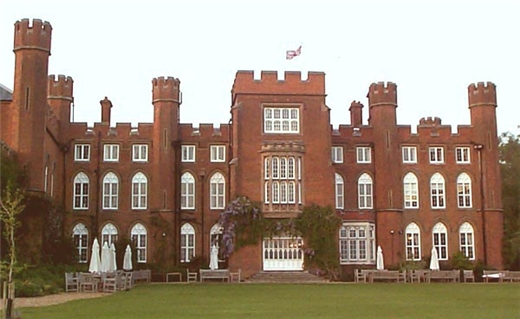
Further to my previous post, I had the great pleasure of attending a workshop on 'Bruno Latour and Environmental Governance' at the superbly plush Cumberland Lodge in Windsor this week.

We worked through a stellar line-up of papers, which were innovatively presented and intensively discussed:
Matthijs Kouw and Arthur Petersen, Learning to trust the IPCC again: A diplomatic approach

Mark Brown, Bruno Latour and the democratic representation of climate change

Maximilian Mayer and Michele Acuto, Large assemblages and ‘size’ in world politics: Questioning a forgotten variable to understand the topography of LTS

Philip Conway, The varieties of diplomatic experience (with special attention to the problem of territory)

Sandra Junier and Maurits Ersen, “An ant’s nest could bring down a hill”: The material in actor network theory

Arjen Zegwaard, Parliaments of mud

Werner Krauss, The political ecology of emerging climate landscapes

Tim Forsyth, Critically examining Science and Technology Studies within environment and development: Actor Network Theory and the stabilization of science in the Global Landscapes Approach

Stephen Flood and David Frame, The IPCC’s science–policy interface through a Latourian lens

Jasper Montana, ‘An IPCC for biodiversity’: On being, and becoming unlike, IPCC-­like

Ed Dammers, The Nature Outlook as an example of diplomacy between different modes of existence

Hanneke Muilwijk and Albert Faber, Beyond borders: How the Anthropocene re-­colours our world

Jasmine Livingston and Eva Lövbrand, Contested purification: The (un)making of integrated climate science in the IPCC’s Fifth Synthesis Report

Kari de Pryck, Developing a methodology for tracing issues and statements in the IPCC
(N.B. not all co-authors attended the workshop.)
My own paper on diplomacy and territory seemed to be well-received and I particularly benefited from the several co-workshoppers who have had first hand experience of participating in IPCC negotiations. I'm hoping to draw on those experiences as I redraft my paper.

Thanks particularly to the organisers Arthur Petersen, Theo Lorenc and Matthijs Kouw.

Thursday, 16 April 2015

"The varieties of diplomatic experience (with special attention to the problem of territory)"—for workshop on "Bruno Latour and Environmental Governance"

I'm very excited to be taking part in a workshop next month titled "Bruno Latour and Environmental Governance."
Since the 1980s Bruno Latour has attempted to supplant the prevailing image of science by proposing a pragmatic and anthropological perspective. [...] The two-day workshop takes as its starting point the idea the Latour's work can be used to explain and understand the workings of environmental governance, using the IPCC as a prime example.
It's being organised and funded by UCL Department of Science, Technology, Engineering and Public Policy and PBL Netherlands Environmental Assessment Agency and will be held at Cumberland Lodge, Windsor (just outside London)—an impressive venue!


My paper will be titled, wordily, "The varieties of diplomatic experience (with special attention to the problem of territory)." I hope to:

(a) Introduce the history of diplomacy as a word and practice, particularly drawing on the existing literature on the subject in the field of International Relations.
(b) Articulate diplomacy as a philosophical concept, particularly as it is developed in the work of Isabelle Stengers (see for example).
(c) Relate the preceding to the concept (and problem) of territory, particularly comparing its modern, state-centric iteration (as traced most notably by Stuart Elden) to the speculative, topological conception articulated by Bruno Latour in his most recent works (see here for an overview).

The crucial link between (b) and (c) is Gottfried Wilhelm Leibniz—he is the prized witness of Stengers' philosophical diplomacy and is credited by Elden as articulating the modern conception of territory for the first time. Understanding his creative conception of territory as a diplomatic act itself allows Latour's reconception to be framed as a diplomatic act also—and thus related to the geo-ontological upheavals that institutions like the IPCC are grappling with in their own ways.

My overall argument is that 'high-level' diplomacy, such as is practised at the IPCC, can only succeed if diplomacy is occurring at all levels and everywhere. Geogovernance (being the focus of the workshop) cannot be taken in abstraction from geopolitics (taking the latter term more or less as Latour articulates it).

I attended a really excellent conference session on anthropology and diplomacy in Exeter this week. Their focus was, as you might expect, 'everyday' diplomacy outside the corridors and constrictions of formalised, state diplomacy (although not ignoring the unavoidable connections and collisions between tentacular state institutions and mediative practices everywhere).

I want to bring these threads together—the historical, the philosophical, the anthropological—and to use this convergence to nudge the concept of geopolitics towards an integration of state and non-state apparatuses.

It's very much a work in progress, and will remain so for a while; however, it should be published, with a bit of luck, in a special issue of Science & Technology Studies next year.