Showing posts with label diplomacy. Show all posts

Saturday, 21 April 2018

Thinking Through Planet Politics—25 April 2018, Tampere, Finland

I'm very much looking forward to travelling to Tampere in Finland next week for what should be a fascinating workshop on the subject of "planet politics."

For those of you who may not be familiar, Planet Politics: A Manifesto from the End of IR was published two years ago. This workshop continues the conversation that has resulted therefrom.

It is open to whoever may be interested, so if you happen to be in the area next week, just drop Hannes Peltonen an email!

(If the below is a bit fuzzy, click the image for higher resolution.)


My own contribution will involve a somewhat critical analysis of the debate thus far, particularly arguing that if planet politics as a 'thing' is to be more than just another re-branding effort for environmental politics then we need to give much more thought to reconceptualising the planetary as such.

Saturday, 20 January 2018

Enough of ‘new’ diplomacies: reclaiming the diplomatic pluriverse

I’m a little late to this particular party; however, in the middle of last year, a very interesting debate broke out between the blogs of Shaun Riordan, Katharina Hone and others on the subject of ‘new’ diplomacies. Does the proliferation of new ‘kinds’ of (or prefixes for) diplomacy serve an intellectual, analytical purpose or is it just another case of academics hankering after scholarly turf?

As Katharina writes:
“Indeed, those practices we describe as diplomacy are expanding. We are seeing discussions on digital diplomacy, climate diplomacy, health diplomacy, business diplomacy, education diplomacy, and sport diplomacy to name a few. Should we, as scholars and practitioners of diplomacy, be concerned? The worry seems all too real. If everything is diplomacy, then nothing is. An ever-expanding concept eventually becomes meaningless. Does this charge apply to these new diplomacies?”
To be sure, from ‘-isms,’ ‘turns’ and (lately) ‘-cenes’ to ‘x diplomacies,’ the urge to name and rename is a strong one. I myself have named this urge ‘entrepreneurial neologism’ (which is, of course, an example of itself).

But, as regards diplomacy, is this just another semantic snowball fight masquerading as thought or does it serve a purpose? Well, to be honest, I think this is a case of a badly formulated question. We have the starting point all wrong.

If what we are really talking about is the conditions under which different kinds of practice can be legitimately counted as ‘diplomacy’ then we are dealing not at all with an idle academic question but, rather, with an intensely – indeed, existentially – political one.

As Sam Okoth Opondo and others have argued, through the course of what is known, euphemistically, as ‘the expansion of international society’ (i.e. European colonialism), the non-white and non-Western were precluded from being agents of diplomacy until such time as they “were converted into something recognizable, yet inferior to the European standard” [1]. Modes of inter-collective negotiation and conflict resolution that did not conform to the received standard not only could not be accepted as legitimate but could scarcely be accepted as existing. By definition, diplomacy was an institution of the civilised; therefore…

If there is a gap – nay, a gaping abyss – in the research of diplomacy today, it does not concern the role of sports or businesspeople (although these are legitimate and necessary courses of study [2]). Rather, it concerns the historical marginalisation and suppression of forms of diplomatic practice undertaken by and between collectives not recognised as legitimate (i.e. state) actors by colonial and imperial powers.

Practices like the ‘wampum diplomacy’ of the Iroquois have received some coverage in anthropological and, to a lesser extent, diplomatic literatures [3]. However, such studies are few and far between. Within the academy at least, the decolonisation of diplomacy has barely begun.

So, in short: Questioning the varieties of diplomacy is not just an idle intellectual debate. It is a matter of sovereignty and existential recognition. In other words, we are talking about matters of diplomatic ontology – what kinds of beings can be recognised as legitimate parties to diplomatic engagement?

This is an historical matter; however, it is also utterly contemporary. When representatives of the First Nations existing within the territory of Canada meet with state representatives, is this an ‘internal’ negotiation between the government and an interest group like any other? Or, is it a meeting between occupying and occupied polities?

It seems to me that this is the point from which to begin questioning diplomatic plurality, rather than from formalistic schemas or issues of professional propriety. That said, starting from this point does not preclude any of the questions that Shaun, Katharina and others have been asking. It simply makes clear what is at stake.

In anthropology and elsewhere, it has become popular to contrast the ‘universe’ with the ‘pluriverse’ – the latter term recognising that there are indefinitely many more ways of existing in the world, indeed of conceiving and making worlds, than has been admitted by the imperial proclivities of modernist Eurocentrism [4].

The problem with the ‘new’ diplomacies debate is twofold. First, it implies that issues of diplomatic variety are somehow recent, rather than the state-centric understanding of diplomacy itself being historically produced [5]. Second, and as a consequence, this debate thinks too small – fiddling while Rome burns the world.

We must accept nothing less than the reclamation of the diplomatic pluriverse.


References
[1] Opondo, Sam Okoth. "Decolonizing diplomacy: reflections on African estrangement and exclusion." In Sustainable Diplomacies (Palgrave Macmillan UK, 2010): p.110.
[2] E.g. Marsden, Magnus. Trading worlds: Afghan merchants across modern frontiers (Hurst and Company, 2016).
[3] E.g. Andersen, Morten Skumsrud, and Iver B. Neumann. "Practices as models: A methodology with an illustration concerning wampum diplomacy." Millennium 40, no. 3 (2012): pp.457-481. See also: Neumann, Iver B. "Euro-centric diplomacy: Challenging but manageable." European Journal of International Relations 18, no. 2 (2012): 299-321.
[4] Blaser, Mario. "Ontological Conflicts and the Stories of Peoples in Spite of Europe: Toward a Conversation on Political Ontology." Current Anthropology 54, no. 5 (2013): pp.547-568.
[5] Although see the comment and response by Barbara and Katharina. See also: McConnell, Fiona, Terri Moreau, and Jason Dittmer. "Mimicking state diplomacy: The legitimizing strategies of unofficial diplomacies." Geoforum 43, no. 4 (2012): 804-814. Cornago, NoĆ©. Plural diplomacies: Normative predicaments and functional imperatives (Martinus Nijhoff Publishers, 2013).

Saturday, 3 October 2015

Reflections on EISA 2015—Day 3

My Thursday at EISA started off with a panel on ‘Kinship in Historical International Relations and Beyond.’ This session was organised by the Norwegian Institute of International Affairs (NUPI).

My notes are, once again, a bit sparse for this session and with the air-con on full blast (the room was sweltering) it was difficult to hear some of the discussion (my hearing isn’t the best, anyway)—plus there were some noisy aircraft making a nuisance of themselves overhead, preparing for the airshow the next day, which made negotiating the discussion-space even more interesting.

In any case, Iver Neumann, formerly of NUPI but now of the LSE, introduced proceedings by reflecting on matters of kinship in IR, particularly with regard to early state formation. Jan Harald Sande Lie gave a very short and very useful introduction to the history of kinship within anthropology. Ole Jacob Sending discussed how kinship is constitutive of international actors, drawing (to the best of my recollection) to a large extent on political theory circa Hobbes. Finally, and most usefully for my own thinking, Halvard Leira talked about kinship in diplomacy. He noted that diplomacy does not invent new forms of organisation but derives its rites and routines from the world around it. ‘Diplomatic culture,’ in other words, derives from the culture of the world(s) with which it is entangled. This is particularly apposite when considering how, before formalisation and professionalisation, ambassadors were quite often quite literal kin.

I am interested in the relationship between IR and anthropology in general and how these differing traditions and disciplines have intersected, are intersecting and could work together differently. Kinship is an excellent focal point for thinking this through and I’ll look forward to the book that is apparently forthcoming on the subject. As mentioned, I gave particular thought to Halvard’s paper. I wondered how European kinship traditions, as embodied in diplomatic institutions, functioned when coming into contact with non-European diplomatic cultures. Kinship was, for example, a key component in French North American colonial relationships with the Iroquois and Algonquian alliances. As Richard White has argued, lacking a common culture as such, Europeans and First Nations negotiated a ‘middle ground’ based not on mutual understanding so much as mutually beneficial misunderstandings. Differing conceptions of kinship, particularly fatherhood, structured the French and Algonquian relationship by providing a common (or rather ‘middle’) vocabulary with which to reach agreements (usually temporary, fragile and fleeting).

White’s book demonstrates diplomacy occurring on multiple levels at once: not only formal and institutional but also familial, sexual, cosmological and more. (This is something that I hope to explore in my thesis.)

I don’t have as much to write about Thursday as previous days (1.1, 1.2, 2), in large part because the two sessions I went to in the afternoon were roundtable discussion sessions and, consequently, didn’t have a structure or rhythm conducive to note-taking (also, I was beginning to feel somewhat fatigued at this point!). They were, however, very interesting.

After lunch, I went to the concluding session of a section organised by my new friends at Aberystwyth on methodological challenges in research. We talked about the epistemic and institutional difficulties in doing research, particularly as PhD students subjected to the often dogmatic Research Council-imposed demands of research training modules and the ever-emphasised need to have a ‘framework’ clearly distinct from (and sometimes even hegemonic over) what one is studying. It seems to me, and happily I am apparently not alone in this, that these ways of framing and carving up the research process place limitations upon what can be researched.

Against this, how can mess, as John Law has written about, be not only accepted as a legitimate methodological mindset but also recognised as an inevitable part of any research project and even as something that needn’t be covered up as though it were some dirty, unfortunate secret?

Writing styles and methods of textual construction were also mentioned, including matters of reflexive writing, which got me thinking about my own projects ahead. I enjoy writing and like to approach it, whenever and wherever possible, as a creative activity. While my research is primarily historical and philosophical (in roughly equal measure), I spent much of my journey home to Wales thinking about how to wrap my own authorial voice up into my writing, to locate my subject-position not just by way of preface (as is common practice) but throughout the process, and to take the experience of research itself as a creative, structural principle in writing. This is easier to do with ethnographic or similar forms of qualititative research as these, quite often, involve a literal journey (or journeys) of self- and other-discovery. But all research is a journey of sorts.

I am drawn back to the idea of theoria, which at the time of Herodotus meant a voyage abroad in search of knowledge. In Plato this meaning is also evident (particularly in the Laws) but also slips into what we recognise today as ‘theory’: when one no longer needs to travel or even to move because one apperceives Ideas, which are placeless, timeless and fundamentally external to any fallen, earthly derivation. Historians and philosophers also go on journeys, also move, also transform and are transformed. How can this not only be accepted as part of the mess of research but also be taken as a principle of narration—as a part of the very fumbling, stumbling world-bundling process in which we are engaged? These are things that I need to think through and experiment with.

Following on from that, the final session of the day for me was also the final session of a section on ‘Diplomacy and Symbolic Violence.’ The panel included Paul Sharp, Costas Constantinou, Alisher Faizullaev and Marcus Holmes.

Costas (who, incidentally, taught me at Keele University all of a decade ago and whose On the Way to Diplomacy is what inspires my inchoate thoughts on theoria, above) began by affirming that one needn’t represent a territory in order to be a diplomat; that we are all diplomats in our own ways as we all negotiate relations of otherness in a world without certainty, simplicity or readymade sovereignty. The discussion touched on formal diplomatic relations but also diplomacies (and symbolic violences) of the everyday.

I was left thinking (although, having only been to this final session and not the ones that preceded it, I should throw a caveat over this) that the concept of violence probably needs a clearer and more carefully considered articulation. It is very easy to expand the concept to such a degree that more or less anything can be understood as ‘violent.’ I would prefer to relate violence necessarily to a conception of harm. An act is violent to the extent that it is harmful. One thing that did come up was the indeterminacy of symbolic violence—something may or may not be intended to be violent; whether or not it is will depend on how it is received by an other; this gap, this fissure is ineliminable. Consequently, we might say that no symbolic act is without violence or that we can never discount the possibility of an act (symbolic or not) being violent; however, not every act that exerts a force need be violent to a notable degree and nor should all acts that do cause harm be lumped into one category as there are ranges and degrees of violence. I see little to be gained by this critical slippage.

In any case, it was another interesting day and one that I am feeling tired simply by recounting! By around this point in the week the weather was turning, getting cloudier and more humid. Practically everyone at the conference was covered by mosquito bites. Many had also quaffed a fair quantity of the hyper-plentiful local wine (sold by the litre) the night(s) before. The fact that the debate remained so engaging and energetic is testament to the stamina and determination of all those involved!

Friday, 12 June 2015

Notes towards a conception of atmospheric diplomacy

More than a few interested parties have, in recent years and decades, detected a certain toxicity in the abstractions by which we think and live. The atmosphere bequeathed by modern thought is nowhere a pure one, nowhere obvious. Nowhere does it achieve a consistency or a simplicity that could condense into a solid ground for a definite 'we.' And yet everywhere are its deep-sunk insinuations felt. Plainly, no one has the authority to regulate or air-condition this pea-souper of concepts. And yet is it not for that precise reason that we might all be emboldened to try? We – that is, all dwellers of the dilapidated faux-palace; all the affected, all the concerned; all those who breathe the damp, questionable air.

For some, this diagnosis emboldens and prioritises the critic. 'We know from whence these toxins came and those satanic mills must be torn down, razed to the ground!' An understandable reaction. But what ground? Like so many castles in the heavy, choking air, there is no outside on which we could be sure to fall safely once the besooted brickwork comes a-tumbling. We are like birds but not 'free-like-a...'. We need an altogether different sensibility in order to work our way out of this kakosmic bind. A sensibility characterised by the prioritisation of obligation and attachment. An ethos of binds and bonds made flexible by their regular exercise.

To the critic's rage at established sentiments we must add the diplomat's patience with them. Not to preserve or celebrate the tawdry and regrettable skyline but to rebuild it – brick by leaden brick.

Sunday, 31 May 2015

William James on the conciliation of religion and science; also, mathematics and pragmatism

I'm presently reading William James' Varieties of Religious Experience. Like much of James' writing, some of it can be rather pedestrian and ponderous but then certain sections jump out like great glowing epiphanies. I like this section from the end of lecture 5 on "The religion of healthy-mindedness" in particular:
The experiences which we have been studying during this hour (and a great many other kinds of religious experiences are like them) plainly show the universe to be a more many-sided affair than any sect, even the scientific sect, allows for. What, in the end, are all our verifications but experiences that agree with more or less isolated systems of ideas (conceptual systems) that our minds have framed? But why in the name of common sense need we assume that only one such system of ideas can be true? The obvious outcome of our total experience is that the world can be handled according to many systems of ideas, and is so handled by different men, and will each time give some characteristic kind of profit, for which he cares, to the handler, while at the same time some other kind of profit has to be omitted or postponed. Science gives to all of us telegraphy, electric lighting, and diagnosis, and succeeds in preventing and curing a certain amount of disease. Religion in the shape of mind-cure gives to some of us serenity, moral poise, and happiness, and prevents certain forms of disease as well as science does, or even better in a certain class of persons. Evidently, then, the science and the religion are both of them genuine keys for unlocking the world’s treasure-house to him who can use either of them practically. Just as evidently neither is exhaustive or exclusive of the other’s simultaneous use. And why, after all, may not the world be so complex as to consist of many interpenetrating spheres of reality, which we can thus approach in alternation by using different conceptions and assuming different attitudes, just as mathematicians handle the same numerical and spatial facts by geometry, by analytical geometry, by algebra, by the calculus, or by quaternions, and each time come out right? On this view religion and science, each verified in its own way from hour to hour and from life to life, would be co-eternal. (99-100)
This brief note on mathematics reminds me of Isabelle Stengers' regular insistence on the importance of the fact that A. N. Whitehead was a mathematician. Far from granting transcendent access-authority to a higher realm of ideas, in this understanding mathematics heightens only one's capacity for perspective-shifting—that is, for pragmatism.

Saturday, 23 May 2015

Reassembling geopolitics—a brief synopsis of my long-term project

For the past 8 or 9 months, I've been plotting and planning the long-term research project that, one way or another, I will pursue for the next several years. (In fact, this plan has been more or less complete since January but I'm just getting around to sharing it now.)

It takes Bruno Latour's work on geopolitics as its starting point but also departs from it in various ways. My recently published article Back down to Earth: reassembling Latour's Anthropocenic geopolitics is essentially a (very) long preface to this larger work.

The project is divided into six parts, each of which are substantially independent but also follow on from each other:

1. Earth and Cosmos
2. Geopolitics and Environment
3. Spherology and Fortification
4. Diplomacy and Territory
5. Possibilism and Possession
6. Geohistory and Geodesy

The first two parts suppose that if we are to reimagine what geopolitics might mean 'in the Anthropocene' or 'facing Gaia,' etc. then we really need to understand what some key terms mean (and have meant) in a broader historical context: Earth, first and foremost, but also the inherited Latin and Greek parallels of that Germanic term, terra and geo. Following on from Peter Sloterdijk's grand conceptual histories, Earth also has to be understood in its historical geo-ontological relation with cosmos. Geopolitics, as I've written in Back down to Earth, was coined in 1899; however, it has to be related to the much longer history of geography and then, in turn, to the entangled histories of words such as environment, climate, milieu, and so on. By the end of these first two parts/chapters, the various conceptual-historical issues surrounding 'geopolitics in the Anthropocene' should be well understood and a thorough reconstruction should therefore be possible.

The middle two parts focus on different sorts of techniques and technologies and how these produce differing configurations of exclusion and belonging. Techniques of fortification—walls, fences, barricades, etc.—carve up space and cement geopolitical arrangements. We are used to understanding such constructions along borders and on strategic high grounds as being geopolitical but increasingly it is not only humans that must be kept in/out: flood defences, dykes, geoengineering projects—these are all geopolitical forms of fortification in the new sense that I would like to articulate. Diplomacy, meanwhile, is not a technique of exclusion but a 'technology of belonging,' as Isabelle Stengers puts it. How differing forms of territory are negotiated (or not) is crucial to understanding the possibility of new forms of coexistence given mounting Anthropocenic pressures.

The final two parts investigate the role of the sciences in this nascent geopolitics in more detail, particularly focusing on problems of calculation, possibility and deep time in relation to matters of land, dispossession and resistance. Possibilism is a term taken from the historian Lucien Febvre. He opposed it to the alleged environmental determinism of the previous generation of geographers from Germany, such as Friedrich Ratzel. Linking to abovementioned investigations, I also want to think about compossibility in the sense of Leibniz and the concept of compossibilism as a diplomatic form of thought about possibilities of coexistence. Possession I take to mean both possession of and possession by—I want to relate geopolitics particularly and inextricably to matters of expropriation but also to mass movements and political passions. Geohistory I mean both in the sense of Fernand Braudel's geographical histories and of Martin Rudwick's history of the geological sciences. Related to the latter, geodesy is a somewhat archaic term meaning the science of measuring the shape of the Earth. However, etymologically the '-desy' also suggests division, which relates back to matters of apportionment, appropriation and nomos, in the sense of Carl Schmitt.

There is an enormous amount of work to be done on all of the above; however, I've already made a start on some of it.

My work-in-progress paper Varieties of diplomatic experience (with particular attention to the problem of territory), presented at a workshop in Windsor this week, investigates the conceptual side of the diplomacy/territory conundrum. I intend to do more empirical work on these issues, taking Richard White's The Middle Ground: Indians, Empires, and Republics in the Great Lakes Region, 1650–1815 as a starting point; however, working out some of the conceptual problems is a first step.

On possibilism and determinism, I've arranged a roundtable conference session at RGS-IBG in Exeter later this year: Determinism, environment and geopolitics: an interdisciplinary conversation. I'm hoping to assemble a variety of geographers and environmental scientists to talk through these issues from different perspectives and to form, however modestly, a research agenda on these topics that are so crucial for political geographers and earth-concerned thinkers of all sorts.

As the project develops over the coming months/years it'll be interesting to see how it changes relative to this initial envisagement!

Friday, 1 May 2015

Sunday, 26 April 2015

The dialogue of Beelzebub and the Hermit—Leibniz, The Philosopher's Confession

Further to a previous post, and particularly Tim Howles' comment thereon, I thought I'd post an extract from Leibniz's 'The Philosopher's Confession,' which Isabelle Stengers references in her Penser Avec Whitehead (although it isn't mentioned in the English translation).

It is a dialogue on God's justness. The interlocutors are 'The Theologian as Catechist [i.e. instructor]' and 'The Philosopher as Catechumen [i.e. instructed].'

We may join them in the closing stages of their discussion, as our principal interest vis-Ć -vis Stengers' remark concerns a 'dialogue within a dialogue' that occurs soon after:
Philosopher: [...] No one who does not know God can love him properly, but such a person can hate him nevertheless. Therefore, he who hates God, hates nature, hates things, hates the world: he who wants these things to be different wants God to be different. He who dies malcontent dies a hater of God and now, as if pushed to the edge of an abyss, he follows the path on which he began, external things no more calling him back. With the access to the senses closed off he nourishes his soul, which has withdrawn into itself, with the hatred of things already began, and with that misery and loathing, indignation, jealousy and displeasure, which increase more and more. When reunited with the body, and when the senses have returned, he continually finds new material for contempt, disapproval and anger, and is so much more tormented the less he is able to change and endure the torrent of things displeasing to him. However, in a certain way the pain turns into pleasure and the wretched are glad to find something by which they are tormented. Just as with humans too, the unhappy, while envying the happy, seek at the same time to wear them down, with no other outcome than that they become indignant, as they think the inept are the masters of things, and their pain, more unimpeded and more unchecked, is turned into a kind of harmony, i.e. an appearance of reason. For in the case of the jealous, indignant and malcontent of this kind, pleasure is mixed with pain in a remarkable way, for just as they are pleased and delighted by their belief in their own wisdom, so they suffer so much more furious pain because they lack the power they think is due to them, or rather is in others they deem unworthy. Here you have the explanation of those extraordinary paradoxes, that no one is damned unless he wills it, but also that no one remains damned unless damned by himself. The damned are never absolutely damned, always damnable. They are damned by stubbornness and a perverse appetite, by an aversion to God, so that nothing gladdens them more than to have something by which they may feel pain; they seek nothing more than to discover a reason for them to get angry. This is the highest degree of madness of reason - it is voluntary, irredeemable, desperate and eternal! The damned, therefore, even if they wanted to, can never make use of those complaints which we ascribed to them earlier, and so cannot accuse nature, the universal harmony and God as being the authors of their own misery. 
Theologian: Immortal God! How you have brought about endoxa from your paradoxes. I realize that the Holy Fathers were not averse to this kind of explanation. And the pious ancients summed up the innate character of the damned very much like this in a simple but wise fable. Some hermit, in the depths of contemplation as if intoxicated, begins to be pained in earnest on account of there being so many creatures coming to ruin. Therefore he approaches God with his prayers, and shows the sincerity of his own longing - 'Oh father,' he says, 'can you watch the destruction of so many healthy children? Ah, receive into your grace those wretched demons, which drag so many souls with them into the abyss.' To him who cried out like this, the almighty calmly replies, with an expression which brightens the sky and quietens the storm: 'I see, my son, the simplicity of your heart, and I forgive the exuberance of your emotions, and in my case there is indeed no obstacle. Let those who seek forgiveness come to me.' The hermit then says, in adoration: 'You are blessed, oh Father of all mercy, oh inexhaustible source of grace. And now I go with your permission in order to meet he who is wretched to himself and others - he who so far is ignorant of the happiness of this day.' He departs to meet the prince of devils, not an infrequent visitor for him, and immediately upon making his way in, says: 'Oh you are fortunate! Oh fortunate this day, on which the way of salvation is opened to you, which almost from the beginning of the world has been closed! Come now, and complain about the cruelty of God, in whose presence the supplication of a miserable hermit on behalf of rebels of so many centuries has been effective.' The prince of devils, like the indignant and like those speaking menacingly, replies 'And who has appointed you as our agent? Who has persuaded you to so foolish a pity? Understand, foolish one, that we need neither you as mediator nor God's pardon.'
The Theologian then proceeds to recount this intra-dialogue:
Hermit: Oh the stubbornness! Oh the blindness! Stop, I beseech you, and allow me to discuss this with you.
Beelzebub: Evidently you will tell me.
Hermit: But how trifling is the loss of a few moments you spend listening to a little man who is desirous of the best for all?
Beelzebub: So what do you want?
Hermit: You should know that I have pleaded with God concerning your salvation.
Beelzebub: You? With God? Oh disgrace of heaven, oh infamy of the world, oh humiliation of the universe! And this is he who rules things, this is he who so demands the angels tremble before an authority which has prostituted itself before these worms of the earth? I am bursting with anger and rage.
Hermit: Ah, refrain from these curses as we are on the verge of reconciliation.
Beelzebub: I am beside myself.
Hermit: You will return to yourself when you have learned with how much fatherly tenderness the lap of God hopes for the return of a son.
Beelzebub: And is it possible that he who has exasperated us through so many injustices wants reconciliation? He who has so often harmed has recovered his senses? He who considers himself all-knowing has recognized his error, he who considers himself all-powerful humbles himself? Eh, and what is the price, do you think, for agreeing to the peace?
Hermit: A single supplication will extinguish the angers, will bury the hatreds, and will make the memory of earlier events submerge as if in the depths of the sea.
Beelzebub: Go and announce that by this condition I am prepared for friendship.
Hermit: Seriously?
Beelzebub: Not a doubt.
Hermit: You are not making fun?
Beelzebub: Only go, and enable the matter to be accomplished.
Hermit: Oh happy me! Oh cheerful day! Men freed, God blessed! 
God: What news do you bring with so much dancing?
Hermit: The matter is settled, oh Father! Now the kingdom and the power, and the salvation, and the strength, and the honour, and the glory are of our God and his son Christ, because he who accused us every day, and who bellowed by night and by day for our death, has turned.
God: What? You have also added the condition of begging mercy?
Hermit: He has approved it.
God: See that you should not be deceived.
Hermit: I go in order to bring him so that he will keep his promise.
God: But listen, you: let us work out in advance the form of words.
Hermit: I shall follow them.
God: Therefore give notice to whoever may want to be accepted in grace that they will have to commit to the use of these words before my throne: 'I confess with my mouth and acknowledge with my heart that my wickedness has been the cause of my misery and that it would have been made eternal if your ineffable pity had not dispelled my stupidity. Now that I, with a subdued mind, have understood the distinction between light and darkness, I would rather suffer everything to the end than return to the condition where I repeated the offence to him, which the nature of things can consider nothing so vile.'
Hermit: I have it. And now I shall go, or rather I shall fly. 
Beelzebub: Can it be that you are winged?
Hermit: The emotion has made me so fast. Here is the form of words of the supplication.
Beelzebub: I shall read it if it pleases you. But when will the condition be fulfilled?
Hermit: Whenever you want.
Beelzebub: As if the delay is on account of me.
Hermit: Come then. Let us go to the throne of God.
Beelzebub: What? Are you quite sane? Do I go to him, or him to me?
Hermit: Do not mock with regard to a matter so great.
Beelzebub: He who is going to beg for pardon will go.
Hermit: Let's go then.
Beelzebub: You are mad.
Hermit: Are you not the one who has to beg for pardon?
Beelzebub: Is this what you have promised?
Hermit: Who would think differently, even if he were dreaming?
Beelzebub: Is it not I who am offended? Shall I become suppliant to that tyrant? Oh excellent mediator! Oh plague of man! Oh model of a colluding advocate!
Hermit: Ah, what are you doing?
Beelzebub: Poison enters the limbs, and already rages the anger Through the whole body: crime is heaped upon crime. Thus we are purified. The only victim for the frenzied Is the sacrifice of his enemy. It is pleasing that he be scattered in the winds And mangled alive, drawn into a thousand pieces, Persecuted with as many marks of my own pain, The trumpet itself summoning those to be resurrected To withdraw the flesh.
Hermit: God, turn to my assistance.
Beelzebub: Gaping jaws of pale Avernus, and you lakes of Taenarum...
Hermit: He has vanished, I breathe again. That wretched creature left behind testimony of where he would go in his last words. Oh despair! Oh enemy of God, of the universe, of himself! The cursed should go to him, and have their deliberate insanity. But to you praise, honour, glory, oh my God, who have condescended to reveal your pity and also your justice so splendidly to your servant; you have removed all those temptations of doubts which were trying to make out that you are either unjust or powerless. Now my soul is at peace, and basks with unexhausted delights in the light of your beauty.

Thus spoke our hermit, and I with him.
 To quote Tim's previous comment:
This is not Milton's Satan. It's a much more cowardly, dastardly, niggardly refusal of truth: the perfect analogy, as Stengers points out, for the destructive/ deconstructive/ denunciatory reaction that she doesn't want from the reader of this book.
The crucial thing here is mediation (this is why I think that the figure of the diplomat must be kept in mind throughout Stengers' writings, even when she doesn't mention it explicitly).

The Hermit is the mediator here who is abused and betrayed by Beelzebub. God, as the previous discussion between the Theological and the Philosopher indicates, is conceived of as a substance of pure harmony. To make peace with God is thus to find peace; to reject God is to wallow in an inwardly and outwardly destructive circle of loathing and contempt.

However, I am inclined to hold at least a moment's thought for Beelzebub's position here. Is his objection not that he is being summoned to kneel before a Father? He is being granted a divine invitation to peace and harmony—an invitation that his loathing and self-importance cannot allow him to accept. However, it is an offer issued from a position that is discernibly monarchical.

Indeed, Stengers says something similar on this same dialogue towards the end of her Cosmopolitics II:
"When Leibniz attempted to consider the question of damnation and introduced Beelzebub's refusal to 'ask forgiveness,' which God had decreed to be the condition for his salvation, he also showed, perhaps in spite of himself, the extent to which apparent generosity, whenever it is one-sided, can exacerbate the rage of the one it was supposed to benefit. The cosmopolitical calculus will always remain exposed to rage, to Beelzebub's despair [...]." (415)
She goes on:
"Beelzebub's venomous rage is the rage liable to invade the victims of crimes to whom the risky commitment of the calculemus is proffered." (415)
The calculemus ('let us calculate') in Stengers' reading refers to the construction of a temporary common measure, a 'middle ground' between estranged parties for the purposes of conciliation. It takes two to conciliate; we may infer that the condescension of a benign deity is insufficient to this end.

I think it's also important that Stengers notes that Leibniz might be making this case "perhaps in spite of himself." Her reading of Leibniz posits him as a 'minor key' thinker, in the sense of Deleuze and Guattari. Leibniz is notoriously impossible to pin down—a multiplicity if ever there was one. However, the minoritarian, diplomatic reading is, I think, really fruitful, even if it has to be constructed to some degree 'in spite of' certain facets of the man himself.

Between common ground and middle ground; or, the unbearable lightness of being Earthbound

Terence Blake writes:
Do we need a “common ground” in order to communicate with each other effectively or enjoyably?
I think we should have no qualms about needing 'grounds.' Not any more. We now understand very well that no ground—not even the proverbial bedrock—can be understood as a secure, unyielding foundation; however, at the same time, we are equally well aware that there is no groundlessness, no infinite nomadism. Groundlessness is death, floating in the vacuum of space.

However, I think that one can make a distinction between 'common ground' and 'middle ground' (as the latter term is used in ethnohistory). Both imply a convergence, a political or cosmopolitical coming together (in the pragmatic conception, compelled by mutually concerning issues). However, while the common is something shared (thus suggesting an underlying unity either revealed or constructed), the middle is simply the temporary milieu fabricated between two distinct parties that may thoroughly misunderstand each other but, nevertheless, are thereby able to exchange well enough to negotiate. The common aims at a settlement 'for us,' the middle aims at a settlement 'between us.' Settlement—i.e. ground—is the issue for both but borders are drawn in completely different ways.

The common should not be prioritised over the middle because of its greater unity. However, equally, the middle is not preferable simply because of the looseness or bagginess of its mode of belonging. The conception of grounds as constructed between distinct groups implies commonality within these groups (albeit with fractal micro-divergences at every level, and so on and so on).

So, which of these conceptions pertains to democracy? If we are talking institutionalised democracy then I think it is plainly a common ground that predominates. To the extent that there are established rules that authorise participation then we are in the common. Of course, a rule is never simply 'applied' and every democrat constantly pushes their luck; however, the fact that they have to 'push their luck' implies a covenant that is recognised to be binding to some degree.

The common cannot imply harmony or an absence of dissent; however, it does imply a collective project in a way that the notion of middle does not. Although, substituting the French 'milieu' for the English 'middle' brings the notion of environment and envelopment into it. But perhaps this is the difference between ground and atmosphere: an atmosphere can be shared without in any way implying a unity. In this sense we can say that every collective on Earth shares an atmosphere but they do not yet share a ground. Not that there is one atmosphere—there are indefinitely many and of endlessly varied kinds; however, there is an atmosphere that envelops us all and that therefore serves as the medium, the ether for our collective problems—but emphatically not our unity.

There is, as I have said, a connection between atmosphere and ground (without ground we are floating in a vacuum). However, atmosphere carries qualities of envelopment that ground does not. In this much we might say that a middle ground is closer to an atmosphere than is a common ground.

Every ground can ultimately float away as if on a breeze but we would be ill-advised to valorise our being of such unbearable lightness! The bittersweet ungroundedness of the ƩmigrƩ understands both edges of the sword.

'All that is solid...,' says Marx. His voice shook with fury but the ground beneath his feet did not. Do we share his common ground?

The unbearable lightness of being Earthbound.

Thursday, 16 April 2015

"The varieties of diplomatic experience (with special attention to the problem of territory)"—for workshop on "Bruno Latour and Environmental Governance"

I'm very excited to be taking part in a workshop next month titled "Bruno Latour and Environmental Governance."
Since the 1980s Bruno Latour has attempted to supplant the prevailing image of science by proposing a pragmatic and anthropological perspective. [...] The two-day workshop takes as its starting point the idea the Latour's work can be used to explain and understand the workings of environmental governance, using the IPCC as a prime example.
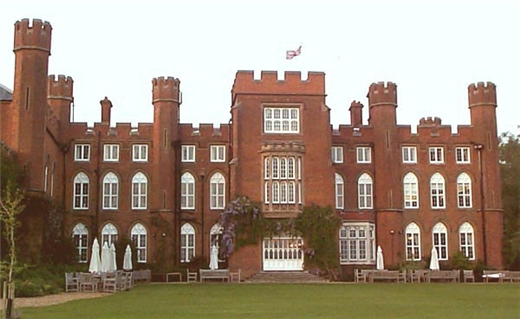
It's being organised and funded by UCL Department of Science, Technology, Engineering and Public Policy and PBL Netherlands Environmental Assessment Agency and will be held at Cumberland Lodge, Windsor (just outside London)—an impressive venue!


My paper will be titled, wordily, "The varieties of diplomatic experience (with special attention to the problem of territory)." I hope to:

(a) Introduce the history of diplomacy as a word and practice, particularly drawing on the existing literature on the subject in the field of International Relations.
(b) Articulate diplomacy as a philosophical concept, particularly as it is developed in the work of Isabelle Stengers (see for example).
(c) Relate the preceding to the concept (and problem) of territory, particularly comparing its modern, state-centric iteration (as traced most notably by Stuart Elden) to the speculative, topological conception articulated by Bruno Latour in his most recent works (see here for an overview).

The crucial link between (b) and (c) is Gottfried Wilhelm Leibniz—he is the prized witness of Stengers' philosophical diplomacy and is credited by Elden as articulating the modern conception of territory for the first time. Understanding his creative conception of territory as a diplomatic act itself allows Latour's reconception to be framed as a diplomatic act also—and thus related to the geo-ontological upheavals that institutions like the IPCC are grappling with in their own ways.

My overall argument is that 'high-level' diplomacy, such as is practised at the IPCC, can only succeed if diplomacy is occurring at all levels and everywhere. Geogovernance (being the focus of the workshop) cannot be taken in abstraction from geopolitics (taking the latter term more or less as Latour articulates it).

I attended a really excellent conference session on anthropology and diplomacy in Exeter this week. Their focus was, as you might expect, 'everyday' diplomacy outside the corridors and constrictions of formalised, state diplomacy (although not ignoring the unavoidable connections and collisions between tentacular state institutions and mediative practices everywhere).

I want to bring these threads together—the historical, the philosophical, the anthropological—and to use this convergence to nudge the concept of geopolitics towards an integration of state and non-state apparatuses.

It's very much a work in progress, and will remain so for a while; however, it should be published, with a bit of luck, in a special issue of Science & Technology Studies next year.

Thursday, 26 March 2015

Styles of writing, modes of thought and logic versus poetics

By way of response to my previous post on the seminar that she organised, Penny Newell writes (with terrific kindness!):
It's great to read the write-up on your blog Philip, and, having browsed the press release for the Reset Modernity! exhibition, I really see how it all links in to the anomalies series. I feel compelled to say something. One thing I really love about your blog is your ability to say that you simply do not know, or that you might know, at some point, but perhaps not everything, just yet. I actually think this in itself is how I think modernity should be 'reset'. It blows syllogistic logic out of the water, allowing you to speak meaningfully, truthfully, rigorously, with an quality of erudition that I think is truly important, in ways that allow your reader to slow down; allows your ideas to resist the finitude of conclusive statements. Put simply: I can't extract what you say from how you are saying it. Maybe you don't intend this, but it's there (and it's actually, in my opinion, really in keeping with the Stengers piece you sent to me - not that I am calling you out as an 'idiot'... merely that I feel you resist the 'and so' of writing). 
Bit of a tangent, but just yesterday I was reading a piece by Constantino Marmo, referenced in Eco's work on metaphor, entitled, 'Suspicio: A Key Word to the Significance of Aristotle’s Rhetoric in Thirteenth-Century Scholasticism'. It sparked an interest in me as Marmo posits the 13th c. (esp. Albert the Great / Aquinas) as a (mini-)paradigm shift toward subtended various modes of thinking within logic, such that Aristotelian rhetoric and poetics became subsumed within the rationalis scientia; opening the way to reading poetics as and through a methodological modus sciendi. This is fascinating! (though I need to explore in more depth just how much I can make the following claim...) as it seems to me that part of the task of resetting modernity should be to reclaim rhetoric and poetics from logic; or at least to position them alongside it. My open question is: if we do so, what happens? What happens to the task of criticism within the field of poetics, if we consciously, just-so-slightly, nudge logic to one side? Does it reveal that works such as the Poetics are somehow subordinate to the Organon? Does it show that we're trying to be too logical in our readings of those works? What does it say about a whole field of Arts and Humanities, which owes so much of its thinking to thinking substantial things, drawing substantial conclusions, about poetics and rhetoric? I feel (or at least, I try in my work to practice the possibility that), if we shift the positionality of the Poetics, away from logic, it becomes a document that we can just write through, away from the rationalising project of modernity, towards, well, not much ... perhaps just away from an 'and so'. Perhaps just towards a 'perhaps'.
I hadn’t thought about it in that way but I suppose that I do work with a degree of ‘idiocy’ (in the technical sense!). I feel utterly unimpressed by modes of thought that always have a pre-fabricated answer for everything. ‘Well,’ they say with a half-stifled yawn, ‘this is, of course, just a case of [xyz].’ Such boredom infects and infests everything it touches (it’s the boredom of someone who’s already had every idea they’ll ever have...). The most important thing I ever learned was how to be productively and creatively perplexed (rather than merely bored) by things that I didn’t understand. It took me a long time to figure that out. I feel like I’ve been making up for lost time ever since.

Self-certainty is good for defending hilltops; exploring forests is another thing altogether. How this translates into a writing style is tricky. I do give a lot of thought to the relation between style, mood, rhythm, structure and argument. And I do find them to be inseparable. Of course, this is not a new insight. However, acceptance of the mere fact of performativity tells us nothing with regard to how that performance should be carried out. And that is something that doesn’t get thought through enough. (Most academic and intellectual ‘styles’ are just copies of copies of copies.)

Regarding poetics and logic, that all does sound very interesting! I suppose if we want to think about ‘resetting’ some dualistic aspect of modernity then we would have to begin by acknowledging or finding the value of both sides of the equation. We might want to save poetics from the stolid strictures of logic. Okay, but if we are to flood this particular valley we need to adequately re-house both villages. If the modernist settlement makes logic an enemy of poetics then we should have some sympathy for the logicians too! They also have no choice but to act as though logic is exhaustively defined by the abstract, the austere, the ‘whether-you-like-it-or-not.’ To quote one Freeman Lowell, “now, what kind of life is that?”

However, it is not a question of adopting a 'neutral' position. A diplomat will never attempt to arbitrate a dispute as though it could be resolved by technicality. A diplomat is necessarily ‘biased’ (or, better, committed) to one side or the other. However, a diplomat will also sometimes say to their side ‘now hold on, they won’t accept that; no, no, that won’t fly.’ Even militants can be diplomats if they are able to slow down momentarily in this manner. So, to militate for poetics against logic is fine and understandable (goodness knows we are all tired of having our poetic daisies stomped on by jackbooted yawn-stiflers!) but the situation, to my mind, becomes truly interesting (in every sense of that word) when we take on the agency re-distributions necessary to do justice to both sides. It becomes interesting when we start to say ‘now, hang on….’

And, in that respect, I think an historical approach is really crucial. A kind of diplomatic history in the sense of a history of disputes becomes extremely fecund when we are able to recognise ourselves as inheritors of these disputes. We may not share the problems that these disputers were grappling with but we have often inherited their solutions.

So, in other words, we should ask not only what could poetics be if it was not browbeaten by logic but also what could logic be if it was not burdened with having to browbeat poetics? A far harder question, I admit!

Thursday, 5 February 2015

Diplomacy and cosmopolitics

In response to my last post, dmf writes:
see I thought diplomacy was about the negotiating workable (extra-military) relations between competing interests. more William James than Kant...
It certainly is much more James than Kant. I didn't mean to suggest that the goal is synthesis as such. That would be unanimity rather than plurality and is emphatically not the goal of diplomacy as either Stengers or Latour articulate it.

[What follows is a thinking-out-loud. Consider yourselves warned.]

There are and must be indefinitely multiple cosmoi. And diplomacy is the "technology of belonging," to use Stengers' words, that renders these cosmoi "contrasting rather than contradictory." It turns either/or into and/and, as she puts it.

This becoming-coexistent requires an openness of all parties to change. It is a political technology and by no means the only one.

When you share an atmosphere, in the Sloterdijkian sense of the word, then you share a kosmos/kakosmos. A progressive composition of a common world means a collective air-conditioning of that atmosphere. And this requires the same diplomatic openness. The same detachment in a very precise sense: not disinterest or any kind of neutered neutrality but detachment from a fixed, permanent, absolutised self that could only ever dominate, be adopted, be enforced, be destroyed or be 'tolerated.' A diplomat's detachment is a unique and extreme case. But that doesn't mean that the rest of us can go around living out our inner perfections.

Is diplomacy just the negotiation between cosmoi or is it also the name of the political technology at work in conditioning and composing the cosmoi from within?

Well, mereologically speaking, once the notion of cosmos is radically pluralised, we are constantly within, between and butting up against the cosmoi of others. We are in a world of foam, in Sloterdijk's imagery. And yet when we find ourselves 'in the same boat' as another—whether that other is a hungry tiger or not—veritably it is not a matter as simple as maintaining border relations (although that is unavoidably part of it). When we share an infrastructure that is toxifying the very air that we breathe then we surely have no option but to negotiate the terms of our coexistence in a rather more intimate sense.

And when this 'air' is conceptual then the ground of the negotiation is a philosophical one. Calculemus!

So, the AIME project, as I understand it, was about attempting to negotiate the composition of a shared atmosphere: a conceptual, philosophical atmosphere. In its participatory stages it was about collectively writing the design specifications that would construct the problem to which the philosopher(s) will respond.

Not everyone or everything is inside this particular 'hothouse.' There are many other abodes. And yet 'the Western philosophical tradition' is not a meaningless designation. Too simple, certainly, but it passably signifies the shared atmosphere in question; an atmosphere that undoubtedly has its toxicities and yet that we cannot simply forego breathing all of a sudden—we cannot simply step out into the void. Hence 'inheritance' and the inevitable problems of translating between generations.

If we suppose that diplomacy pertains to the inter-cosmic and cosmopolitics to the intra-cosmic then that would be an elegant enough distinction. However, as far as I can see, the difference is not one of polarity but of intensity. The pressure of coexistence is relative to the pressure of the atmosphere and the pressure increases relative to the toxicity experienced by the occupants who format the existential space itself—pressure is a function of the tension experienced by those who collectively constitute the tensegretic milieu. And even hostile parties share a space formatted by that very non-indifference.

So, while there are undoubtedly other political technologies besides the diplomatic metamorphosing of contradictions into contrasts and while there are vastly more kinds of atmospheres than the merely conceptual and while diplomacy as a concept obviously suggests a concern with the interrelation of existential spaces that have some sort of mutual exteriority, the capacities, the requirements, the technical competencies required of the diplomat are only an extreme case of what is required of a negotiated coexistence in general. The 'true self' abhors coexistence.

So, pace Kant, it is not synthesis that any kind of diplomacy is working for. There is no 'perpetual peace,' only perpetually negotiated settlements. There are no shortcuts. But, equally, this is not an atomising gesture. It does not function to fracture the foam into ever smaller bubbles. Co-occupancy is not a choice and toxicity is not a mere metaphor.

The goal is not synthesis and yet if we are co-occupant then we will soon realise it. Plurality does not mean disentanglement. And so becoming-cosmic through a quasi-system, as I have described it, does not presuppose a will to synthesis—only the recognition that this is one possible tool for the negotiation of a co-occupancy that we cannot easily opt out of, nor need we.

Those of us who read and talk philosophy—or simply those of us who speak a European language—are part of a hothouse that we cannot close like a book. It is something that we share and something that we are, something that is part of us.

We speak of becoming-coexistent not becoming-unified. And yet negotiating the shape of the space we occupy necessarily means negotiating the very shape of who we are—and the 'we' is not an idle one because we are something together, 'we are in this together.' Such a statement can never be exempted from scepticism or even refusal but nor can we pretend that we are all mutually exterior and that we don't have collective projects or that we can become-cosmic without some sort of convergence—even if, and here we can inherit a modern classic, every action has an equal and opposite reaction. That is, even if convergence contains its contrary within itself, it is still a necessary motion. Convergence is still something that is built, is still something that can be built better.

Why is cosmopolitics not cosmopolitan? Cosmopolitanism, in its perpetually pacific end state, would have no need of diplomacy since all borders would be dissolved. In a cosmopolitical world—'cosmopolitics' being the recognition that there is only cosmos with politics and only politics with a cosmos, not that these are one and the same but that they are in a state of tension—there would be only varying intensities of the demand for diplomatic detachment that would be adjusted according to relative degrees of estrangement, conflict and pressure. Unity would never be the goal but nor would isolation be anything but a death sentence. Collective writing projects would be commonplace, not because we were striving for a hive-mind but because we would be capable of saying 'that is my writing' even when the words did not conform to 'my true beliefs.' We would recognise our ecstasy, our being outside ourselves. We would recognise ourselves in collective composites, in trace-lattices without a trace of purity.

Our borders would not disappear but their fortification would become ever less urgent.

[P.S. just saw Ex Machina and it left me feeling very philosophical.]

Wednesday, 4 February 2015

Should 'system' be part of our ontological inheritance?

In response to my last post, Tim Howles writes:
Cf. the question put to BL in his recent interview on 'AIME as system': "The site has been open for two years in French, one in English, and I still don’t see new modes coming in. Isn’t the 'system' here coming to paralyse the inquiry?"
System or 'quasi-system' (a term that I've applied to AIME elsewhere)?

What is the 'quasi' doing for 'object' and 'subject'? Literally speaking, they are 'as if' objects and subjects. More specifically, it renders them not a kind of object or entity, or at least not any entity with an enduring identity, but a point in a trajectory; it implies that the quasi-X is always a becoming-X and always a becoming-with-others. It is a relativisation of subject and object not to each other (Ć  la dialectic) but to a wider pluriverse of existential modalities.

In terms of AIME, it is obvious enough as to why we'd want to keep notions of objectivity and subjectivity as part of our 'inheritance' (albeit deeply modified). The question is really one that I posed right at the end of my article: what are we to inherit and how? What is it in the notion of 'system' that is valuable, despite all the problems with that term?

I think it could be related to the notion of cosmos. Unlike high modernists like Alexander von Humboldt (whose biography I've been reading recently -- but that's an aside), the Latourian cosmos is not at all a pure, perfect state of harmonious nature. It's more Messiaen than Mozart. Harmony, yes, but amidst discord of all sorts. No kosmos without kakosmos -- we'd do well to remember that there is no guarantee of enjoying a cosmos whatsoever; cosmoi are composed.

If a quasi-systematising is an organising, a settling, a becoming-cosmos, then the important question concerns how that systematising is happening. And isn't that what the diplomacy is all about? Progressively composing the common cosmos in the absence of a pre-given sovereign?

Certainly, we shouldn't hold becoming-cosmic or becoming-system to be necessarily superior to whatever the contrary would be -- no composition without decomposition. What a quasi-system permits is an organised conversation about our cherished abstractions. Its realisation is necessarily a stuttering and pragmatic one. However, I think that there is definitely a case for 'system' to be part of what we inherit from the moderns.

I'm trying to think up a joke about Quasimodo but I haven't quite gotten there yet.
quasimodo: "Low Sunday," 1706, Quasimodo Sunday, from Latin quasi modo, first words of introit for the first Sunday after Easter: quasi modo geniti infantes "as newborn babes" (1 Pet. ii:2). The hunchback in Victor Hugo's novel was supposed to have been abandoned as an infant at Notre Dame on this day, hence his name. For first element, see quasi; for second see mode.

Wednesday, 3 December 2014

Reflections on An Inquiry into Modes of Existence as an experiment in the digital humanities

In the last week of July this year, I had the good fortune of attending the concluding workshops of Bruno Latour's An Inquiry into Modes of Existence project. I've written several posts on and deriving from this in the past; however, I've not really reflected on the event itself as an experiment ‒ which is what it was; an experiment in the digital humanities. (See also this by Consuelo Vasquez.)

We were to play a 'Serious Game' ‒ that is, to test, trial and interrogate the 'Report' (i.e. the AIME book) produced by Latour as his 'Anthropology of the Moderns.' However, we were not at liberty to simply set about 'critiquing.' The attendees were divided into several roundtables that worked independently on politics, religion, economy, nature and diplomacy, respectively. Each table was to, first of all, review and synthesise the many contributions submitted to the project website. By the end of the week, we had to collectively write a 'Specbook' containing our indispensable values and requirements that would inform, first, the public seminar to be held the following week in which the chargĆ©s d'affaires (Barbara Cassin, Eduardo Viveiros de Castro, Annemarie Mol, Dipesh Chakrabarty, Deborah Danowski, Peter Weibel, Simon Schaffer, Clive Hamilton) would, each in their own way, begin to edge towards 'facing Gaia'; and, secondly, the eventual rewriting of the Report. At the end of each day, there was a plenary session where the groups came together and debated their findings.

At this point I should mention my own struggles ‒ travails, as we say in English... ‒ with having only the most rudimentary grasp of the French language. The roundtable on politics was held primarily in English (and this is were I spent the first part of the week); however, the plenary sessions were almost entirely in French (and with perfect justification since I was the only non-French speaker in attendance!). Although I was greatly aided by the interpretations of Cormac O'Keefe and Stephen Muecke, the most immediate consequences of this linguistic disjuncture were that (a) my head hurt a lot and (b) whenever I opened my mouth I ran the very serious risk of making a fool of myself, having only understood about 10% of what was going on. (Sure enough, that happened. However, I more or less got through the week in one piece!)

But back to the point. The thing that strikes me most about the way all this worked, retrospectively, is the very partial realisation of the 'game' aspect. Certainly, this was never going to be a run-of-the-mill academic workshop since we were playing a 'Serious Game' under quite unconventional conditions. However, it was not quite a 'role playing game' (something like a Model United Nations) either since there was no clearly defined narrative nor prescribed characters. As 'gamers' we were surely playing characters ‒ but those characters were, seemingly, ourselves.

The whole format of the event was consequently approached from an array (perhaps, at times, a disarray) of perspectives. At times it seemed as though every participant had their own idea of what was going on (though this may have been an impression imposed by my aforementioned linguistic marginality). This was liberating inasmuch as it permitted the event to evolve ‒ diverging, converging and improvising ‒ as it progressed. However, this freedom was by no means uncurtailed. The plenary session effectively acted as a 'sovereign voice' that stamped down on this or that, approving or denying certain lines of conjecture.

In other words, it was never completely clear what the rules were but it was occasionally made very clear what they were not. This is how the experiment was able to hang so loosely without falling apart altogether. (Schmitt, and so on...)

These occasionally crossed purposes, and the practical misalignments that resulted, came to a head particularly in the discussions of diplomacy (a roundtable that I participated in towards the end of the week). Every table was under instruction to 'deflate' its subject matter, and to do so both simultaneously and symmetrically. A deflated politics without a correspondingly humilous economy would be neoliberal; a deflated religion without its matching politics would be a cold and aggressive secularism, and so on. The diplomacy table interpreted its remit as covering both anthropology and philosophy. It then, and this was certainly the overwhelming judgement, inflated these institutions to a degree earning the label 'Kantian.' This really didn't go down well. The balloon burst.

Upon reflection, I think that the whole experiment may have worked better if it had been more of a 'role playing game' and, in that sense, more intensively fictionalised. Some attendees (myself included) were, at times, labouring under the misapprehension that we (the attendees) were ourselves 'diplomats.' It seems to me now that we should have thought of ourselves as, at most, attachƩs. We were doing nothing more than preparing briefing papers based upon our own, partial, naive perspectives (plus the electronic augmentations afforded by the contribution-collecting website), towards a negotiation that would be decidedly 'above our pay-grade.' The 'middle ground' was indeed the issue but it was not we who would go there.

Nevertheless, it was enormously refreshing and exciting to participate in an intellectual exercise that broke the usual conference/workshop format where various researchers assemble, read their pre-written papers, eat, drink and then fly back to wherever it is they came from. If this experiment seeds more creativity in the manners and modes by which ideas get debated and texts get drafted then it will have been a success for that alone.

However, on that point, a final difficulty sticks in my mind in particular: the difficulty of speaking under a condition of the suspension of 'true belief.' In other words, in order to participate in a game one does not act solely on the basis of one's own sense of self but, rather, upon the instructions received, the roles given or taken up. One must speak from a subject position that is not 'oneself' but is already the result of the displacement that necessarily occurs in anticipation of negotiation.

This happened, I think, only fleetingly and inconsistently. The participant to have adopted such a pose most explicitly was the chargĆ© d'affaires Simon Schaffer,   who made a point of embodying a diplomatic persona and thus not 'saying what he really thinks.' While there were many personae flying about the place, I'm not convinced that the specific form of detachment necessary for the diplomatic game was widely achieved ‒ at least not as widely as it could have been. Indeed, some clung to their 'true beliefs' with a passion.

To be 'detached' with regard to any firm, pre-given ground but not, for that reason, 'disinterested' ‒ such discursive techniques are still to a large extent awaiting if not their invention then certainly their adoption.

And this brings me back to my previous remarks: the experiment only partially broke free of the conventions and standards of existing academic discursive formats. At times the 'game' relapsed into something much more closely resembling a conventional 'conference' or 'workshop' than, I think, was intended. The gravitational pull of engrained habits remained too strong and the deterritorialisation effected by the territorialising motions of the 'rules of the game' was too weak precisely because the rules themselves were too weakly specified. Truly leaving the orbit of arbitrary convention would, however counter-intuitively, have required a stronger and more arbitrary imposition of a counter-convention for the purposes of the game. Stronger, more challenging rules, roles and narratives would have meant a greater pull towards dissociating 'true belief' from speech-action and would, therefore, have established a more diplomatic event, a more thoroughly and impressively prepared 'middle ground.'

That said, I count myself very fortunate to have played a part in this experience ‒ perplexed, furrow-faced, pain-brained onlooker though I so often was!

Tuesday, 28 October 2014

Harman's 'Reassembling the Political'—Some first impressions

I received Graham Harman's new book on Latour's political thought last Wednesday. Apparently before it's author!

Having spent several hours in and around airports on the following day, I was able to read it on Thursday. However, I'm only just now having time to put my thoughts down in words, this time looking out at the passing Devonshire countryside.

It is certainly a very thorough introduction to aspects of Latour's political philosophy. However it has, in my opinion, several major flaws.

First, and perhaps least importantly, the first half of the book should really give Latour co-writing credit since it is mostly a patchwork of quotations from his books. In excess of 50% of the text seems to be quotation in many places (I haven't calculated this systematically). This gives the impression of a book that was written in a hurry and that, while not being very long, is short on original content. The actual analysis is packed into the last 70 pages or so, amidst more long quotations from other authors.

Secondly, and much more seriously, the book almost completely decontextualises its subject matter. Latour's political thought becomes free-floating and grounded only in his own personality, not in his problematiques, nor in his historical moment. It is written, like Harman's Prince of Networks, as though Latour was responding to 'perennial problems' rather than concrete historical issues. Unless I somehow missed it, Harman doesn't even mention the 'Science Wars,' a quite surprising omission, especially with regard to the extensive treatment of Politics of Nature, which, along with Pandora's Hope, was written in direct response to said affair. (I should add that I don't have the text in front of me to double check these points but if these things were mentioned it can only have been very briefly.)

Thirdly, and not unrelatedly, Harman hardly mentions diplomacy as a concept at all. His treatment of 'politics' comes down almost entirely to the issues of power and violence. He does mention at one point that, contrary to Zizek's imperiously self-certain basing of politics on Truth, Latour thinks and argues as a diplomat rather than a vanguardist. However, the depth and importance of this concept (one that he takes from Isabelle Stengers) is unrecognised and its conceptual complexities are not even nodded at.

Much like his previous writings on Latour, Harman's new book should not be read as a neutral introduction. Just like Prince of Networks, Harman really ends up talking about himself and his own interests via the medium of Latour's concepts. Harman's clear, accessible and sometimes entertaining prose style, and the excessively extended introductory quotations, should not distract from this point. The final two fifths of the book are far stronger than the earlier part with interesting and valuable discussions of Zizek and Strauss. However, as mentioned above, it appears to be a book written both in a hurry and in a style that fosters the appearance of being relatively neutral and introductory while in fact being anything but. Once again, Harman completely ignores the more interesting and complex, pluralistic aspects of Latour's work and his unwavering groundedness in problems.

To take account of the changing historical circumstances in which Latour was writing would require a more careful and difficult writing process. Harman prides himself seemingly above all in being prolific. Well, it is easy to be prolific when you trade in 'perennial problems' that require no contextual discussion. Moreover, it is easy to slice Latour's works up into heuristic phases when when the actual conditions under which his thought evolved are simply erased.

Harman writes that Latour deserves better critics than he has for the most part been subjected to so far. I would agree. However, Harman's only real criticism is that Latour is not 'realist' enough, which perhaps explains why he gives diplomacy as a concept such short shrift. If he had to actually deal with the extreme intimacy of thought, politics and plurality in Latour's and Stengers' works it wouldn't be so easy to reduce the former's to bland, emaciated musings on 'perennials' that are said to be hamstrung by being inadequately underpinned by 'realism.'

Harman continues to reject out of hand the possibility of any real relation between Latour's work and that of Deleuze on the rather dubious metaphysical grounds that Deleuze apparently dissolves things into flows while Latour is interested in individual things. Even if that were true it is flabbergasting to think that the basic ontological aesthetic choice of things versus processes would exhaust the relevance of a thinker as complex and multifaceted as Deleuze.

Latour is Deleuzian, in my view, in this sense: he is a thinker for whom thought must always move from, around, towards and/or through a specific, particular, pressing and contemporary problem. His work simply cannot be properly understood in ignorance of this. The crucial connection between philosophical and political pluralism, both of which must be redefined in order to reach a new accommodation of the Moderns' values, is just left outside in the cold.

In grounding Latour's thought in perennials rather than problems, Harman not only misrepresents Latour's work; in my view, he fails to understand its most essential characteristics. He doesn't just perturb the works along a slightly new trajectory (of course every commentator does this) and he doesn't just neglect important aspects of Latour's work. He gets crucial, core elements of Latour's thought wrong.

It is for this reason that Harman's books should be read with a highly critical eye. Under no circumstances, in my opinion, should they be assigned to students or interested beginners as introductory texts. While the copy and paste reassembly of choice cuts of Latour-prose may be useful for such readers—as a kind of highly edited 'Latour Reader'—they are likely to be wholly mislead by the unmistakably Harmanian spin that is put on the whole assemblage. Once again, this is, on a conceptual level, more a book about Harman than it is about Latour, and it must be read as such.

Harman's central conceit in both his books published on Latour to date is this: to read Latour as though he hadn't attempted to redefine what doing philosophy, or doing political philosophy, involved; as if he could be read without recognising the degree to which he attempts to modify the very ground of interpretation from which he could be understood.

Harman's book is not without merits but its demerits are disappointing. The summary of recent criticism makes for a useful literature review and focusing some attention on the Hobbesian underpinnings of Latour's work over the years is worthwhile. However, ultimately Harman is all too conservative a reader. His modus operandi is one of simplification, axiomatisation and schematisation. While I have nothing against these operations per se they it would be nice if Harman at least acknowledged that in pinning down the proverbial butterfly he is losing something of its being—perhaps the most crucial part.

Latour's work doesn't need simplification and separation; it needs articulation and interconnection; less carding, more weaving. The principle fault of the existing secondary literature on his work is that it fails to draw it together in its interconnectedness. Harman compounds this problem. Just as his book on Latour's metaphysics sidelined his sociology, seeing that as a separate thing, here certain elements are deemed political and others are left out. This is, in my view, not helpful. If Latour's work were so easily 'zoned' it wouldn't be as interesting as it is.

And so I can only conclude by saying that if Harman's commentary becomes the prism through which people begin to read Latour (and I have seen some evidence of this) we will all be a lot worse off for it.

Tuesday, 2 September 2014

Patrice Maniglier on Diplomacy and AIME

In the new issue (187) of Radical Philosophy there's a review of Bruno Latour's An Inquiry into Modes of Existence by Patrice Maniglier (translated by Olivia Lucca Fraser) titled A metaphysical turn?. It's currently available to download for free.

It argues similarly to another piece by Maniglier translated by Stephen Muecke and posted to the AIME website earlier this year. This excerpt from Fictions and Attachments: A Comparative Metaphysics of Art and Commerce muses on and somewhat extends the concept of diplomacy that derives from Isabelle Stengers' work and which lies at the heart of Latour's project (which, by the way, is continuing past its previously advertised end date).

Both pieces are well worth reading.

A metaphysical turn? describes Latour's approach to metaphysics in a similar (but rather more sophisticated) fashion to how I have attempted to describe it recently. Of particular relevance is the concluding comment, which argues that Latour's philosophy:
surmounts both the hypercritical relativism of deconstruction and the rather ostentatious dogmatism in which the new, so-called ‘speculative’, metaphysics basks. (44)
Earlier on he writes that, for Latour:
Being isn’t the Separate (what should be reached) but the Confused (what should be disintricated, contrasted). What ontology has to resolve are not the problems of access, but the problems of equivocation. (40)
This gets at an important contrast with the reading of Latour that derives from Graham Harman. This popular reading, rather point-missingly, wonders whether Latour's work is a 'philosophy of access' or not. What should be becoming clear now is that 'access' is an irrelevant concept to philosophy, as Latour describes and practices it; or, to put it in other words, that 'access' is pertinent to other modes of existence but not to the philosophical mode.

Philosophers have props but no instruments.

Referential truth is none of their direct concern. Their pretensions must thus be duly deflated; the possibility of ontological co-existence is not something that they will bestow on the world, it is something that they themselves must undergo, that they themselves must achieve amongst themselves. Until philosophy itself is thus transformed it can be of no use to the 'planetary negotiations' that we apparently collectively face.

It will be interesting to see which side of philosophical history Harman's forthcoming Prince of Modes will come down on. I suspect that it won't be the same side as Maniglier.

Sunday, 13 July 2014

Diplomacy as theory; theory as diplomacy—excerpts from Constantinou's On the Way to Diplomacy

Further to my last post, which provided some excerpts from Costas Constantinou's On the Way to Diplomacy on the subject of diplomacy itself, here are some more, this time concentrating on the etymology of 'theory' and its relation to diplomatic and metaphysical practice.
This word theoria was used in ancient Greek to designate, among other things, an old type of embassy, the solemn or sacred embassy sent to attend religious festivals and games, discharge the divine obligations of the polis, and consult the oracle. This particular ancient meaning has been lost in the modern, Anglicized use of the term theoria, as is the case with the modern Greek term. (p.52-53) 
Firstly, theoria is derived from the words theos (god) and orao (to see). It had the meaning ‘to see god’ and particularly referred to this aspect of eyeing god in the shrine. Orao also relates, however, to the word hora (time, hour), and so theoria can be understood as the moment of god or the moment devoted to god. The sight and time of the theoria invoked therefore a specific truth-making process. (p.53)

Later, in the biblical tradition, theoria was given a special theological significance, for it was specifically used to describe the view of Jesus at the cross, that is, bearing witness to the moment of sacrifice. But the root word theo in Ancient Greek also meant—depending on the emphasis—to run and to look. […] From this root theo- (run), theoria acquired the meaning of a journey, of traveling abroad to see the world. This meaning is especially important, for it refers to the first known use of the word theoria by Herodotus. It was employed to designate the journey of Solon, the lawgiver of Athens, to Egypt and other ‘far away’ places. The importance of the timing of Solon’s journey points to the significance of hora, the reaching of a certain moment in one’s private or political lifetime for going on a theoria. (p.54)

[There is also a link with theatre,] the theatron itself being the place where theoria was practiced. (p.54)

The sacred ambassadors [sent to religious events and oracles] were called theors or theoroi and were specially chosen. (p.55)

Theoria then was an embassy to god or truth (tied to divine sanction and authority), and theors were ambassadors, peripatetic ‘theorists,’ charged with the discovery of what was right or true. In theoria, therefore, one can view embassy as theory and theory as embassy. (p.55)

[…] theory at its Platonic conception was the mirror image of the very diplomatic process it [i.e. diplomatic theory] now seeks to explain. (p.56)

In Phaedo, Plato employed theoria to describe the solemn embassy sent to the Delian oracle ‘in honour of the god’ Apollo and to commemorate Theseus’s journey to Crete. In The Republic, there are instances where Plato’s theoria can be understood more generally as participation in any kind of festival or campaign. In Crito, theoria is used as a journey, and in the Laws, in addition to voyage, as view and careful observation. In another instance, it has a more specific meaning when it refers exclusively to the Dionysian celebrations. Finally, Plato employs the word theoria to denote the contemplation of the divine, and in his most common usage as speculation and philosophical reasoning. (p.56)

[…] in order to see reality, the philosopher is required to ascend out of the cave. Plato thus describes the return of the philosopher to the cave as a theoria. The return of the philosopher signifies the conclusion of a contemplative journey, a journey that equips the philosopher with theoretical knowledge subsequently communicated for the benefit and education of the people. Theoria constitutes, therefore, the philosophical journey out of the cave of ignorance. But it is important to note that this is not a journey of any kind. It is not simply a theoria, as understood by Herodotus […]. It is a theoria meant for divine contemplations. Just like the sacred embassy, it is sent to contemplate the metaphysical. (p.57)

Platonic philosophical thinking, therefore, appears [at first] to resemble ancient Greek diplomatic practice. (p.58)

[In the Laws, ambassadors and theors have a key pedagogical role. They are to educate the] youth concerning the laws and affairs of the polis. This was a role traditionally reserved for the man of philosophy, but Plato appears also to expect pedagogical responsibility from the man of diplomacy. (p.58)

[This granting of power required strict rules—infringement of which would be punishable by death.] Plato begins by establishing certain conditions under which a citizen could travel abroad. First, nobody under the age of forty would be permitted to do so under any circumstances. Second, nobody would be permitted to go abroad in a private capacity—only in a public one, which involves the sending of heralds, embassies, and theorias […]. The information and knowledge acquired by such theorias is then to be communicated to the citizens of the model polis so to confirm the rightness of its laws or to amend the deficient ones. […] Theoria is therefore charged with the discovery of the good and held responsible for the perfect condition of the polis. Of course, that was precisely the role saved for the philosopher-ruler in The Republic. In the Laws, consequently, the Platonic republic attains its full metaphysical significance. It becomes a political cave. (p.58-9)

It is typical of Platonic irony that Socrates, the nontravelling philosopher, becomes a model of the theoretician. Socrates is a philosopher who contemplates aporia and yet he himself is an aporos (without passage or way), one who has never crossed to the beyond (peras). (p.59-60)

[Eventually, ideas win out over journeys.] Plato demotes and marginalizes the journey out of the cave. Once the light is encountered, once the truth is revealed, once reality is viewed, the quest is passĆ© and the path that led there loses its significance. […] the Platonic idea becomes an idol (eidolon) in the mirror of which theoria is now immediately discharged. (p.60)
So, long story short, the Greeks before and around Plato provided the linguistic and conceptual basis for the kind of theoretical diplomacy that Bruno Latour is now seeking to practice; however, Plato being Plato, this promising beginning was immediately sundered by Transcendence.

From the beginning of the AIME project I've felt that diplomacy was an undertheorised concept. The above (and the previous two posts on the subject [one two]) might provide the possibility of a more thorough conceptuual consideration of diplomacy.

Credit must go, however, to Costas Constantinou whose wonderful little book I've so ruthlessly pillaged here. (It deserves a proper read; these excerpts do it no justice.) I took his class on diplomacy during my final year of undergraduate study at Keele University and it's the one thing I learned at that time theory-wise that really stuck with me.

See also:

Articles

Costas Constantinou's Between Statecraft and Humanism: Diplomacy and Its Forms of Knowledge (pdf)

On Homo-Diplomacy (pdf)

Between Statecraft and Humanism: Diplomacy and Its Forms of Knowledge (pdf)

Constantinou & Der Derian's Sustaining Global Hope: Sovereignty, Power and the Transformation of Diplomacy (pdf)

Books

NoƩ Cornago's Plural Diplomacies: Normative Predicaments and Functional Imperatives

James Der Derian's On Diplomacy: A Genealogy of Western Estrangement

Iver B. Neumann's At Home with the Diplomats: Inside a European Foreign Ministry