Showing posts with label gaia. Show all posts

Monday, 31 October 2016

Bruno Latour on geo-logy in a neo-Humboldtian university

In her book The Passage to Cosmos: Alexander von Humboldt and the Shaping of America, Laura Dassow Walls writes:
"By asserting that nature is independent of humans in a difference that is profoundly generative, [Alexander] Humboldt is trying to bridge the impasse reached by Kant, who had deepened the Cartesian dualism of mind and nature into an unbridgeable abyss by arguing that the nonhuman or “noumenal” world could never be reached or conceived. We could see only its phenomenal shadow, the mask, what little was open to the human senses. As Margarita Bowen details, Humboldt bridged this Kantian impasse by showing how humans developed their concepts over time, in a historical process by which they “are generated, tested and incorporated into the sphere of ideas.” Through this historical process, ideas forged in the crucible of physical nature made the world of thought part of the process of nature. As Bowen observes, Humboldt sees the very gulf between mind and nature “as the locus of the sciences.”"
In an endnote to this passage, she adds:
"I would argue that in this respect Humboldt’s philosophy anticipates that of the French sociologist of science Bruno Latour. A Latourian analysis of Humboldtian science would be a very productive project."
Walls is surely not the first to find affinity between Humboldt, whose leitmotif was Alles ist Wechselwirkung [everything is interrelated], and Latour, the famous thinker of networks.

In a recent talk at Cornell, Latour himself has reflected on the contemporary relevance of Humboldt with regard to the challenges of Anthropocene affairs, particularly regarding the question of how to organise training and knowledge production in a world where words like "world," "nature" and "earth" have been challenged on the most fundamental level. This connection presumably derives from the suggestion of Cornell's Aaron Sachs, whose book The Humboldt Current: Nineteenth-Century Exploration and the Roots of American Environmentalism establishes Humboldt as something of a 'founding father' of North American environmental thinking.
This is a felicitous happenstance for this blog (as long-term readers will probably have noticed). I'm currently writing what began as a chapter (and is ending up as six chapters) on Humboldt's work. It is not my intention to directly compare his thinking with that of Latour; however, there is an important connection.

My thesis, such as it currently exists (13 months into my PhD), asks a very simple and very complicated question: What is the history of the concept of environment? The basic philosophical idea that runs through the whole project derives from a paper by Latour and Michel Callon from 1992, Don't Throw the Baby Out With the Bath School! – specifically, "the distribution of agencies." In short, I understand the evolution of the concept "environment" (and its various equivalents, cognates and associates) in terms of variations in the distribution of agency between domains (particularly "society" and "nature").

In writing this I am attempting to engage with a whole range of questions and debates. However, one book in particular that stands out is The Shock of the Anthropocene by Christophe Bonneuil and Jean-Baptiste Fressoz. This is, as I have written previously, not just another Anthropocene book. It is an excellent piece of work and covers much the same sort of territory that I am attempting to examine; however, it has some serious limitations. First of all, I'm not convinced that the critique it makes of the works of Latour and Ulrich Beck stand up. What they call "environmental reflexivity" seems to somewhat misrepresent what these two authors were saying.

However, the important point for my project is that while they do a very good job of demonstrating that capacities for sophisticated modes of thought and action concerning "environment" are nothing new, they do little or nothing to establish what, in statistical language, we can call the incidence or, simply, the relative importance of environmental concepts, practices and concerns within their particular historical epoch. They seem to me to be operating within an epistemological conception of historiography (à la Bachelard through Foucault) that primarily concerns itself with establishing what is "thinkable" and "unthinkable" in any historical period. That is to say, an historiography for which incidence is largely irrelevant.

This is why I am interested in Humboldt – and why my initial single chapter has ballooned to six. I am attempting to set the aspects of his work that can, anachronistically, be termed "environmental" or "ecological" within a fuller account of his life, works and networks. By doing so, I will be able to show the relative importance (or otherwise) of these aspects for Humboldt and, by a more tentative implication, for his historical epoch.

Needless to say, this has been quite a challenge! Not only are Humboldt's own works voluminous in the extreme but the figure of this "great man" has been claimed and re-claimed so many times that the layers of interpretation form strata that are themselves formidable. My agenda is not really to criticise the spectacular plume of recent writings that have reclaimed Humboldt once again for the ecological age we seem to be in. However, I cannot help but be struck by how different my approach and the reading that results is from most if not all of these writings.

Humboldt is, undoubtedly, quite a likeable chap. However, Humboldtography has a definite tendency towards sanitisation, sometimes turning over into outright hagiography. My objection to this is not so much that one should not attempt to reclaim aspects of the past for the present. Rather, it is, I think, that the version of Humboldt that results from this purification is substantially more boring than the "warts and all" version that results from a more thorough and less tendentious reading. Quite often, the specifics of Humboldt's work simply disappear by his being interpreted through more contemporary modes of thought.

This is, I think, what happens in the passage from Walls quoted above. It is deeply misrepresentative in a whole number of ways. Primarily, presenting Humboldt as somehow overcoming Kant (even in intention) is quite implausible. He constructed his magnum opus Cosmos (written in the final years of his life and never finished) on explicitly Kantian lines, strictly dividing the objective and subjective elements into separate works. Yes, he was attempting to reconcile the opposition – but so was everyone else (including Kant). Nothing could have been further from his mind than the project we inherit from Whitehead (circa 1919) of overcoming the bifurcation of nature.

Once again, I have no problem with creative readings of past thinkers. However, there is a risk in this: making the past an extension of the present and thereby erasing the possibility of encountering historical difference.

And so, I think there is much to recommend revisiting the Humboldtian project (evidently!). Latour is careful to distinguish Alexander from his brother Wilhelm, who was a statesman, linguist and political theorist. However, I would argue that this separation should not be undertaken too hastily. It was Wilhelm who founded the University of Berlin (later Humboldt University) and was principally involved with educational reform (Alexander worked, before his South American journey from 1799 to 1804, reforming mining and industrial practices). True, Wilhelm was known as the "humanist" in a disciplinary sense – they were both humanists in the philosophical sense. However, Alexander explicitly joins the two projects in Cosmos, extensively quoting his brother's works (and, after Wilhelm's death, editing and publishing his most important works).

I would also, on the basis of the above, have to question Latour's statement that:
"What I propose to do, then, is to introduce a division between nature and the natural sciences, on the one hand, and phusis and the earthly sciences on the other. A fully geo-centric move, if you wish, provided that you take geo not as a globe but as a critical zone. It is not as speculative as one might think, since there are lots of good technical reasons to utilize such a partition. Witness Timothy Lenton’s version of the same divide in his book: “For many Earth system scientists, the planet Earth is really comprised of two systems -the surface Earth system that supports life, and the great bulk of the inner Earth underneath. It is the thin layer of a system at the surface of the Earth -and its remarkable properties- that is the subject of my work” 
This is something that Humboldt would have understood easily."
Humboldt was nothing if not an open-minded empiricist and, so, would undoubtedly have been delighted to encounter the geo-logy of today. He did as much as anyone in his era, both intellectually and infrastructurally, to enable the contemporary earth sciences. However, it is, I think, important to remember that his "climate" was nothing like ours – nor was his "earth." Moreover, his geopolitics (to use another anachronistic term) was a very, very long way from what is needed today. If there was ever a more enthusiastic advocate of modernisation than Alexander von Humboldt, I have never encountered them.

In short, if we are to learn from the likes of Humboldt we must not get hung up on those aspects that echo with reassuring familiarity. We must, instead, be attentive to the differences – encounter that historical difference. Doubtless, we share some of Humboldt's problems but we should not, as his hagiographers all too often do, suppose that we have much "common ground" with him or his epoch.

Tuesday, 20 October 2015

"My enemy is arrows. I want to get rid of arrows" – Bruno Latour on maps, earth and International Relations

One of the first academic conferences I went to was that of the Millennium journal of International Relations in 2012. The theme was 'Materialism and World Politics' and IR, always late to any bandwagon, was doing its best to catch up. One striking pattern that was immediately evident was the proliferation of references to a certain Bruno Latour in many papers and presentations, particularly amongst students and early career academics. Up to that point, his name was almost completely unknown amongst IR scholars – surely one of the last provinces of the social sciences and humanities to remain so unperturbed.

Three years on and Latour was Millennium's headline act, delivering the keynote lecture. This was filmed and will presumably be made available online in the next few days. Consequently, I will not try to summarise it but will just offer some thoughts.

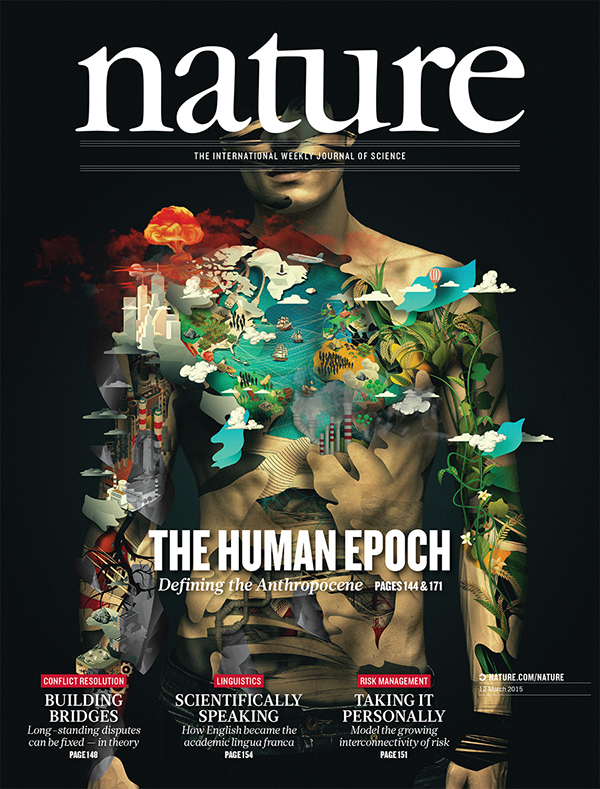
The lecture began with a visual comparison of Hobbes' famous frontispiece with a recent front cover from Nature.


Both are monstrous but in totally different ways. The Anthropocenic human juts out randomly, stupidly, headlessly. The Hobbesian sovereign is all measure, calculation and looming menace. This speaks to the real difference between them: Hobbes was proposing a solution to the problem of political order that had so drastically broken down in his time; Nature, on the contrary, is representing the problem of the Anthropocene, a problem of order – indeed, political order – without any apparent solution in sight. The problem of Nature's image, then, is precisely the disappearance of Nature as an organising principle of geopolitics in the fullest sense of that term.

This is one thing that I was trying to get at when I recently wrote at a fair bit of length about Latour's conception of geopolitics and, particularly, his reading of Gaia. The key feature of Gaia, taking James Lovelock's iteration somewhat creatively, is that it is not any sort of personal deity because it doesn't care one bit about the fate of any individual or species but, at the same time, Gaia is not Nature because it is not indifferent or external to human action – it reacts, it is perturbed, it is responsive. To quote myself:
"However, responsiveness is not responsibility. Gaia can summon no Leviathan; there is a Great Society but no Great Community [à la Dewey]. Of course, it is not that Gaia ‘lacks’ the appurtenances of a formalised polity per se – it is only we Earthbound that such a supplement impels; it is, rather, that Gaia, our past and our present, will only be our future – we will only have a future – if such an assembly is realised."
The image I had in mind at this time was precisely Hobbes' most famous image and the cohesiveness and unity of that ugly apparition looming over the English countryside. Nothing could be less true of the geopolitical predicament that Latour is addressing. There is no Global State – nor will there be. The things formerly known as natural do not bring unity; total knowledge of the Earth's surface in no way allowed it to be mastered (some of its occupants, perhaps, but this paramilitary victory was plainly overestimated); its complex spatiality greatly exceeds merely topographical imagings; the things formerly known as natural, in fact, disturb, destabilise and destroy the comforts of order and regulation, they do not and will never again give it a secure foundation. This realisation, to parrot Naomi Klein, changes everything.

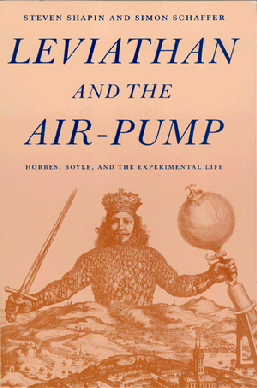
Oliver Kessler mentioned in the closing panel of the conference that he wished that Latour had used the modified version of this image from Shapin & Schaffer's Leviathan and the Air-Pump.


That would have been an interesting connection but the point that Latour was making concerned political unity rather than the relation between science and politics per se. In any case, Latour's attempt to imagine a representative geopolitics of this Gaian situation was precisely the overarching theme of his lecture.

Representation in every sense of that word – political, scientific, artistic. And representation not in the vague, vain liberal sense of 'letting everyone have their say.' It was very clearly representation as a precondition of action. In other words, it was a question of collective will and adherence; of achieving the political infrastructures by which a collective could act – and a collective that is constituted by far more than just humans and their (delegated or imposed) spokespeople. A form of action that requires the alignment of actors of all kinds (and here the humanists leave the room…).

To self-indulgently quote myself again (because I can't think of a better way of putting it than this sentence that I spent months writing and re-writing):
"Gaia is not just the scene of politics, nor a violent interjection to it, but a dramatic, swirling convolution of world-convening relations – a collective constituted by all the constituents that she collects."
This is why Gaia is at the centre of Latour's geopolitics. It is not a unity. It is not a single, homogeneous, centred actor. It is not a totality and it is not nature. It has no one name. It is not something everywhere the same. It is impersonal but not indifferent. It is violent but not malevolent. It has intentionality but no teleology.
"There is only one Gaia but Gaia is not One."
It is, above all (and in more than one sense of that phrase), a sovereign. Here we see that, however 'flat' Latour's philosophy may or may not have been in the past, his 'Gaia-politics' presupposes an emphatic verticality; a power, a transcendence that vastly exceeds human actions but does not transcend them in the sense of being in any way exterior.

This must unground every sense of earth, terrain, territory on which International Relations, knowingly or unknowingly, has based its object.

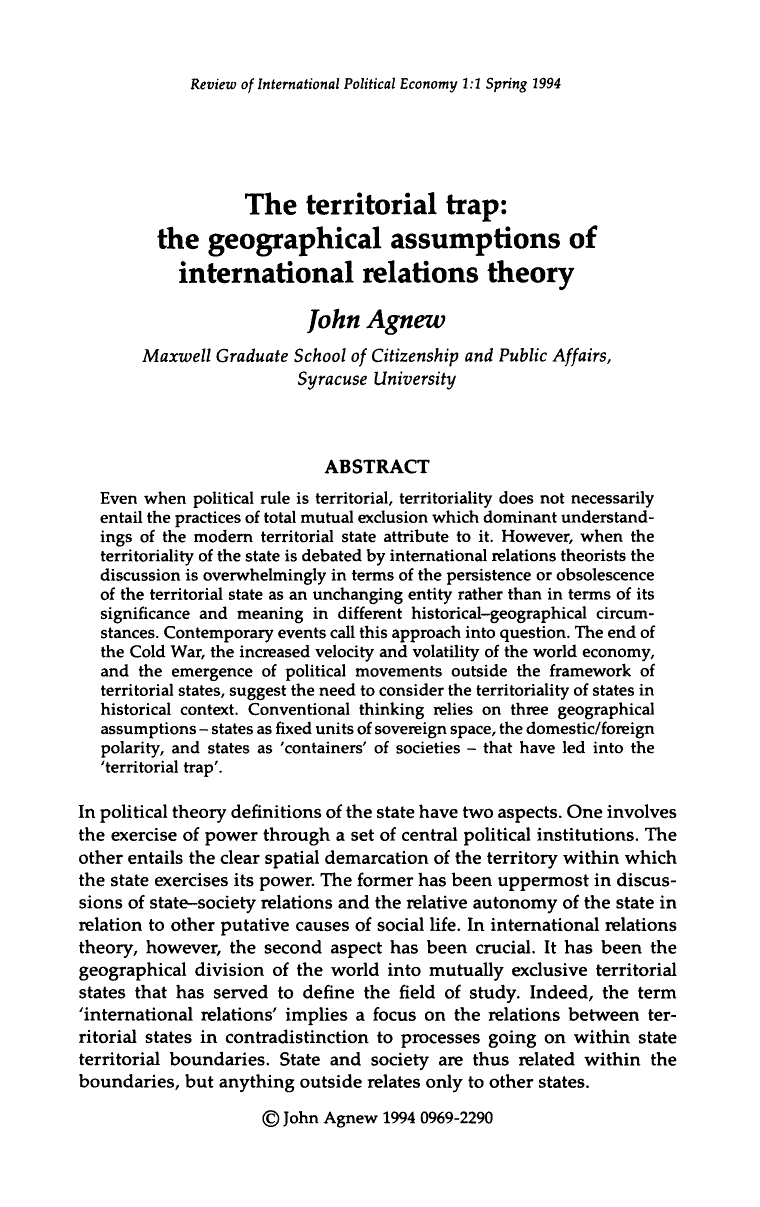
But here we should pause. Geopolitics is not IR. To re-hash John Agnew's famous article The Territorial Trap, IR has been consistently ignorant of the space, the materiality, the environments that its institutions presupposed.


Political geography was born as a discipline in the imperial struggles of the late nineteenth-century. Its reactionary extremes directed and enthusiastically served those ends – knowledge of the earth, its environments and climates was to found the efficient, ruthless administration of empire. This is, quite unambiguously, the root of 'geopolitics' (the word itself was coined, as 'Geopolitik,' in 1899).

Some would say that IR was born as a discipline in 1919 (at my home institution in Aberystwyth, from which I type these words); however, it only really got going as a disciplinary space and movement in the 1950s with sponsorship from the Rockefeller Foundation, among others. At this time, 'geopolitics' had all but disappeared from conversations in polite society as it had become had it become almost synonymous with Nazi expansionism via Karl Haushofer's association with the regime (a somewhat more complicated relationship than was recognised at the time but nevertheless).

Geopolitical ideas were soon revived by the likes of Henry Kissinger who reconstructed them for the new era of empires that the so-called Cold War brought about but human geography as an academic discipline on the whole lost its connection with international or global politics. IR, meanwhile, soaked as it was in the behavioural sciences and the realpolitik of its various émigrés, had little interest in the complexities of the ways that the world gets composed. The planet was, by this point, known rather well (or so they thought) and explanatory power was to be sought primarily in understanding the behavioural characteristics of human beings and their institutions. Their agenda was, variously, to secure peace and to overcome the non-liberal remnants of 'History,' in the Hegel/Fukuyama sense of the word.

This aside has a point, which I will now get to: 'environment' in IR has always been a special interest, a subfield, something to do with whales; 'earth' has been either an anachronism or an irrelevance; 'space' has been what you put satellites in.

Is there any discipline less prepared for what is coming than IR? I can hardly believe that there is. And yet, does this mean that IR must be brought to an end? Perhaps not.

Latour's lecture concluded with an overview of the 'Make It Work!' event – essentially a Latourised model UN – that was held in Paris this summer. The main point made by this event was that oceans, icecaps, forests, etc. – all these also require political representation, alongside corporations, NGOs and states.

And states. It is so very easy to denounce and demean this mode of geopolitical organisation, born out of the historical milieu that is encapsulated by Hobbes' towering phantasm. But let's be honest, the 'Westphalian state system is redundant' critique practically writes itself at this point, doesn't it?

"The old (but still useful) world of States" – this was on one of Latour's slides.

And this brings me to the Q&A session that followed the lecture. Two of the questioners made more or less the same point: Okay, so having non-state representatives representing beings other than humans is good but are we to believe that states do such a wonderful job of representing people? Verily, if (critical) IR scholars have achieved anything over these years it has been to demonstrate the vicious iniquities of state-based political complacency!

I was reminded at this point of the Olympics where stateless athletes are permitted to compete under an independent banner.


Of course, all of this raises questions of power. How does anything come to be represented politically? By demanding that it be so. In other words, through struggle. Or, to put it in more Latourian terms, how is a 'middle ground' ever formed from which diplomacy can begin? According to Richard White, this too is about power. All sides must be capable of compelling their other to meet on the middle ground rather than imposing a settlement from without.

But returning to my thread, if we are to extend representative politics to more than humans is this not a perfect time to reconsider how we represent human beings too? And is not a discipline such as IR not well placed to consider such a task? Well, perhaps. But not on its own. IR's ignorance of space and geography is well known but its connections with anthropology are not much better. The very concept of representation, for instance, was also born around the time of Hobbes – it is no more universal than 'Nature.'

Here it might be opportune to cast our minds back to Patrick Thaddeus Jackson's keynote at the Millennium conference last year:
"The way I understand it, the term ‘international’ picks out those aspects of anything that involves cross-boundary encounters with difference. The international aspect of a military manoeuver or a financial transaction does not simply begin at the moment that a formal territorial border is crossed, but as soon as the existence of some other—the alien, the foreigner, the stranger—is taken into account in the operation. Representations of otherness, which shape and structure what we come to regard as legitimate or acceptable or appropriate action towards or in reaction to those others, are the common thread connecting all of our myriad substantive concerns, and the ‘return’ of culture and identity to the scholarly agenda is better thought of as a clarification of what we were all already interested in in the first place."
This, to my mind, is a large step in the right direction but isn't quite there yet because it continues to pretend that other academic disciplines haven't been doing this for years and years in their own ways (and doing a very good job of it). It's still sectarian. What about anthropology, for instance? Cynthia Enloe was also present at this year's Millennium conference and was a perfect reminder of the importance of that connection to IR historically. But the larger part of these disciplines remain entirely estranged.

Plainly, there is a need for a complete re-evaluation of what the purpose of IR in this new world is. Reconsidering its relations to not only geography and Earth system science, etc. but also to anthropology and other forms of knowledge production besides. A comparative and interstitial sociology of social science.

Is there an appetite for such self-criticism within this most cloistered and jurisdictionally jealous of academic disciplines? Some, perhaps not enough. But it is a conversation worth having and a task worth attempting – and one that Latour's work will help us to initiate, even if he by no means has all the answers.

But perhaps I should end with the quote that titles this post. 'What's so wrong with arrows?', I hear you ask. Well, Latour tells us, you draw an arrow on a map when you need to account for something that the map itself (base map plus territorial outlines) says shouldn't be there – migration, movement, pollution, mess. In other words, if you need to draw an arrow it's because your map is inadequate to its representational task because it assumes a flat, stable base upon which everything else is projected rather than trying to capture the territorial complexes in motion and in their own complexity; that is to say, in the process of their ongoing assembly.

This is a difficult point to grasp without a thorough transformation of conceptual vocabularies. For example, this is how Latour describes 'territory':
"A territory is everything that you need to survive and that may suddenly fail you. […] Of course the territory does not resemble the nicely coloured geographical maps of our classrooms. It is not made of nation states – the only actors that Schmitt was ready to consider –but of interlocking, conflicting, entangled, contradictory networks that no harmony, no system, no ‘third party,’ no overall Providence may unify in advance. Ecological conflicts do not bear on the nationalistic Lebensraum of the past but they do deal with ‘space’ and‘life.’ The territory of an agent is the series of other agents that are necessary for it to survive on the long run, its Umwelt, its protective envelope."
To quote myself again, in attempting to think through this conception:
"[…] an economy does not distribute goods circulating across a given territory, it formats the territories themselves; globalisation has nothing to do with ‘levels’ or ‘scales’ but rather concerns intensifications and extensions of entangled dependencies; a Collective does not have a territory but rather as many territories as it has constituents; and geopolitics is not a matter of bickering over bounded surfaces but, rather, publicly contesting these polydimensional spaces."
What political agency such a kind of spatial formatting could have is questionable. However, it asks questions that are plainly unanswerable without a great degree of conversation between researchers and technicians with a range of different skills and disciplinary experiences – scientists, artists, theorists, ethnographers, programmers, organisers, and so on. It requires institutions such as Latour's own Medialab, for instance. (For all the talk of post-disciplinarity, let's not pretend that we can do away with institutions.)

That is an exciting prospect but not one that IR is well-prepared for. Nevertheless, I think we can most certainly all count ourselves as 'perturbed' – whether this way or that – by now. If nothing else, Latour is laying down a challenge that tremors right across the disciplinary landscape. To what extent it will uproot IR's usual comforts and homilies remains to be seen but it will be interesting to find out.

Wednesday, 20 May 2015

'Bruno Latour and Environmental Governance'—a brief report

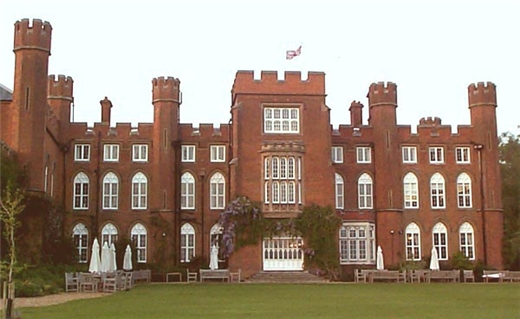
Further to my previous post, I had the great pleasure of attending a workshop on 'Bruno Latour and Environmental Governance' at the superbly plush Cumberland Lodge in Windsor this week.

We worked through a stellar line-up of papers, which were innovatively presented and intensively discussed:
Matthijs Kouw and Arthur Petersen, Learning to trust the IPCC again: A diplomatic approach

Mark Brown, Bruno Latour and the democratic representation of climate change

Maximilian Mayer and Michele Acuto, Large assemblages and ‘size’ in world politics: Questioning a forgotten variable to understand the topography of LTS

Philip Conway, The varieties of diplomatic experience (with special attention to the problem of territory)

Sandra Junier and Maurits Ersen, “An ant’s nest could bring down a hill”: The material in actor network theory

Arjen Zegwaard, Parliaments of mud

Werner Krauss, The political ecology of emerging climate landscapes

Tim Forsyth, Critically examining Science and Technology Studies within environment and development: Actor Network Theory and the stabilization of science in the Global Landscapes Approach

Stephen Flood and David Frame, The IPCC’s science–policy interface through a Latourian lens

Jasper Montana, ‘An IPCC for biodiversity’: On being, and becoming unlike, IPCC-­like

Ed Dammers, The Nature Outlook as an example of diplomacy between different modes of existence

Hanneke Muilwijk and Albert Faber, Beyond borders: How the Anthropocene re-­colours our world

Jasmine Livingston and Eva Lövbrand, Contested purification: The (un)making of integrated climate science in the IPCC’s Fifth Synthesis Report

Kari de Pryck, Developing a methodology for tracing issues and statements in the IPCC
(N.B. not all co-authors attended the workshop.)
My own paper on diplomacy and territory seemed to be well-received and I particularly benefited from the several co-workshoppers who have had first hand experience of participating in IPCC negotiations. I'm hoping to draw on those experiences as I redraft my paper.

Thanks particularly to the organisers Arthur Petersen, Theo Lorenc and Matthijs Kouw.

Thursday, 16 April 2015

"The varieties of diplomatic experience (with special attention to the problem of territory)"—for workshop on "Bruno Latour and Environmental Governance"

I'm very excited to be taking part in a workshop next month titled "Bruno Latour and Environmental Governance."
Since the 1980s Bruno Latour has attempted to supplant the prevailing image of science by proposing a pragmatic and anthropological perspective. [...] The two-day workshop takes as its starting point the idea the Latour's work can be used to explain and understand the workings of environmental governance, using the IPCC as a prime example.
It's being organised and funded by UCL Department of Science, Technology, Engineering and Public Policy and PBL Netherlands Environmental Assessment Agency and will be held at Cumberland Lodge, Windsor (just outside London)—an impressive venue!


My paper will be titled, wordily, "The varieties of diplomatic experience (with special attention to the problem of territory)." I hope to:

(a) Introduce the history of diplomacy as a word and practice, particularly drawing on the existing literature on the subject in the field of International Relations.
(b) Articulate diplomacy as a philosophical concept, particularly as it is developed in the work of Isabelle Stengers (see for example).
(c) Relate the preceding to the concept (and problem) of territory, particularly comparing its modern, state-centric iteration (as traced most notably by Stuart Elden) to the speculative, topological conception articulated by Bruno Latour in his most recent works (see here for an overview).

The crucial link between (b) and (c) is Gottfried Wilhelm Leibniz—he is the prized witness of Stengers' philosophical diplomacy and is credited by Elden as articulating the modern conception of territory for the first time. Understanding his creative conception of territory as a diplomatic act itself allows Latour's reconception to be framed as a diplomatic act also—and thus related to the geo-ontological upheavals that institutions like the IPCC are grappling with in their own ways.

My overall argument is that 'high-level' diplomacy, such as is practised at the IPCC, can only succeed if diplomacy is occurring at all levels and everywhere. Geogovernance (being the focus of the workshop) cannot be taken in abstraction from geopolitics (taking the latter term more or less as Latour articulates it).

I attended a really excellent conference session on anthropology and diplomacy in Exeter this week. Their focus was, as you might expect, 'everyday' diplomacy outside the corridors and constrictions of formalised, state diplomacy (although not ignoring the unavoidable connections and collisions between tentacular state institutions and mediative practices everywhere).

I want to bring these threads together—the historical, the philosophical, the anthropological—and to use this convergence to nudge the concept of geopolitics towards an integration of state and non-state apparatuses.

It's very much a work in progress, and will remain so for a while; however, it should be published, with a bit of luck, in a special issue of Science & Technology Studies next year.

Saturday, 21 February 2015

Hobbes on Warre

Further to my reflections on Leviathan and the concept of war in my previous post, perhaps the words of the man himself might be in order:
"There Is Alwayes Warre Of Every One Against Every One. Hereby it is manifest, that during the time men live without a common Power to keep them all in awe, they are in that condition which is called Warre; and such a warre, as is of every man, against every man. For WARRE, consisteth not in Battell onely, or the act of fighting; but in a tract of time, wherein the Will to contend by Battell is sufficiently known: and therefore the notion of Time, is to be considered in the nature of Warre; as it is in the nature of Weather. For as the nature of Foule weather, lyeth not in a showre or two of rain; but in an inclination thereto of many dayes together: So the nature of War, consisteth not in actuall fighting; but in the known disposition thereto, during all the time there is no assurance to the contrary. All other time is PEACE."
War is seemingly something approaching a default metaphysical state, or at least a given and established tendency in nature. War is to be assumed, peace is what is to be explained. Bellicosity comes first, co-operation second. Moreover, war per se is divorced from any specific actions or means and becomes like a climatic state.

Is Gaia a Leviathan? Without deference to such a terrestrial deity—"that Mortall God, to which we owe under the Immortal God, our peace, and defence"—are we in a state of war? I'd prefer to retain a sense of concrete practise to 'war'—i.e. to insist that the means matter. However, it is a more complex question than just this.

Gaia does not much resemble Hobbes' deity in the details (or the illustrations) but certainly the concept of sovereignty needs to be re-evaluated at its roots and that must surely mean a meeting of these figures.

Wednesday, 18 February 2015

“We scientists are on a warpath” – Gaia: Global Circus

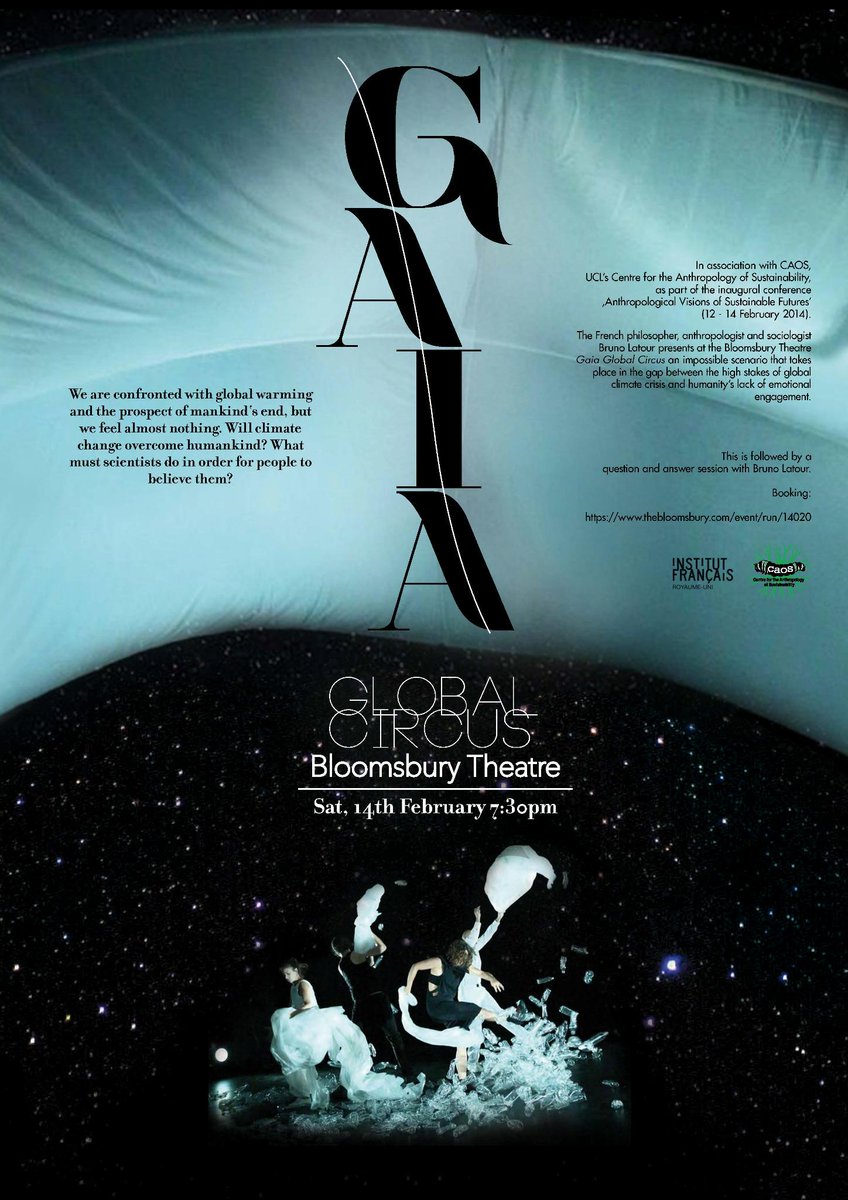
Last Saturday evening, I had the great pleasure of attending the first UK performance (and, indeed, the first in English) of a play written by Pierre Daubigny and organised by Bruno Latour – ‘Gaia: Global Circus.’


It should be noted immediately that I am a total and complete plebeian when it comes to the theatre. Nevertheless, some thoughts:

What is Gaia? I am tempted to quote Hobbes and say a ‘mortal god.’ However, if we think of the famous frontispiece to Hobbes’ book, we find a problem with this allusion.


Hobbes' Leviathan, at least as it is visualised here, suggests something organ-ised in the most profound sense. Gaia, on the contrary, does not have – does not have yet – any sort of apparatus or dispositif (political, legal, religious, scientific) that could broadcast her 'eviction notices,' as I have called them, with anything approaching a singular, booming 'old Testament' kind of a voice. The phenomenology is more that of earth-shaking claps of thunder and blinding bolts of lightning that we are all stumbling around, bumping into each other trying to understand.

Galileo's 'and yet it moves' (apocryphal or not) is a crucial phrase. Oh, he had no idea! Certainly, Gaia has the authority to decide to 'move' as she pleases 'whether we like it or not' – so much more so than Galileo could even have imagined; however, one scientist's self-righteous mutterings does nothing for the problems we face.

It is this not-yet-assembledness that, I think, 'Gaia: Global Circus' explored. I will not attempt to summarise it in detail. It was too inventive and multi-layered to be précised in any useful way. From the very first scene, events constantly folded back on themselves, going one way and then stopping, resetting and approaching their topic from another angle, with an ever shifting array of personae.

The star of the show was perhaps the canvas, the canopia or the ‘sheet with balloons attached to it,’ as one audience member commented, that dominated the stage. It could be manipulated in such a way that it was facing the audience and acting as a projection screen; at other times, it was pulled and tussled so as to convulse and summon up a storm; it lurked above the stage for a time before being pulled down so as to conceal and partition the space; finally, and by way of finale, it floated out over the audience, encapsulating them. This was an impressive technical achievement (although one of the actors did remark at the end on the difficulties they would be in if a balloon burst!), however it was also a poetic one as the device never seemed extraneous to the performance – on the contrary, it was integral.

A few words must be added for the four actors whose performances were remarkable, particularly considering that portions of the play relied heavily on improvisation and that they were doing this outside their first language. Being that funny and that engaging under those conditions deserves applause in itself.

And on that point, humour! A play on something as serious as climate change and environmental destruction could easily lapse into a kind of dour, pious sagacity. This was averted by simply being consistently very funny (as one might well expect from a Bruno Latour production).

The most important point is that the play attempted to enact the stuttering, uncertain beginnings of the representative invocation of a sovereign. We are not yet ready to carve Gaia’s image in brass, all her features clear and distinct. In terms of Gaia’s fictive representation, we remain at a much more impressionistic stage, for political, religious, artistic and scientific reasons. A stage well suited to... the stage!

On this point, a tangent beckons me... It'd also be interesting to investigate, in the style of von Uexküll, how Gaia perceives us. What are we to her? We are not ambulating beings, wandering around, faces wobbling, eyes blinking – we are chemicals and heat; we are a chemical burn, an itch. Perhaps that should be factored into our representations. Gaia is 'ticklish' but only in response to very specific stimuli. Our pleas will not be heard! She should not be imagined as having eyes, ears. Perhaps she should have a nose, a giant and over-sensitive nose. She will be monstrous, in any case. Maybe less a task for a fine artist than a cartoonist. Something out of H.P. Lovecraft.

Gaia can call on no Leviathan; by this I mean that there is no assembly so coherently assembled as to legitimately declare itself the medium of her 'Word' and, therefore, the task of translating her coded, gaseous missives into affective and cognisable messages falls on Earthbound scientists, politicians, religionists, etc.

At perhaps the pivotal moment in the play, one character declares with defiant force: "we scientists are on a warpath!" I’ve been critical of Latour’s use of ‘war’ as a concept previously. As I mentioned in the conclusion to my recent article, there are problems of translation when adapting these ideas for political geography (which is my interest). The matters of concern that must be taken into account there involve ISIS in Iraq, Putin in Ukraine, Obama's drones in Pakistan, the walls and fences being built in Israel, Texas, India, Saudi Arabia's plan to build a fence around their entire territory (!), and so on. Consequently, one must be very careful when talking about 'war' and violence in this context.

And, in light of that, I think 'warpath' is good alternative to 'war.' It indicates an attitude – which is serious, passionate, angry, implacable, forceful, being prepared for violence – but doesn't conflate what we are doing with what we are trying to prevent ('all out' or 'total' war). In Lippmann's Phantom Public he remarks that a war could perhaps be fought for democracy but it couldn't be fought democratically. We are most definitely on the path to war. Those fences on the borders of the EU, those migrants drowning in the Mediterranean, those drones in the sky – these are geogovernance and geostrategy at work (and the Pentagon is not where you'll find the climate deniers...).

However, if we accept that 'politics is war by other means' then we should conclude not that politics and war are one and the same but that politics is not war because it is by other means. In other words, the means matter. To somewhat egocentrically quote myself:
A climate scientist arguing fiercely with a denialist at a public meeting may lack a ‘sovereign’ to whom he can appeal to settle the dispute; however, no matter how much they bellow – no matter even if they brawl – they are not ‘at war’ in a sense that should be so easily literalised. [...] We would do well to remember the difference between heated arguments and charred flesh, even if we are staring at a future that is going up in flames.
So, the sense of 'being on a warpath' modifies this vocabulary notably. It becomes possible to state that we are engaged in a secret war with Gaia but, for the most part, a nervous peace amongst ourselves. There are relations of domination, violence and injustice, of course, but 'total war' is, for now, absent. Those 'on a warpath' must insist that, if we are not very careful, we are headed for worse. Those walls, fences and other fortifications are there for a reason and Gaia will not differentiate between polluters and non-polluters. Nothing proves that the crimes of the last century are unrepeatable.

More could be said, much more (particularly by someone who knew what they were talking about). Nevertheless, the play has achieved what it set out to do, from my perspective at least: to provoke thought.

Sunday, 8 February 2015

Clive Hamilton and Jacques Grinevald: 'Was the Anthropocene anticipated?'—Explorations of historical geo-ontology

In what is, in my humble opinion, one of the most important contributions on the subject yet, Clive Hamilton and Jacques Grinevald ask: 'Was the Anthropocene anticipated?' [paywalled; if anyone wants a copy and doesn't have access, drop me an email]. That is, does the notion that human beings can and have had transformative, geology-scale effects on the Earth itself have precedents within the history of thought?

Various commentators have recently drawn links between thinkers as diverse in time and predilection as Pierre Teilhard de Chardin, Vladimir Vernadsky, George Perkins Marsh, and the Comte de Buffon (to name but a few), suggesting that these figures articulated arguments regarding the effects of human action on the Earth that are directly comparable to present concepts.

Hamilton and Grinevald argue in no uncertain terms that to equate any of these authors with the Anthropocene is deeply anachronistic. None of these authors had anything approaching the same conception of what the Earth is as we do today. They were operating, in other words, with completely different geo-ontologies. Their statements should, therefore, be read in their historical contexts.
"[S]ince the last decades of the 19th century natural science’s understanding of the global environment has undergone a profound transformation, a scientific revolution not yet fully recognized. Although human impact on Earth was a well-known theme within naturalistic and geological thinking from the time of the Western industrial revolution, there was no foreshadowing of the Anthropocene in its contemporary sense. Stoppani’s ‘anthropozoic era’ and a number of variations – Renevier’s ‘Période Anthropique’ (1873), Joseph LeConte’s (1877) and Charles Schuchert’s (1918) ‘psychozoic era’, James Dwight Dana’s ‘Era of Mind – Age of Man’, Teilhard’s noösphere – described the impact of human action on ‘the face of the Earth’ rather than on the planet Earth as an evolving complex system. The concept of the Earth system – including the anthropogenic alteration of the great biospheric or biogeochemical cycles – was another century in the making." (p.6)
For Hamilton and Grinevald, we must recognise the deep novelty of the Anthropocene and refuse any undue backdating of either its concept or its referent. The historiographical and geopolitical point of their argument is to unbendingly refute the 'early Anthropocene' thesis.

Alongside John Tresch's work, which I wrote about yesterday, this short but extremely informative essay has convinced me that the project of reconceiving geopolitics as a concept requires a far more historically informed and anachronism-sensitive approach than has prevailed so far. This kind of historical geo-ontology is something that I'm hoping to develop in the near future. 

'Gaia: Global Circus,' London, 14th February

Next weekend at UCL's Bloomsbury Theatre, 'Gaia: Global Circus,' a play by Pierre Daubigny and organised by Bruno Latour, will have its first UK performance. There are still a few tickets left. It should be an interesting experience!


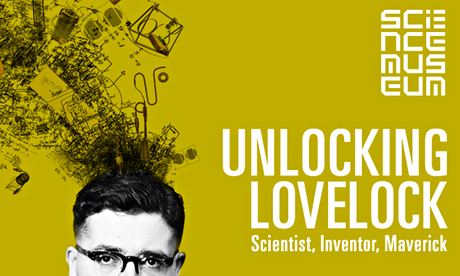
It'll also give me a chance to go and see the exhibition on James Lovelock at the Science Museum, which is on until April.


That particular feature brought to you in association with Shell, Siemens, Bank of America and other presumably generous benefactors.

Tuesday, 3 February 2015

Hot off the press: 'Back Down to Earth: Reassembling Latour's Anthropocenic Geopolitics'

After much preamble on this blog over the past few years, my first journal article has just been published online (it will appear in print at a later date as part of a special issue).

Abstract:
The principal intuition of this article is that Bruno Latour’s explicitly or implicitly ‘geopolitical’ works – strewn as they are across many years and innumerable texts – have not yet been coherently assembled in such a way that their critical interrogation relative to contemporary debates in political geography can gainfully proceed. Such a reassembly must consider ‘earlier,’ ‘later’ and whatever other Latours. Although ‘politics’ per se has, in his more recent works, become just one ‘mode of existence’ among others, every aspect of Latour’s thought has political ramifications. Consequently, his works must be read ‘anthropologically’ – that is to say, in cognisance of the interimplicatedness of every typological strand of ‘the social’ taken altogether. In short, this article attempts not only to read Latour’s works more interconnectedly than have other readers, but, furthermore, to read Latour’s ‘geopolitical’ writings in a more joined-up fashion than he has himself written them. To this end, it (1) introduces the major elements of Latour’s political philosophy, highlighting the importance of geopolitical issues and concepts from his early works onwards; (2) précises his 15 ‘modes of existence,’ laying out the philosophical resources that will be subsequently rewoven; (3) examines six key allies with whom he rearticulates first geo (James Lovelock, Peter Sloterdijk) and politics (Walter Lippmann, John Dewey) separately and then geopolitics (Michel Serres, Carl Schmitt) itself; and, finally, (4) details his Anthropocenic geopolitics conceptually by speculatively intertwining the above with his recent Gifford Lectures. The reassembly attempted – or, rather, initiated – herein is, therefore, neither disinterested nor definitive. It is a working through of the possibilities internal to a specific, albeit sprawling, bundle of texts. It presents a reading both constructive and ‘charitable’ – not in order to obviate critical interrogations but in the hope of provoking a more incisive debate concerning Latour’s works in relation to political geography.
If anyone without institutional access wants a copy, this link allows 50 downloads free of charge. (If those with institutional access could download from the normal page, that would be appreciated.) If and when that route is exhausted, just drop me an email (see top right between 'Subscribe' and 'Archive') and I'd be happy to oblige.

Saturday, 22 November 2014

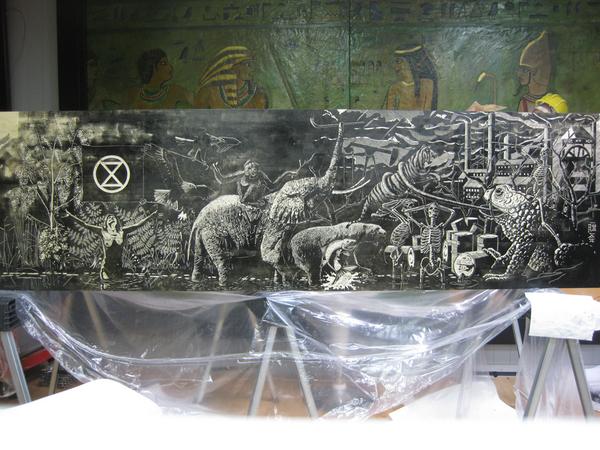
Gaia in woodcut—the artwork of Gordon Liddle

Some arresting images!

See more here. This is what the artist has to say about his work:
I have used Gaia as a metaphor for this print and a series of paintings (underway). She is shown in the print raising her arms below the symbol for the Sixth Extinction, borne by the two eagles. The Sixth Extinction (Holocene Extinction) is being triggered by humans by our treatment of the environment, recently accelerated to about 140,000 species per year. Huge population growth, resource depletion, deforestation, ocean trawling, dumping and industrialisation leading to climate change have exacerbated this event. Gaia stands within a paradise, mother nature, the earth in all its splendour, whilst on the other side are the humans with their processes of destruction: too many to place in a single woodcut, hence the series. The creatures (I’ve shown a few) are leaving Gaia and bound to extinction, ensnared by pollution and destruction. The remnants of humanity wail in despair at the spectacle, unable to stop their own demise. The science is overwhelming now, either we act or we perish. There is no planet B to escape if we destroy life here. My picture is a warning, a lament, my contribution to the debate on the future of humanity and our relationship with Gaia.
I would quibble the mother nature bit—indeed, the personification of Nature as Woman.

Tuesday, 23 September 2014

Latour on Tyrell and Gaia

I previously wrote about Toby Tyrell's book On Gaia and Clive Hamilton's references to it at the AIME colloquium. Bruno Latour himself has recently written/spoken about this book at an event in Rio. Suffice to say, his reading of Tyrell's book is scathing. However, there is far more to the text than just the critique. He fleshes out his post-Darwinian reading of Lovelock's work quite a bit and makes very clear the fundamental inscrutability and plurality of Gaia as he understands the concept.
Lovelock describes a planet that is alive because his prose is alive, meaning that any time you add an entity, even if it's a gas, a rock, a worm or a mat of micro-organisms, it vibrates with all the historical specificity of the other agencies intertwined in it. (18)

Tuesday, 26 August 2014

More on Lovelock, technical evolution and the climate apocalypse

I've just re-read through James Lovelock's A Rough Ride to the Future (2014) for a paper I'm presenting this week. In a previous post I mentioned how he had reversed some of his earlier apocalypticism with regard to Gaia and global warming. While it's true that he's now presenting himself as an 'optimist' (169) and damping down the apocalyptic predictions of a human population curtailed to a few hundred million, there are some extremely troubling undertones that remain amidst the hyper-futurist techno-babble.
We have to ask ourselves the painful question: are we seeking the survival of the largest number of humans, regardless of their condition, or seeking the survival of as many as we can keep in an acceptable condition? (110) 
[…] in reality we are not thinking of saving Gaia, we are thinking of saving the Earth for us, or for our nation. […] If I am right to think that our species is evolving maybe to become part of a planetary intelligence, then our most important task for Gaia, as well as for ourselves, is to ensure that enough of is survive to sustain our role as the first species to sense, think about and act to oppose adverse environmental change. […] We are not yet clever nor determined enough to serve in this way, but we could still be the progenitors of those that can. (111)

Perhaps a similar suspension of democracy [as in WWII] will be needed when climate and other changes become as serious and as deadly as a major war. (120)

[Urbanisation might be] a powerful, benign force leading us to a future existence in city super-organisms. (123) 
My hope is that we survive and evolve further to the point where we are as much a part of our living planet as our brains are of us. (131)

[We have] to trust in Gaia to regulate the Earth as she has done since life began, and retreat to the best cities that we can design and build with the objective of saving as many of us as we can […]. (156)

The system cannot sustain the present level of human population for very much longer. (169)
It's clear that, whatever he claims, Lovelock remains a population pessimist. It's also clear that when he asks, rhetorically, 'are we seeking the survival of the largest number of humans, regardless of their condition, or seeking the survival of as many as we can keep in an acceptable condition?' he is erring on the side of urban air-con for the few rather than subsistence for the many.

His 'optimism' is of the techno-utopian variety. The wretched of the Earth remain wretched and voiceless, albeit perhaps with a little more hope for the future thanks to the evolution-accelerating brilliance of inventors (such as James Lovelock).

His pessimistic predictions are never issued with anything like a sense of endorsement or approval; it would be utterly unfair to suggest that. However, he makes them with such an air of blithe disinterest and detachment that he is basically acquiescent to this future. Add to this the extreme superorganic naturalism that he forces upon human political organisation and he is only ever a stone's throw from endorsing the future he foretells. He endorses it teleologically if not morally.

'Resistance is futile in the face of Gaia's evolution'—that is the persisting subtext.

Friday, 8 August 2014

Clive Hamilton and Toby Tyrell on Gaia

Clive Hamilton made two wonderful contributions to the final AIME colloquia/diplomatic summits held the week before last. Both have now been published on his website. First, Gaia Does Not Negotiate; second, When Earth Juts Through.

The latter begins:
With the arrival of the Anthropocene we must now be suspicious of all ideas developed in the last 10,000 years. That includes James Lovelock’s notion of Gaia which, it turns out, is a child of the Holocene. In his recent book, On Gaia, Toby Tyrell shows that since Lovelock put his idea into the world some 30 years ago our understanding of the Earth system has changed dramatically. 
As Earth scientists have found means of taking a more fine-grained view of Earth history, especially through the analysis of ice-cores, the trajectory of Earth appears much more wild and unpredictable. There is no built-in stabiliser; life does not bring the planet back into equilibrium. Gaia is based on old science.
(I love that first line!) Now, I haven't read Tyrell's book but I think one point needs to be made: while Earth system science has moved on in the past thirty years so has Lovelock's take on Gaia. It is true that the original hypothesis posited the Earth as a homeostatic system but that notion of homeostasis has long since been abandoned. 'Gaia' has evolved. Lovelock now well understands that there is no equilibrium as such, only an indefinitely large range of quasi-stable states within a complex system; strange attractors and so on. This is not the same thing as 'homeostasis.' The possibility of a sudden and massive system state shift in response to a relatively minor degree of perturbation is precisely the point of his more recent works. That is why Gaia is 'vengeful.'

Here is how Lovelock differentiates the hypothesis and the theory in the glossary to Revenge of Gaia (p.208):
Gaia Hypothesis
James Lovelock and Lynn Margulis postulated in the early 1970s that life on Earth actively keeps the surface conditions always favourable for whatever is the contemporary ensemble of organisms. When introduced it was contrary to the conventional wisdom that life adapted to planetary conditions as it and they evolved in their separate ways. We now know that both the hypothesis as originally stated and the conventional wisdom were wrong. The hypothesis evolved into what is now Gaia Theory and the conventional wisdom into Earth System Science.
Gaia Theory
A view of the Earth that sees it as a self-regulating system made up from the totality of organisms, the surface rocks, the ocean and the atmosphere tightly coupled as an evolving system. The theory sees this system as having a goal—the regulation of surface conditions so as always to be as favourable as possible for contemporary life. It is based on observations and theoretical models; it is fruitful and has made ten successful predictions.
The hypothesis is not the theory and while I am in no position to scientifically defend either this is worth noting.

While, as I say, I've not read Tyrell's book, this interview on his publisher's website makes for interesting reading. Tyrell makes the case, albeit briefly, that Gaia is simply anthropocentric wishful thinking and should be rejected as a scientific idea:
Q: If the Gaia hypothesis is not the reason, then why did the Earth remain habitable for such an enormously long interval of time? 
A: This may relate partly to the weak Anthropic Principle, whereby we logically cannot observe any facts that preclude our own existence. So however infrequent it may be in the universe for a planet to remain continuously habitable over billions of years, we happen to be on just such a planet. According to this way of thinking, Earth may just have been lucky, with no sentient observers having evolved on other planets which were not so lucky, i.e. where conditions became sterile at some point. Another possible explanation for extended habitability in the absence of Gaia is a predominantly inorganic thermostat, such as has been suggested for silicate weathering.
This is a provocative and contestable claim. However, his concluding remarks are if anything more revealing than his central thesis:
Q: Are there any implications for the current era of global change? 
A: Yes, it is suggested that belief in the Gaia hypothesis can lead to excessive complacency about the robustness and resilience of the natural system. Gaia emphasizes stabilising feedbacks and protective mechanisms that keep the environment in check. If Gaia is rejected, however, we are left with a less comforting view of the natural system. Without Gaia it is easier to appreciate that the natural system contains lines of weakness and other susceptibilities. One such line of weakness that has already been demonstrated is the ozone layer depletion by CFC’s. I have argued in the book that there is no over-riding Gaia to protect our planet’s life support system. Maintaining the Earth’s environment is up to us [emphasis added].
Who is the Modern here? I don't think that it's Lovelock... To suggest that Gaia is a 'comforting' theory is to be a few decades out of date. Yes, the original might have encouraged worshipful idleness and Nature-absorbed complacency but that is not at all the image of Gaia that is now presented to us. In Gaia Does Not Negotiate Hamilton quotes Latour who is in turn ventriloquising Gaia:
I am not your Mother, nor your protector. … So figure out the enigma of my presence.
The motherly vision of Gaia as homeostatic über-regulator is surely a holocenic fable that has long passed its sell-by-date. However, while, as I've mentioned recently, Lovelock is a tricky ally to enrol I'm not sure that Tyrell is a better option.

Without Gaia what planetary imagery are we left with? 'Spaceship Earth'? Again?...

Friday, 1 August 2014

"We used to look up at the sky and wonder at our place in the stars, now we just look down and worry about our place in the dirt"

The hype around Christopher Nolan's Interstellar is rather excessive for a film that isn't due out for several months. However, it's has all the makings of an interesting one. The plot is simple enough: astronauts travel through a wormhole into deep space in order to search for habitable planets. So far so sci-fi; however, there's a hint of desperation to the endeavour that very much speaks to our anthropocenic moment.

As the protagonist, played by Matthew McConaughey, put it:
We used to look up at the sky and wonder at our place in the stars, now we just look down and worry about our place in the dirt.
This is, of course, following on precisely from the sentiment of Gravity, where Sandra Bullock's protagonist fights tooth and nail to return to the life-giving dirt of planet Earth. There can be no more geocentric film than Gravity and Interstellar in its very title revives the imagined possibility of human expansion into 'the final frontier.' However, the ontological shift that these films both presuppose is obvious. Final frontierism is no longer the obvious logical consequence of a rational civilisation benignly rolling out into the endlessly fertile emptiness of existence; it is the final act of the desperate and depraved, a last frantic lunge into the improbable.

Of course, it's unlikely that we will be denied a happy, life-affirming ending. This is a Hollywood blockbuster, after all:
At Comic Con in San Diego last week, Nolan told the audience Interstellar was "about what it is to be human, and what our place is in the universe," adding: "The further that you travel out into the universe, the more you realise it's in [your heart]." Hathaway's astronaut seems to be saying something similar in the trailer: "Maybe we've spent too long trying to figure all this out with theory. Love is the one thing that transcends time and space."
Nothing with that much schmaltz is going to be especially austere with its ultimate estimation of 'the human spirit,' etc. etc. Interestingly, the romantic kitsch is contrasted to the 'hard science' -- yes, there's something for all the family:
If that all sounds a bit gooey, there are hard science facts (or at least theories) at the centre of the movie, which is based on ideas about wormholes posited by the American theoretical physicist Kip Thorne. Nolan told Comic Con the conversations between film-maker and scientist were "intense" and even admitted: "It actually made my head hurt a bit. I actually said to Kip, 'Well, I don't want to understand this stuff too much because I have to be able to explain it to the audience.'"
Sit back and prepare to be explained to, kids (but don't worry, mum, there'll be a mushy love story too). And I imagine that at some point something will probably go !!BANG!!, in order to keep dad awake.

Regardless, the trend towards quasi-middle-brow, more-or-less geocentric sci-fi blockbusters is an interesting cultural development. In the past ecological issues cropped up in science fiction as a romantic or aesthetic tragedy -- 'alas, look what we evil all-too-humans have done.' Now we are beginning to see that it is a tragedy that is considerably more existential, mortal -- a tragedy that threatens not the pastoral beauty of a world that is meekly prostrate before our mastery but a thoroughly active and reactive world that may very well be preparing to extinguish us like the pests that we have become.

That is something rather different. To realise that the Earth will never be mastered and that we are simply earthbound organisms with overly high estimations of ourselves -- that is galaxies away from science fiction's past imagined futures.

To what extent Interstellar will follow that ontological detour of course remains to be seen. It seems likely that the power of love will overcome all and we'll all go home either enraptured or nauseated. (Still thinking in terms of AIME, this would be an interesting category mistake: it is as if [rel] could keep us breathing [rep]!)