Showing posts with label sci-fi. Show all posts

Monday, 2 April 2018

Tarde’s 'Fragment d’histoire future' and the modal coordination of history and fiction – Reflections on 'Imagining the History of the Future'

Last week, I had the great fortune of attending the Imagining the History of the Future conference, part of the Unsettling Scientific Stories project (based at the universities of York, Newcastle and Aberystwyth). It was a really fantastic three days that introduced me to some fascinating people and has left me with a lot to think about.

For my part, I presented a paper – an exerpt from my thesis – on 'Gabriel Tarde’s Fragment d’histoire future and the milieu-fantôme.' This title is slightly modified from what I originally proposed (and from what appears in the programme). However, the original abstract still gets the gist of it:
Gabriel Tarde (1843-1904) was a magistrate, criminologist, sociologist and philosopher. Around the turn of the century, he engaged in a series of polemical exchanges with Émile Durkheim (1858-1917) concerning the remit and purpose of sociology. He also wrote a science fiction novel: Fragment d’histoire future (1896), published in English as Underground Man (1905) with a preface by H.G. Wells. The setting is apocalyptic: The sun has gone out and humanity – or rather a lone inventive pocket of it – has burrowed into the earth’s crust, chasing its enduring inner heat. All other life is extinguished. Written from the perspective of a future historian, Tarde uses this subterranean scenario to conduct a thought experiment that tests out his sociological theories concerning imitation, creativity and 'great men.' Although war and strife are suffered early on, this new civilisation comes to enjoy a golden age, free from the hardships of its surface-dwelling ancestors. Diseases are few; air is “the purest that man has ever breathed”; food is plentifully acquired from the frozen oceans above; the new troglodytes wear “coats of asbestos spangled with mica.” The Malthusian tendencies of population are the only serious problem, held in check by strict controls on marriage. Read in relation to Tarde’s other works, particularly Monadologie et sociologie (1893), Fragment d’histoire future provides an alternative means of approaching the development of the social sciences, their relation to race, class and gender, as well as the not so much ecological as sociological futurology of an eccentric but important fin de siècle thinker.
More precisely, I am interested this book for several reasons: First, in explaining the premises of the story, the narrator describes a "social milieu" entirely separated from the "natural milieu" that was destroyed with the cataclysm. It is this "purification," as he calls it, that constitutes Tarde's thought experiment; that is, he asks what would happen to social relations when all other conditions of life are removed.

Second, this sociological system – or, rather, ontology – involved an open criticism of Durkheim's rather more superorganismic conception. Whereas Tarde understood sociology along the lines of networks of creative imitations, Durkheim thought of society as a totality of collective representations impinging upon and transcending individual agents. Third, just two years later, this led Tarde to ridicule Durkheim et al.'s use of the concept of "milieu" as a kind of explanatory panacea for all phenomena. Durkheim's "milieu-fantôme," as Tarde called it, was therefore to be repudiated, although Tarde continued to use a somewhat different conception of milieu. 

Fourth, Tarde's book can be taken as a kind of witness to its situation – that is, to the time and place to which it accommodated itself. As well as the apocalyptic science-fiction premise, Tarde's technological anticipations give us a strong sense of the common sense of his time, as does his apparent endorsement (however eccentric) of a kind of artistic eugenics (where only the most creative are permitted to reproduce). Moreover, Tarde's development of a social ontology based on ideas of epidemic contagion (he was by no means the only to propound such an ontology but was unusual as regards the extent of his defence of it) creates interesting parallels not only with other sociologists and criminologists but also with post-Pasteurian transformations in bacteriology.

Tarde, then, links together a great many things. Indeed, a rather wide-ranging world can be reconstructed in terms of the networks and milieus that relate to his choices and dispositions – an elite, metropolitan world but nevertheless a significant one for my purposes.

The presentation was, I think, well-received and there were a number of great questions that tested my thinking and gave me ideas as to how to take this further. However, one question in particular, from Hanna-Riikka Roine, has stayed with me (I paraphrase): What was Tarde trying to do with this shift from legal and academic to fictional-speculative writing? What was the purpose or motivation of this segue of genres?

This is not something that I've looked into in detail yet; however, my immediate response was that Tarde was, at this time, involved in a polemical relationship with his intellectual competitors and wished to propagate his ideas to a wider audience. I am quite sure that this is the case; however, it is also a rather unsatisfactory answer and I hope to develop a better one.

The conference closed with a roundtable where participants were invited to submit questions ahead of time. I asked:

In the discussion itself, in response to a comment by Sarah Dillon on the subject of evidence in relation to historiography, I expanded on these questions a little. In my thesis work I've found a comment from Michael Oakeshott's 1933 book Experience and its Modes to be particularly useful – specifically, that a historian is someone who is obliged to interpret the past in terms of the evidence of that past. In other words, an historian qua historian bears an obligation to evidence.

This leads to a criterion of distinction (or a differentia as Oakeshott calls it in more formal philosophical terms) that differentiates historical from other modes of experience. A fictionist qua fictionist may or may not incorporate historical fact into her text; however, a fiction qua fiction cannot be faulted for its choices in this regard. Rather, the obligations incumbent upon a fiction are to the immersive or transformative effects it may have on its audience – a quite different condition of relevance.

(My thinking on this point is related to both Étienne Souriau and, more recently, Bruno Latour who have described fiction as a 'mode of existence,' as well as to Isabelle Stengers' philosophy of science; however, I will leave their particular propositions for another day.)

To cut a long histoire short, it is in relation to this distinction between history and fiction that my thinking as regards historiography (and, indeed, my practice thereof) is being developed. However, while history and fiction are therefore understood as fundamentally distinct in modal or categorical terms, they are also practically and technically highly interrelated. In the abstract, they share a great many textual and rhetorical techniques and, in the concrete, it may be difficult in certain liminal cases to tell them apart.

So, the basic point that I was (and am) trying to make is that historians, even if they do not write fiction, already venture onto at least some of the same terrain. Likewise, fictionists often have more interesting things to say about the writing of history (or just writing in general) than do professional historiographers (I think this is no coincidence). And so what is needed, I believe, is a more precise understanding of the modal differentiae that both distinguish these practices and, at the same time, allow them to be intellectually and, perhaps, politically coordinated.

I am making this argument here in perhaps more cohesive terms than I managed 'off the cuff.' Indeed, articulating these ideas was quite a challenge, given the diversity of the audience. During the three days, I talked to at least one non-academic sci-fi author, a curator, and academics from half a dozen recognised disciplines and many more subfields and disciplinary interstices.

In response to my mini-monologue, Maxine Gee (a screenwriter and PhD candidate at York) made the completely fair point that many academics are already authors of fiction (sci-fi and otherwise). Amanda Rees added that writing fiction is not at all easy. Mat Paskins commented that while the exploration of the intricate overlaps between history and fiction is all well and good, historians must recognise a fundamental moral obligation to relating the past as it happened, both for the sake of the victims of historical events (such as, to take only the most obvious and oft-cited example, victims of the Holocaust) and also for present-day survivors (such as those gay men for whom the very possibility of a collective future was, at the height of the AIDS epidemic, very much in doubt). Then, towards the end of the session, Kanta Dihal commented that there are many more voices producing (science-)fiction than are usually taken notice of in academic discourse – a lack of diversity being something for which this conference itself could, indeed, be faulted. And, so, rather than writing more fiction, perhaps academics should instead undertake to read more widely.

I would not substantively disagree with any of the above remarks (as I have remembered and reconstructed them). Indeed, they really expand on, in different ways, what I was trying to articulate.

However, I would just add that I think there remain unexplored possibilities at the modal and practical meeting point of fiction and history that I want to explore further. I do not mean to suggest that academics (as a homogenous group) can or should all start writing fiction. Some already do; many would not want to; most would not be much good at it. Nevertheless, I think it is notable that the likes of Tarde's Fragment can still, today, be understood as being a rather eccentric and exceptional expressive and discursive choice.

Writing fiction well is indeed a formidable task, as is any other kind of artistic creation. However, while counterfactuals are a common enough pedagogical (and, to a lesser extent, historiographical) tool, the active coordination of historical and fictional modes of experience (or of existence) remains at the margins. This is not, moreover, to deny the vibrancy of the margins; however, it is to call attention to what may be lost by accepting marginalisation as a given.

As to why the practices of historical and fictional writing are thus, for the most part, estranged, the reasons are fairly obvious: In more or less all of the social sciences (where I am located) and perhaps most of the humanities, scholarship is institutionally rewarded in a manner not only strictly demarcated from the artistic but is, to some extent, defined in opposition to it. This arrangement is tied to political expectations as to what constitutes useful knowledge and how funding regimes, accordingly, are to be distributed. For most academics, writing fiction could only be a pastime; it could not be a serious part of that for which they are employed.

None of this is either surprising or insightful but it remains, I think, relevant.

My thesis asks: What is the history of the concept of environment? I am interested in how this expression, along with its precursors such as milieu and climate, came to be a part of the everyday conceptual landscape. However, I am also interested in answering a second question: What does this history mean for the problems of the present?

Fictions, such as that of Tarde, are a crucial resource for reconstructing this history – that is, for answering the first question. However, could they not also be a starting point for approaching the second?

To be sure, I would not like to align myself with Tarde in any substantive sense. And yet at least some of his problems remain problems that concern us today. Thus, I take his work as presenting a problem of inheritance: What worlds will we make from the always conflicted and often deeply corrupted traces and evidences that we have, with great degrees of preservational prejudice, inherited?

My paper and this post only tease out the outer fringes of this question. However, this conference has given me many more routes to now explore.

Thursday, 25 September 2014

Silent Running at the Eden Project / Sci-fi in the Anthropocene

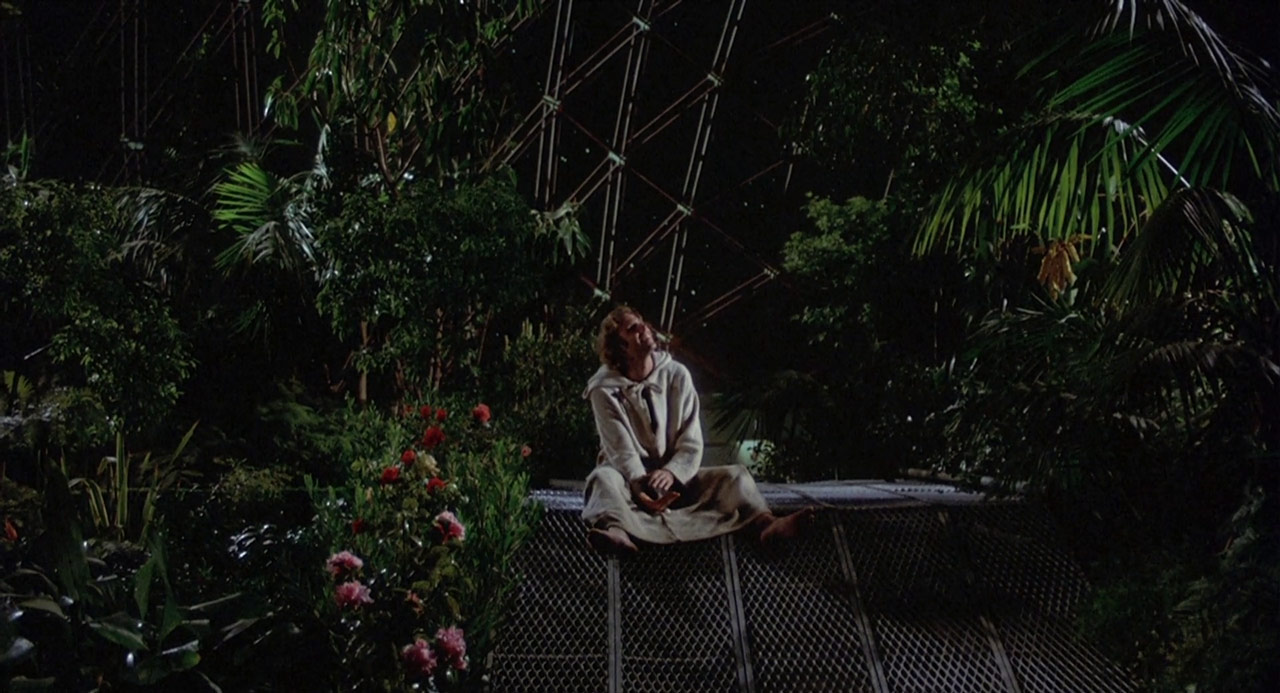
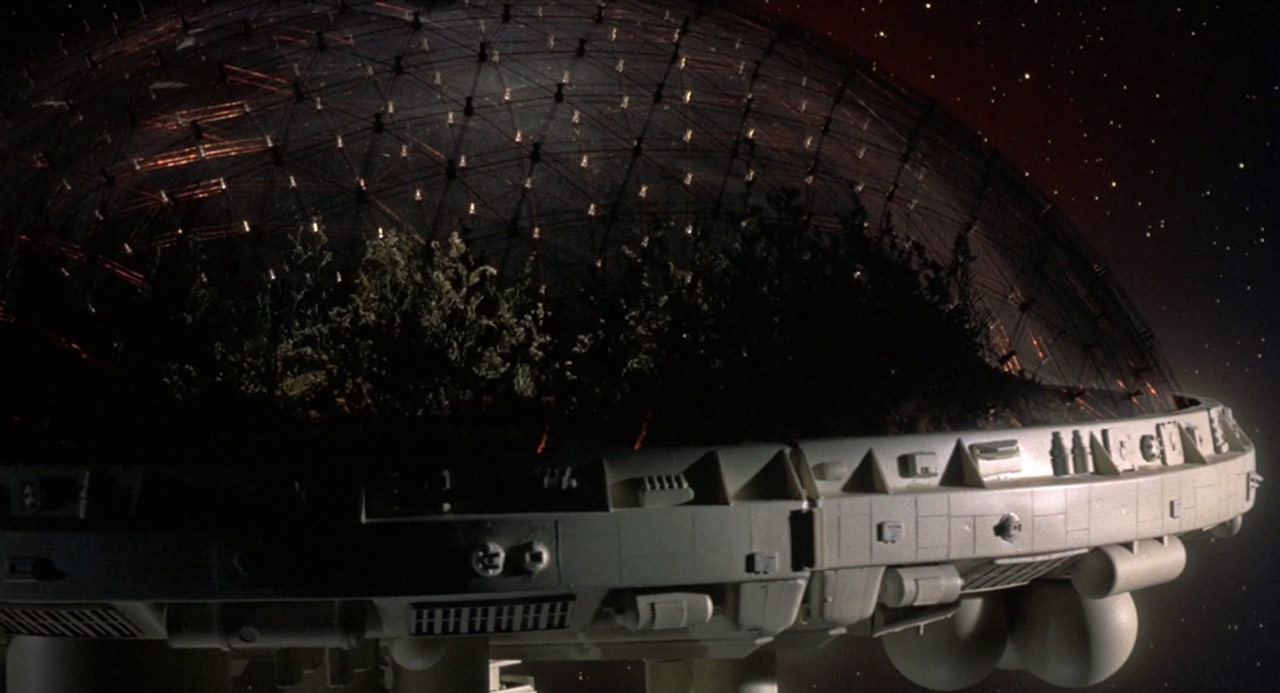
As one of several plates that I'm currently spinning, I'm writing (or, rather, at the moment planning) an article on the 1972 science-fiction film Silent Running.


In a nutshell, the article is about space in the Anthropocene, analysing this film in the context of sci-fi film more widely in order to understand how our collectively imagined attitudes to nature, ecology, space and outer-space have changed, are changing and need to change further.

Fortuitously, as part of its 'Days of Fear and Wonder' series, the BFI (British Film Institute) is putting the film on at the Eden Project in Cornwall – a tourist attraction I grew up just a few miles from.

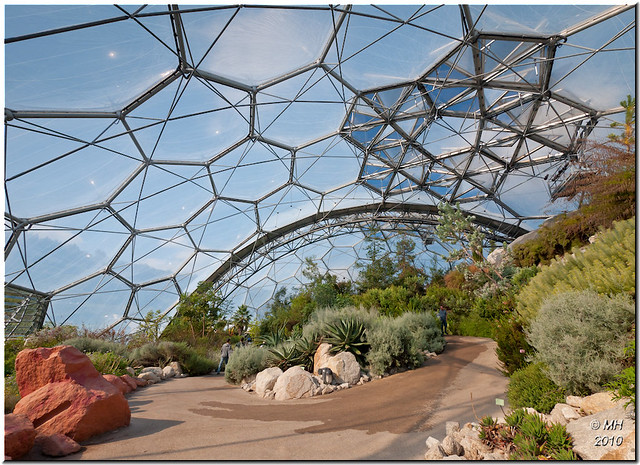
Silent Running's geodesic biodomes inspired the domes at Eden, as one can plainly see:


I am very much looking forward to it!

Incidentally, the last time I went to Eden was to see Sigur Rós perform there last year, which was an experience bordering on transcendent.


The most ethereal, other-worldly music in the most surreal, other-worldly setting. I've seen Sigur Rós perform nearly a dozen times and this was the most perfect mise-en-scène for them.

There's certainly something about these spaces that is musically inspiring. Adrian Utley of Portishead and Will Gregory of Goldfrapp have composed pieces to be played in the Mediterranean biome before the screening of the film.


(Sadly the film will not be shown in the biomes themselves but rather in the visitor centre that overlooks the site.)

Another slightly eccentric rock band, 65daysofstatic, re-scored Silent Running and have performed their version live a number of times (never gotten to see that though, unfortunately):


(By the by, if you've not seen the film before I'd recommend watching the original before the 65daysofstatic version, as brilliant as their score is.)

The film critic Mark Kermode, who has a BFI-curated book on Silent Running coming out soon, is also going to introduce the picture.

All in all, I'm pretty excited! It's provoking lots of thoughts for me with regard to my research. I've started reading semiotics for this project and it's very challenging to think about how I can conceptualise the 'intertext' of the film, so broad and 'beyond-textual' as it all is.

The film's director, Douglas Trumbull, rose to prominence for being one of the foremost special effects wizards on Kubrick's 2001: A Space Odyssey. Off the back of that success he was given $1m by Universal Studios, as a directorial debutant, to make whatever film he wanted. He describes Silent Running as the 'human' reaction to 2001 – it's a film all about emotion, relation and affect; where 2001 is cold and impersonal, Silent Running is warm and intensely personal.

It is often dismissed as an out-of-date, hippy-era melange of preachy nature-worship – and there is that element to it, for sure (see the painfully kitsch Joan Baez song 'Rejoice in the Sun' that was written for the soundtrack, for example); however, its beating heart is the incredible lead performance by Bruce Dern.

(Griemas & Fontanille's The Semiotics of Passion: From States of Affairs to States of Feelings is interesting in this regard, though I don't yet know enough semiotics to really understand it properly. It's an intimidatingly technical discipline.)

It's both the outdated ontology of nature implicit within the film's political aesthetics and the intense, emotional core of the story that I'm interested in. These things together are what make this such an interesting film.

Beyond the narrow 'intertext,' there's also the tourist-ecological relation in the fact that these domes, or derivatives of them, were materialised on a grand scale in an abandoned quarry in a sleepy, quiet and rather impoverished part of Cornwall. And, of course, these are not the only such domes in the world.

Then there's the author-biographical fact that I grew up close to where these domes are and know the area. This, I think, affects how I experience the space of the domes and, consequently, perhaps the film. It will be an interesting phenomenological experience.

There's also a 'making of' documentary that reveals much about how the film was produced and the motivations and mindsets of the performers. Crucial, I think, is that there are no women in this film whatsoever besides a little girl whose picture on the wall is gestured to rhetorically by the main character at one point (and at a pivotal moment in the film, I might add). In this documentary we see that, as one might expect of the time, women are pretty much nowhere to be seen on the production side of things. I find this interesting because of the lead character who blends a sometimes ferocious masculinity with a sensitivity that might have been quite strikingly effeminate in context. Dern recounts jogging around the naval base at which the filming was taking place and being left in no doubt that the world wasn't ready for a long-haired hippy running about the place. The only women in the 'making of' are seemingly either organisational or ornamental; in the film itself there's almost no trace of women-kind whatsoever. And yet the lead character is far from being a straightforward 'man's man,' although he is far from being 'unmanly.' Does he project a progressive masculinity or simply a man's idea of what progressive masculinity would look like? The latter, I think; however, it's interesting either way, especially given the ecological context of the film.


Finally, the spaceship on which the film is set is named the Valley Forge, after the aircraft carrier on which it was filmed, which in turn was named after an important site in the American Revolution:
Valley Forge in Pennsylvania was the site of the military camp of the American Continental Army over the winter of 1777–1778 during the American Revolutionary War. It is approximately 20 miles northwest of Philadelphia. Starvation, disease, and exposure killed nearly 2,500 American soldiers by the end of February 1778.
Ecology and terror are baked into the film's very pretext.

I think it'll be impossible to weave all these threads together into a neat and perfect plait. However, there's certainly plenty to be working with. Here's the abstract as it's been proposed:
This paper examines ontologies of nature and their cognate concepts of space as they are represented in popular culture, particularly in science fiction. It does this through a close, contextualised and intertextualised reading of Douglas Trumbull’s 1972 film Silent Running. It proceeds in two parts. First, the ontologies of space and nature that are implicit within SR’s ecological mise-en-scène are examined alongside Bruno Latour’s rendering of James Lovelock’s concept of Gaia. This is used to theorise the ‘counter-Copernican revolution’ whereby our futural spatial imaginaries are turned around and transformed – as the protagonist in Christopher Nolan’s Interstellar (2014) puts it: “We used to look up at the sky and wonder at our place in the stars, now we just look down and worry about our place in the dirt.” The second section detects deeper and more sophisticated space-creative processes in the manner by which SR’s protagonist, Freeman Lowell, fabricates a life for himself alone aboard the damaged, drifting, dome-clad spaceship in which he is ensconced. This inner-space construction is analysed in terms of Peter Sloterdijk’s ‘microspherology.’ This paper therefore relates to a number of issues in contemporary spatial and cultural theory: the effect of the Anthropocene and the ‘irruption of Gaia’ upon our cosmic spatial imaginaries; affective, postphenomenological theories of the construction of space and their ecological politics; and, finally, the relationship between Latour and Sloterdijk, two major theorists of space whose work has not yet been compared in adequate detail. In short, this paper examines what happens to spatial, terrestrial, imaginative, immunological existence when it is realised that, as Latour (2013) puts it, “we are imprisoned in [the Earth’s] tiny local atmosphere” – when space ceases to be ‘the final frontier.’ 

Friday, 1 August 2014

"We used to look up at the sky and wonder at our place in the stars, now we just look down and worry about our place in the dirt"

The hype around Christopher Nolan's Interstellar is rather excessive for a film that isn't due out for several months. However, it's has all the makings of an interesting one. The plot is simple enough: astronauts travel through a wormhole into deep space in order to search for habitable planets. So far so sci-fi; however, there's a hint of desperation to the endeavour that very much speaks to our anthropocenic moment.

As the protagonist, played by Matthew McConaughey, put it:
We used to look up at the sky and wonder at our place in the stars, now we just look down and worry about our place in the dirt.
This is, of course, following on precisely from the sentiment of Gravity, where Sandra Bullock's protagonist fights tooth and nail to return to the life-giving dirt of planet Earth. There can be no more geocentric film than Gravity and Interstellar in its very title revives the imagined possibility of human expansion into 'the final frontier.' However, the ontological shift that these films both presuppose is obvious. Final frontierism is no longer the obvious logical consequence of a rational civilisation benignly rolling out into the endlessly fertile emptiness of existence; it is the final act of the desperate and depraved, a last frantic lunge into the improbable.

Of course, it's unlikely that we will be denied a happy, life-affirming ending. This is a Hollywood blockbuster, after all:
At Comic Con in San Diego last week, Nolan told the audience Interstellar was "about what it is to be human, and what our place is in the universe," adding: "The further that you travel out into the universe, the more you realise it's in [your heart]." Hathaway's astronaut seems to be saying something similar in the trailer: "Maybe we've spent too long trying to figure all this out with theory. Love is the one thing that transcends time and space."
Nothing with that much schmaltz is going to be especially austere with its ultimate estimation of 'the human spirit,' etc. etc. Interestingly, the romantic kitsch is contrasted to the 'hard science' -- yes, there's something for all the family:
If that all sounds a bit gooey, there are hard science facts (or at least theories) at the centre of the movie, which is based on ideas about wormholes posited by the American theoretical physicist Kip Thorne. Nolan told Comic Con the conversations between film-maker and scientist were "intense" and even admitted: "It actually made my head hurt a bit. I actually said to Kip, 'Well, I don't want to understand this stuff too much because I have to be able to explain it to the audience.'"
Sit back and prepare to be explained to, kids (but don't worry, mum, there'll be a mushy love story too). And I imagine that at some point something will probably go !!BANG!!, in order to keep dad awake.

Regardless, the trend towards quasi-middle-brow, more-or-less geocentric sci-fi blockbusters is an interesting cultural development. In the past ecological issues cropped up in science fiction as a romantic or aesthetic tragedy -- 'alas, look what we evil all-too-humans have done.' Now we are beginning to see that it is a tragedy that is considerably more existential, mortal -- a tragedy that threatens not the pastoral beauty of a world that is meekly prostrate before our mastery but a thoroughly active and reactive world that may very well be preparing to extinguish us like the pests that we have become.

That is something rather different. To realise that the Earth will never be mastered and that we are simply earthbound organisms with overly high estimations of ourselves -- that is galaxies away from science fiction's past imagined futures.

To what extent Interstellar will follow that ontological detour of course remains to be seen. It seems likely that the power of love will overcome all and we'll all go home either enraptured or nauseated. (Still thinking in terms of AIME, this would be an interesting category mistake: it is as if [rel] could keep us breathing [rep]!)