Showing posts with label peter sloterdijk. Show all posts

Sunday, 20 March 2016

Not just another Anthropocene book: "The Shock of the Anthropocene" by Christophe Bonneuil and Jean-Baptiste Fressoz

I must admit that I feared the worst. For a while now, perhaps since the RGS-IBG conference last September, I have been experiencing something like Anthropocene overload. So many opportunistic declarations of it being the new, big, scary/wonderful thing; so many furious denunciations of the very idea (some convincing, many not); and so few substantial intellectual contributions to the debate, one way or the other.

From various sources, I had heard that a new book by a pair of French historians titled The Shock of the Anthropocene: The Earth, History and Us was worth reading. Published in French in 2013 (as L'événement anthropocène: La Terre, l'histoire et nous), the English translation has been with us for a few months now. Finally, last week I got my hands on a copy and got to reading.

Initial impressions aggravated my underlying Anthropocene fatigue. Chapter 1: "Welcome to the Anthropocene" – if I see another op-ed or book chapter that opens with this line, I think I will get a headache. On the upside, my list of "-cene" neologisms has been extended by six. Here's the list from before, assembled from various sources over the past year or two:

Capitalocene
Eurocene
Technocene
Anglocene
Metropocene
Cthulhucene
Plantationocene
Gynocene
Manthropocene
Misanthropocene
Anthrobscene
Sociocene
Homogenocene
Econocene
Aerocene
Growthocene
Palaeoanthropocene

And now I get to add, from this book:

Thermocene
Thanatocene
Phagocene
Phronocene
Agnotocene
Polemocene

However, my fears and prejudices were wholly misplaced. Bonneuil and Fressoz have written a meticulous, timely and much-needed work. Neither seeking to dismiss nor diminish the Anthropocene as an event, nor propounding it with the giddy overexcitement of so many popularisers, nor contenting themselves with pointing out the obvious criticism: that it is in no way "anthropos" in the sense of the human species as a whole that has brought about this event (although they do make this point, and well).

It is a rich and complex text, one that I will not attempt to summarise in any great detail (read it!). The book consists of 11 chapters, divided into three parts. The first outlines the Anthropocene concept and debates around it; the second criticises the concept with regard to the grand narrative it has tended to promote; the third, and most significant, part of the book weaves together a quite encyclopedic synthesis of historical knowledge (some of it based on original readings of primary texts, much of it tying together the vast but somewhat scattered relevant literatures), encompassing intellectual, conceptual, environmental, economic, political, geopolitical, sociological, ecological (and more) histories.

The most original argument it makes, I think, concerns its refutation of various theories and grand narratives that have been popular since the 1990s (and have become heavily associated with the Anthropocene concept). Specifically, ideas like Ulrich Beck's reflexive modernisation, Peter Sloterdijk's explicitation and Bruno Latour's modernist constitution. All, the authors argue, share the presumption that in recent decades we have witnessed the raising to awareness of the consequences of technological, scientific, industrial and economic productivity in a way that is somehow unprecedented.

Against this, Bonneuil and Fressoz argue most forcefully that:
"The problem with all these grand narratives of awakening, revelation or arousal of consciousness is that they are historically wrong. The period between 1770 and 1830 was marked on the contrary by a very acute awareness of the interactions between nature and society." (76)
They continue:
"[…] it is clear that the moderns possess their own forms of environmental reflexivity. The conclusion that forces itself on us, disturbing as it may be, is that our ancestors destroyed environments in full awareness of what they were doing." (196)
In all kinds of ways, the intensive worldly awareness said to be characteristic of the Anthropocenic future is shown to have precedents in the early days of the Industrial Revolution (and after). The sensitivities were never absent, they were repressed, forgotten, scrubbed out – hence "Agnotocene." And so the post-1990s cry of "but we did not know!" rings hollow. Ignorance, no less than knowledge, is also something produced; it also has a history.

This is an agenda-setting work, however it is also a modest one. The authors admit that their analysis, thorough though it is, is only preliminary. It closely parallels (though thankfully does not overlay!) much of what I am working on for my PhD thesis. There are some points on which I find myself in disagreement. By emphasising, with evident justification, continuities that had been repressed or forgotten, they merge and run together some important distinctions that still need to be identified and understood. (This is more or less the criticism made of their work by Jacques Grinevald and Clive Hamilton in their important article from last year.) Moreover, there are some points of detail that, on the basis of my limited learning, seem to be questionable. (This will need more work on my part.)

A more nuanced version of the explicitation/reflexivity thesis could still be made, pointing out that it was never a question of a binary shift from unawareness to awareness but rather a gradual trend from one to the other. Therefore, pointing out precedents does not, in and of itself, disprove the thesis. One would also have to demonstrate a comparable degree of incidence – i.e. just because examples can be found does not mean that they had anything like the same degree of influence or importance as they do now.

Bonneuil and Fressoz have certainly assembled, via well-established historical literatures (see, for example, the works of Richard Grove or Clarence Glacken) but also under their own steam, a compelling archive of examples to bolster their claims. Nevertheless, I am inclined to wonder to what degree the ideas and practices identified can be said to have suffused the societies in question. My own work will look at political and geopolitical thought during this time period and, from my research so far, the explicitation/reflexivity thesis might still have some life in it from this point of view. Another interesting angle, one that I am slowly investigating through my own work, is to think about science fiction (and perhaps other genres of speculative fiction) as potential benchmarks or tests of incidence and influence. As Kim Stanley Robinson put it, commenting on his trilogy of novels on climate change (published between 2004 and 2007):
"If you want to write a novel about our world now, you’d better write science fiction, or you will be doing some kind of inadvertent nostalgia piece; you will lack depth, miss the point, and remain confused."
Is this something that could only be said in the 21st-century? My feeling is that it would be far too simplistic to answer this question with either a yes or no answer.

The point of a book such as this is clearly not to achieve finality or answer every question. However, if you are going to read just one book on the Anthropocene (besides the one by my supervisor, obviously), The Shock of the Anthropocene is very much worth your consideration. The synthesis they assemble, the sources they bring to light, the heuristics they offer, and the provocations they make – all render this, in my perhaps not disinterested view, an important book indeed.

Saturday, 23 May 2015

Reassembling geopolitics—a brief synopsis of my long-term project

For the past 8 or 9 months, I've been plotting and planning the long-term research project that, one way or another, I will pursue for the next several years. (In fact, this plan has been more or less complete since January but I'm just getting around to sharing it now.)

It takes Bruno Latour's work on geopolitics as its starting point but also departs from it in various ways. My recently published article Back down to Earth: reassembling Latour's Anthropocenic geopolitics is essentially a (very) long preface to this larger work.

The project is divided into six parts, each of which are substantially independent but also follow on from each other:

1. Earth and Cosmos
2. Geopolitics and Environment
3. Spherology and Fortification
4. Diplomacy and Territory
5. Possibilism and Possession
6. Geohistory and Geodesy

The first two parts suppose that if we are to reimagine what geopolitics might mean 'in the Anthropocene' or 'facing Gaia,' etc. then we really need to understand what some key terms mean (and have meant) in a broader historical context: Earth, first and foremost, but also the inherited Latin and Greek parallels of that Germanic term, terra and geo. Following on from Peter Sloterdijk's grand conceptual histories, Earth also has to be understood in its historical geo-ontological relation with cosmos. Geopolitics, as I've written in Back down to Earth, was coined in 1899; however, it has to be related to the much longer history of geography and then, in turn, to the entangled histories of words such as environment, climate, milieu, and so on. By the end of these first two parts/chapters, the various conceptual-historical issues surrounding 'geopolitics in the Anthropocene' should be well understood and a thorough reconstruction should therefore be possible.

The middle two parts focus on different sorts of techniques and technologies and how these produce differing configurations of exclusion and belonging. Techniques of fortification—walls, fences, barricades, etc.—carve up space and cement geopolitical arrangements. We are used to understanding such constructions along borders and on strategic high grounds as being geopolitical but increasingly it is not only humans that must be kept in/out: flood defences, dykes, geoengineering projects—these are all geopolitical forms of fortification in the new sense that I would like to articulate. Diplomacy, meanwhile, is not a technique of exclusion but a 'technology of belonging,' as Isabelle Stengers puts it. How differing forms of territory are negotiated (or not) is crucial to understanding the possibility of new forms of coexistence given mounting Anthropocenic pressures.

The final two parts investigate the role of the sciences in this nascent geopolitics in more detail, particularly focusing on problems of calculation, possibility and deep time in relation to matters of land, dispossession and resistance. Possibilism is a term taken from the historian Lucien Febvre. He opposed it to the alleged environmental determinism of the previous generation of geographers from Germany, such as Friedrich Ratzel. Linking to abovementioned investigations, I also want to think about compossibility in the sense of Leibniz and the concept of compossibilism as a diplomatic form of thought about possibilities of coexistence. Possession I take to mean both possession of and possession by—I want to relate geopolitics particularly and inextricably to matters of expropriation but also to mass movements and political passions. Geohistory I mean both in the sense of Fernand Braudel's geographical histories and of Martin Rudwick's history of the geological sciences. Related to the latter, geodesy is a somewhat archaic term meaning the science of measuring the shape of the Earth. However, etymologically the '-desy' also suggests division, which relates back to matters of apportionment, appropriation and nomos, in the sense of Carl Schmitt.

There is an enormous amount of work to be done on all of the above; however, I've already made a start on some of it.

My work-in-progress paper Varieties of diplomatic experience (with particular attention to the problem of territory), presented at a workshop in Windsor this week, investigates the conceptual side of the diplomacy/territory conundrum. I intend to do more empirical work on these issues, taking Richard White's The Middle Ground: Indians, Empires, and Republics in the Great Lakes Region, 1650–1815 as a starting point; however, working out some of the conceptual problems is a first step.

On possibilism and determinism, I've arranged a roundtable conference session at RGS-IBG in Exeter later this year: Determinism, environment and geopolitics: an interdisciplinary conversation. I'm hoping to assemble a variety of geographers and environmental scientists to talk through these issues from different perspectives and to form, however modestly, a research agenda on these topics that are so crucial for political geographers and earth-concerned thinkers of all sorts.

As the project develops over the coming months/years it'll be interesting to see how it changes relative to this initial envisagement!

Thursday, 5 February 2015

Diplomacy and cosmopolitics

In response to my last post, dmf writes:
see I thought diplomacy was about the negotiating workable (extra-military) relations between competing interests. more William James than Kant...
It certainly is much more James than Kant. I didn't mean to suggest that the goal is synthesis as such. That would be unanimity rather than plurality and is emphatically not the goal of diplomacy as either Stengers or Latour articulate it.

[What follows is a thinking-out-loud. Consider yourselves warned.]

There are and must be indefinitely multiple cosmoi. And diplomacy is the "technology of belonging," to use Stengers' words, that renders these cosmoi "contrasting rather than contradictory." It turns either/or into and/and, as she puts it.

This becoming-coexistent requires an openness of all parties to change. It is a political technology and by no means the only one.

When you share an atmosphere, in the Sloterdijkian sense of the word, then you share a kosmos/kakosmos. A progressive composition of a common world means a collective air-conditioning of that atmosphere. And this requires the same diplomatic openness. The same detachment in a very precise sense: not disinterest or any kind of neutered neutrality but detachment from a fixed, permanent, absolutised self that could only ever dominate, be adopted, be enforced, be destroyed or be 'tolerated.' A diplomat's detachment is a unique and extreme case. But that doesn't mean that the rest of us can go around living out our inner perfections.

Is diplomacy just the negotiation between cosmoi or is it also the name of the political technology at work in conditioning and composing the cosmoi from within?

Well, mereologically speaking, once the notion of cosmos is radically pluralised, we are constantly within, between and butting up against the cosmoi of others. We are in a world of foam, in Sloterdijk's imagery. And yet when we find ourselves 'in the same boat' as another—whether that other is a hungry tiger or not—veritably it is not a matter as simple as maintaining border relations (although that is unavoidably part of it). When we share an infrastructure that is toxifying the very air that we breathe then we surely have no option but to negotiate the terms of our coexistence in a rather more intimate sense.

And when this 'air' is conceptual then the ground of the negotiation is a philosophical one. Calculemus!

So, the AIME project, as I understand it, was about attempting to negotiate the composition of a shared atmosphere: a conceptual, philosophical atmosphere. In its participatory stages it was about collectively writing the design specifications that would construct the problem to which the philosopher(s) will respond.

Not everyone or everything is inside this particular 'hothouse.' There are many other abodes. And yet 'the Western philosophical tradition' is not a meaningless designation. Too simple, certainly, but it passably signifies the shared atmosphere in question; an atmosphere that undoubtedly has its toxicities and yet that we cannot simply forego breathing all of a sudden—we cannot simply step out into the void. Hence 'inheritance' and the inevitable problems of translating between generations.

If we suppose that diplomacy pertains to the inter-cosmic and cosmopolitics to the intra-cosmic then that would be an elegant enough distinction. However, as far as I can see, the difference is not one of polarity but of intensity. The pressure of coexistence is relative to the pressure of the atmosphere and the pressure increases relative to the toxicity experienced by the occupants who format the existential space itself—pressure is a function of the tension experienced by those who collectively constitute the tensegretic milieu. And even hostile parties share a space formatted by that very non-indifference.

So, while there are undoubtedly other political technologies besides the diplomatic metamorphosing of contradictions into contrasts and while there are vastly more kinds of atmospheres than the merely conceptual and while diplomacy as a concept obviously suggests a concern with the interrelation of existential spaces that have some sort of mutual exteriority, the capacities, the requirements, the technical competencies required of the diplomat are only an extreme case of what is required of a negotiated coexistence in general. The 'true self' abhors coexistence.

So, pace Kant, it is not synthesis that any kind of diplomacy is working for. There is no 'perpetual peace,' only perpetually negotiated settlements. There are no shortcuts. But, equally, this is not an atomising gesture. It does not function to fracture the foam into ever smaller bubbles. Co-occupancy is not a choice and toxicity is not a mere metaphor.

The goal is not synthesis and yet if we are co-occupant then we will soon realise it. Plurality does not mean disentanglement. And so becoming-cosmic through a quasi-system, as I have described it, does not presuppose a will to synthesis—only the recognition that this is one possible tool for the negotiation of a co-occupancy that we cannot easily opt out of, nor need we.

Those of us who read and talk philosophy—or simply those of us who speak a European language—are part of a hothouse that we cannot close like a book. It is something that we share and something that we are, something that is part of us.

We speak of becoming-coexistent not becoming-unified. And yet negotiating the shape of the space we occupy necessarily means negotiating the very shape of who we are—and the 'we' is not an idle one because we are something together, 'we are in this together.' Such a statement can never be exempted from scepticism or even refusal but nor can we pretend that we are all mutually exterior and that we don't have collective projects or that we can become-cosmic without some sort of convergence—even if, and here we can inherit a modern classic, every action has an equal and opposite reaction. That is, even if convergence contains its contrary within itself, it is still a necessary motion. Convergence is still something that is built, is still something that can be built better.

Why is cosmopolitics not cosmopolitan? Cosmopolitanism, in its perpetually pacific end state, would have no need of diplomacy since all borders would be dissolved. In a cosmopolitical world—'cosmopolitics' being the recognition that there is only cosmos with politics and only politics with a cosmos, not that these are one and the same but that they are in a state of tension—there would be only varying intensities of the demand for diplomatic detachment that would be adjusted according to relative degrees of estrangement, conflict and pressure. Unity would never be the goal but nor would isolation be anything but a death sentence. Collective writing projects would be commonplace, not because we were striving for a hive-mind but because we would be capable of saying 'that is my writing' even when the words did not conform to 'my true beliefs.' We would recognise our ecstasy, our being outside ourselves. We would recognise ourselves in collective composites, in trace-lattices without a trace of purity.

Our borders would not disappear but their fortification would become ever less urgent.

[P.S. just saw Ex Machina and it left me feeling very philosophical.]

Tuesday, 3 February 2015

Hot off the press: 'Back Down to Earth: Reassembling Latour's Anthropocenic Geopolitics'

After much preamble on this blog over the past few years, my first journal article has just been published online (it will appear in print at a later date as part of a special issue).

Abstract:
The principal intuition of this article is that Bruno Latour’s explicitly or implicitly ‘geopolitical’ works – strewn as they are across many years and innumerable texts – have not yet been coherently assembled in such a way that their critical interrogation relative to contemporary debates in political geography can gainfully proceed. Such a reassembly must consider ‘earlier,’ ‘later’ and whatever other Latours. Although ‘politics’ per se has, in his more recent works, become just one ‘mode of existence’ among others, every aspect of Latour’s thought has political ramifications. Consequently, his works must be read ‘anthropologically’ – that is to say, in cognisance of the interimplicatedness of every typological strand of ‘the social’ taken altogether. In short, this article attempts not only to read Latour’s works more interconnectedly than have other readers, but, furthermore, to read Latour’s ‘geopolitical’ writings in a more joined-up fashion than he has himself written them. To this end, it (1) introduces the major elements of Latour’s political philosophy, highlighting the importance of geopolitical issues and concepts from his early works onwards; (2) précises his 15 ‘modes of existence,’ laying out the philosophical resources that will be subsequently rewoven; (3) examines six key allies with whom he rearticulates first geo (James Lovelock, Peter Sloterdijk) and politics (Walter Lippmann, John Dewey) separately and then geopolitics (Michel Serres, Carl Schmitt) itself; and, finally, (4) details his Anthropocenic geopolitics conceptually by speculatively intertwining the above with his recent Gifford Lectures. The reassembly attempted – or, rather, initiated – herein is, therefore, neither disinterested nor definitive. It is a working through of the possibilities internal to a specific, albeit sprawling, bundle of texts. It presents a reading both constructive and ‘charitable’ – not in order to obviate critical interrogations but in the hope of provoking a more incisive debate concerning Latour’s works in relation to political geography.
If anyone without institutional access wants a copy, this link allows 50 downloads free of charge. (If those with institutional access could download from the normal page, that would be appreciated.) If and when that route is exhausted, just drop me an email (see top right between 'Subscribe' and 'Archive') and I'd be happy to oblige.

Monday, 26 January 2015

Culture makes life worth living?

Levi Bryant has some more reflections on the ontology of culture and ecology.

I find Peter Sloterdijk interesting on these questions. He generally cites Heiner Mühlmann's The Nature of Cultures when he wants to talk about cultures as entities. Sloterdijk's mixing of this kind of socio-biology and grand, sweeping Spenglerian history makes me a little uneasy but it is interesting. Understanding cultures as tensegretic structures (i.e. as holding together in relations of tension) makes a lot of sense.

Although, of course, the temptation is to understand culture as cultivation, as care, as enriching and enlivening. In this sense culture could be understood as a kind of surplus that arrives when beings achieve more complex modes of existence than simple Darwinian selection (Elizabeth Grosz makes more or less this argument). A kind of froth of irreducibility that rises up from natural selection without ever leaving it (but that's the limitation of this metaphor: it suggests epiphenomenality).

Culture is 'what makes life worth living' for beings self-sensitive enough to need a 'life worth living.' (Here 'culture' is very close to Sloterdijk's 'sphere.') It is not what transcends life but what mediates the deadly contradiction of consciousness—at first, anyway; and then it has 'a life of its own.'

It is not a spiritual supplement but, on the contrary, a profoundly down-to-earth necessity. A history of its invention, or rather of its innovations, would require the consideration of far more than cave paintings and string quartets. It would be a nonsensical overreach to say that 'the heart cultivates the blood' or somesuch but do the evolving aesthetics of sexuality cultivate the becoming-reproduced of the sexualised organism? That isn't nonsensical to say.

And so 'nature,' whatever that may be, should have no quarrel with culture; nor should this pair be in need of any 'mediation' of the dialectical sort. If culture is what itself mediates the emergent problems of highly self-sensitive vitality then culture certainly cannot be confused with bio-nature but nor should it be seen as something laid on top of it, an embellishment. Stones and stars might have no need of it but it is easily understood as woven into the biological fabric of living beings of all sorts.

Wednesday, 31 December 2014

The last book I'll read this year: Peter Sloterdijk's 'Globes'

I haven't kept a list of the books I've read this year but I know what will be the last I'll read (as I've just finished reading it): the second volume of Peter Sloterdijk's Spheres trilogy, Globes.

At 1,019 pages it is a veritable breeze-block of book. However, while somewhat time-consuming, it is lucidly written and so full of illustrations that the 1000+ page count is in fact somewhat illusory. Moreover, much of the final chapter has previously appeared in another book: In the World Interior of Capital (sections 1-10 and 13-30 of Interior appear in Globes).

While meandering and ponderous in places, the journey is well worth enduring. It is a quite monumental achievement, the purpose of which one only really begins to glimpse towards the end of volume 2.

The book is obviously unsummarisable and so I won't bother. However, I'll be looking forward to the third instalment, whenever Wieland Hoban gets round to finishing that translation (he does a very good job, by the way). I have a copy of the third volume in French but am only planning on reading snippets of it in that format. With my language skills, reading the whole thing would take me up to this time next year!

Next up, if my brain can handle it (it's sore), is Isabelle Stengers' Thinking With Whitehead. I've made two attempts at this book in the past and failed to make it more than half way through. It isn't the kind of book one can read a bit here, a bit there. It demands sustained periods of close attention, which I've struggled to find the time/energy/wherewithal for. I perhaps wasn't ready for it in the past but I'm feeling confident this time around!

Thursday, 25 September 2014

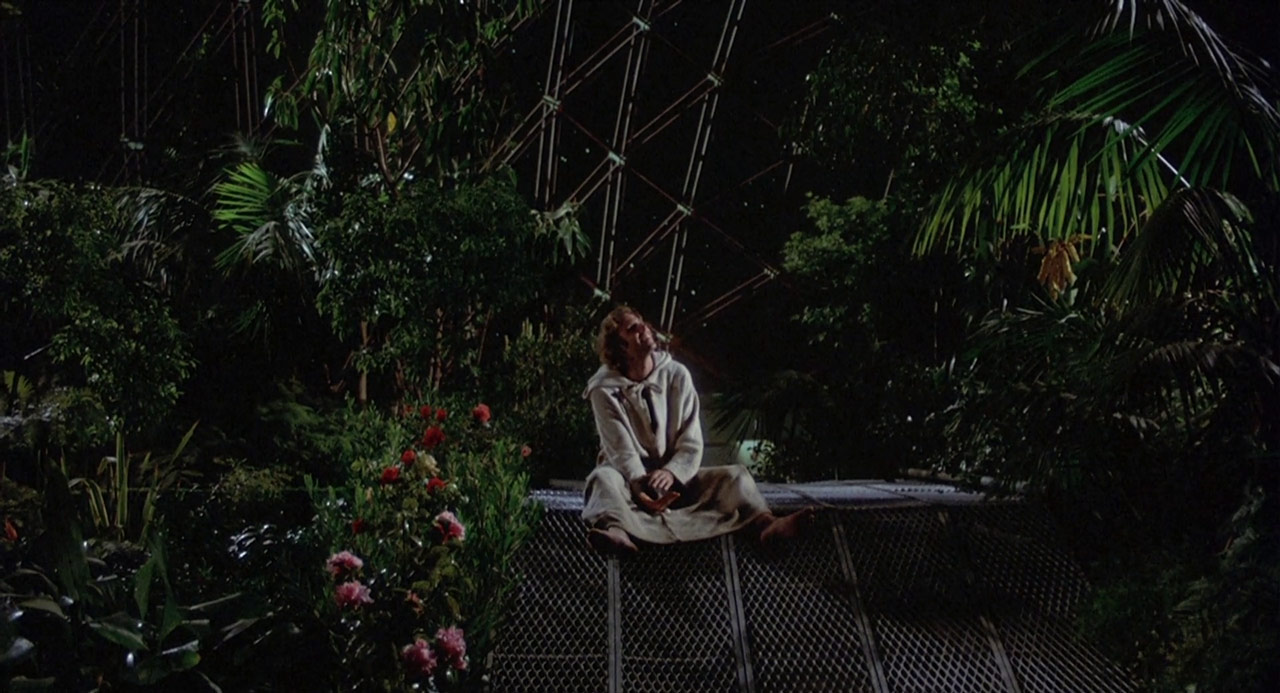
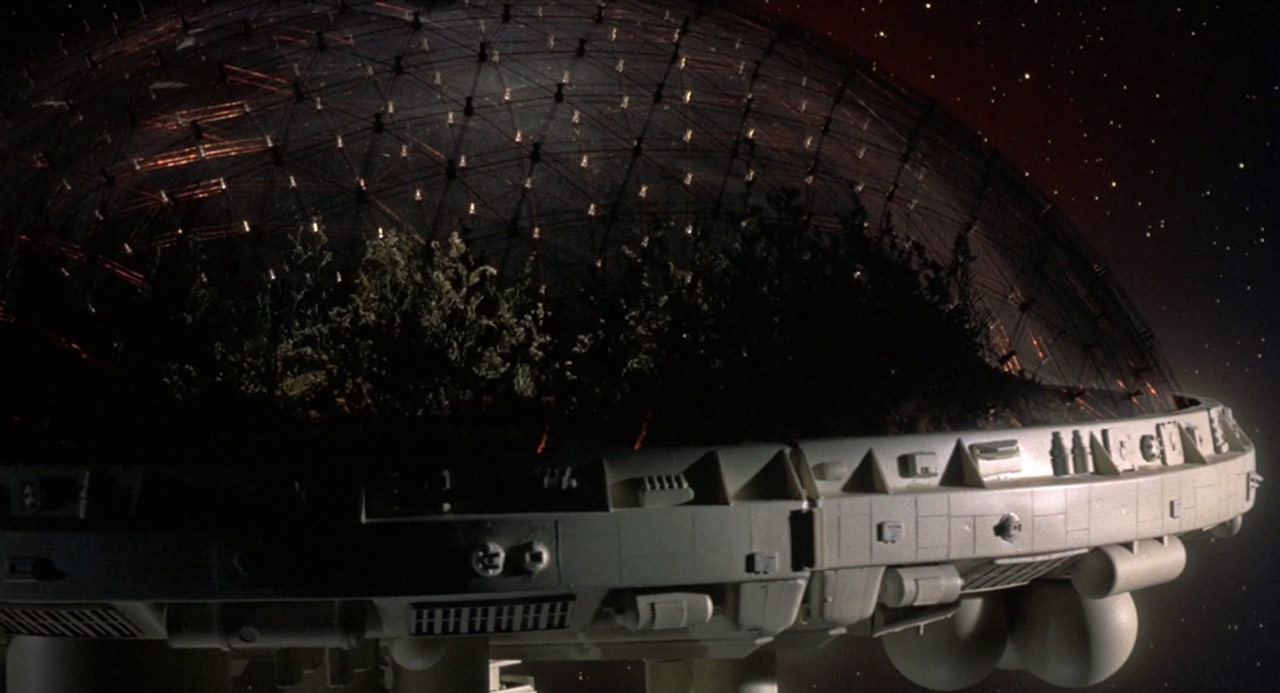
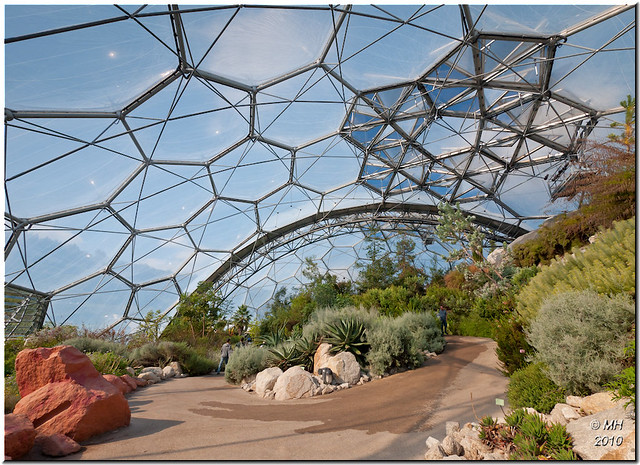
Silent Running at the Eden Project / Sci-fi in the Anthropocene

As one of several plates that I'm currently spinning, I'm writing (or, rather, at the moment planning) an article on the 1972 science-fiction film Silent Running.


In a nutshell, the article is about space in the Anthropocene, analysing this film in the context of sci-fi film more widely in order to understand how our collectively imagined attitudes to nature, ecology, space and outer-space have changed, are changing and need to change further.

Fortuitously, as part of its 'Days of Fear and Wonder' series, the BFI (British Film Institute) is putting the film on at the Eden Project in Cornwall – a tourist attraction I grew up just a few miles from.

Silent Running's geodesic biodomes inspired the domes at Eden, as one can plainly see:


I am very much looking forward to it!

Incidentally, the last time I went to Eden was to see Sigur Rós perform there last year, which was an experience bordering on transcendent.


The most ethereal, other-worldly music in the most surreal, other-worldly setting. I've seen Sigur Rós perform nearly a dozen times and this was the most perfect mise-en-scène for them.

There's certainly something about these spaces that is musically inspiring. Adrian Utley of Portishead and Will Gregory of Goldfrapp have composed pieces to be played in the Mediterranean biome before the screening of the film.


(Sadly the film will not be shown in the biomes themselves but rather in the visitor centre that overlooks the site.)

Another slightly eccentric rock band, 65daysofstatic, re-scored Silent Running and have performed their version live a number of times (never gotten to see that though, unfortunately):


(By the by, if you've not seen the film before I'd recommend watching the original before the 65daysofstatic version, as brilliant as their score is.)

The film critic Mark Kermode, who has a BFI-curated book on Silent Running coming out soon, is also going to introduce the picture.

All in all, I'm pretty excited! It's provoking lots of thoughts for me with regard to my research. I've started reading semiotics for this project and it's very challenging to think about how I can conceptualise the 'intertext' of the film, so broad and 'beyond-textual' as it all is.

The film's director, Douglas Trumbull, rose to prominence for being one of the foremost special effects wizards on Kubrick's 2001: A Space Odyssey. Off the back of that success he was given $1m by Universal Studios, as a directorial debutant, to make whatever film he wanted. He describes Silent Running as the 'human' reaction to 2001 – it's a film all about emotion, relation and affect; where 2001 is cold and impersonal, Silent Running is warm and intensely personal.

It is often dismissed as an out-of-date, hippy-era melange of preachy nature-worship – and there is that element to it, for sure (see the painfully kitsch Joan Baez song 'Rejoice in the Sun' that was written for the soundtrack, for example); however, its beating heart is the incredible lead performance by Bruce Dern.

(Griemas & Fontanille's The Semiotics of Passion: From States of Affairs to States of Feelings is interesting in this regard, though I don't yet know enough semiotics to really understand it properly. It's an intimidatingly technical discipline.)

It's both the outdated ontology of nature implicit within the film's political aesthetics and the intense, emotional core of the story that I'm interested in. These things together are what make this such an interesting film.

Beyond the narrow 'intertext,' there's also the tourist-ecological relation in the fact that these domes, or derivatives of them, were materialised on a grand scale in an abandoned quarry in a sleepy, quiet and rather impoverished part of Cornwall. And, of course, these are not the only such domes in the world.

Then there's the author-biographical fact that I grew up close to where these domes are and know the area. This, I think, affects how I experience the space of the domes and, consequently, perhaps the film. It will be an interesting phenomenological experience.

There's also a 'making of' documentary that reveals much about how the film was produced and the motivations and mindsets of the performers. Crucial, I think, is that there are no women in this film whatsoever besides a little girl whose picture on the wall is gestured to rhetorically by the main character at one point (and at a pivotal moment in the film, I might add). In this documentary we see that, as one might expect of the time, women are pretty much nowhere to be seen on the production side of things. I find this interesting because of the lead character who blends a sometimes ferocious masculinity with a sensitivity that might have been quite strikingly effeminate in context. Dern recounts jogging around the naval base at which the filming was taking place and being left in no doubt that the world wasn't ready for a long-haired hippy running about the place. The only women in the 'making of' are seemingly either organisational or ornamental; in the film itself there's almost no trace of women-kind whatsoever. And yet the lead character is far from being a straightforward 'man's man,' although he is far from being 'unmanly.' Does he project a progressive masculinity or simply a man's idea of what progressive masculinity would look like? The latter, I think; however, it's interesting either way, especially given the ecological context of the film.


Finally, the spaceship on which the film is set is named the Valley Forge, after the aircraft carrier on which it was filmed, which in turn was named after an important site in the American Revolution:
Valley Forge in Pennsylvania was the site of the military camp of the American Continental Army over the winter of 1777–1778 during the American Revolutionary War. It is approximately 20 miles northwest of Philadelphia. Starvation, disease, and exposure killed nearly 2,500 American soldiers by the end of February 1778.
Ecology and terror are baked into the film's very pretext.

I think it'll be impossible to weave all these threads together into a neat and perfect plait. However, there's certainly plenty to be working with. Here's the abstract as it's been proposed:
This paper examines ontologies of nature and their cognate concepts of space as they are represented in popular culture, particularly in science fiction. It does this through a close, contextualised and intertextualised reading of Douglas Trumbull’s 1972 film Silent Running. It proceeds in two parts. First, the ontologies of space and nature that are implicit within SR’s ecological mise-en-scène are examined alongside Bruno Latour’s rendering of James Lovelock’s concept of Gaia. This is used to theorise the ‘counter-Copernican revolution’ whereby our futural spatial imaginaries are turned around and transformed – as the protagonist in Christopher Nolan’s Interstellar (2014) puts it: “We used to look up at the sky and wonder at our place in the stars, now we just look down and worry about our place in the dirt.” The second section detects deeper and more sophisticated space-creative processes in the manner by which SR’s protagonist, Freeman Lowell, fabricates a life for himself alone aboard the damaged, drifting, dome-clad spaceship in which he is ensconced. This inner-space construction is analysed in terms of Peter Sloterdijk’s ‘microspherology.’ This paper therefore relates to a number of issues in contemporary spatial and cultural theory: the effect of the Anthropocene and the ‘irruption of Gaia’ upon our cosmic spatial imaginaries; affective, postphenomenological theories of the construction of space and their ecological politics; and, finally, the relationship between Latour and Sloterdijk, two major theorists of space whose work has not yet been compared in adequate detail. In short, this paper examines what happens to spatial, terrestrial, imaginative, immunological existence when it is realised that, as Latour (2013) puts it, “we are imprisoned in [the Earth’s] tiny local atmosphere” – when space ceases to be ‘the final frontier.’ 

Wednesday, 10 September 2014

Valuing philosophy as an historical phenomenon

Levi Bryant has a new post simply asking what is the value of philosophy? A most interesting and complicated question!

I'm reading Peter Sloterdijk's books at the moment and his attitude to philosophy seems to be not that it is a 'love of wisdom' per se but rather that it is a wisdom tradition -- one among others. While Sloterdijk is a curate's egg, to say the least, I like this aspect of his work a lot as it anthropologises, historicises and also pragmatises how we think about philosophy.

The question of the value of philosophy could be posed, on this basis, in (at least) two ways:

First, counter-factually: Would the world be better or worse off if philosophy hadn't been practised all this time? This seems to be an almost impossible question to answer since I can hardly even imagine such a world, such has been the entanglement of philosophical thought and power over the centuries. In this respect enquiring as to the value of philosophy seems to be beside the point; it suggests that not philosophising is somehow an option for those living in its wake.

Second, we could ask: Why should we take up this tradition, enrol in these regimens today? This all hangs on who the 'we' is. If we're talking you, me, whoever is engaging in this conversation then we must recognise that even if we don't then surely someone else will. And we can hardly put the genie back in the bottle or block ourselves off from its deep-seeped whisperings.

So, long story short, 'the value of philosophy' is unthinkable without recognising the entanglement of its regimens with power-effects of various varieties over the course of ('Western') history.

The value of philosophy in this broad, sociopolitical sense (by no means the only sense in which this question can or should be answered) must surely be this: it provides those of us who enrol in it with an opportunity for subjectivity within circuits and milieus where, lacking the privileges afforded by these age-old callisthenics, there would otherwise be none (or, perhaps more modestly: less).

That is not to say that simply having a disposition towards reading difficult books magically gives us the powers to 'change the world' or any such thing -- that would be naive idealism of the most silly sort. However, I think it's fair to say that philosophy makes us agents within certain processes and practices in a way that we would not be otherwise.

The question of philosophy's value should not, therefore, be limited to its eudaimonic, affective, personal qualities -- as profound as these elements of the wisdom tradition in question undoubtedly are (and as sensitively as Levi has articulated them). As wizened old war veterans say, philosophy has 'seen action.' It may be that the tradition's days of serious sociopolitical influence are long behind it but even so the question of its value goes beyond its value to you or me, here or there, then or now.

The values it has created and the effects that its creativity has thus unleashed on the world are irrepressible once one considers philosophy in its historicity.

Sunday, 13 July 2014

Sloterdijk on the non-existence of 'Religions'

From You Must Change Your Life:
European Enlightenment—a crisis of form? An experiment on a slippery slope, at any rate, and from a global perspective an anomaly. Sociologists of religion put it quite bluntly: people keep believing everywhere else, but in our society we have glorified disillusionment. Indeed, why should Europeans be the only ones on a metaphysical diet when the rest of the world continues to dine unperturbed at the richly decked tables of illusion? 
[...] a return to religion is as impossible as a return of religion—for the simple reason that no 'religion' or 'religions' exist, only misunderstood spiritual regimens, whether these are practised in collectives—usually church, ordo, umma, sangha—or in customized forms—through interaction with the 'personal God' with whom the citizens of modernity are privately insured. Thus the tiresome distinction between 'true religion' and superstition loses its meaning. There are only regimens that are more and less capable and worthy of propagation. The false dichotomy of believers and unbelievers becomes obsolete and is replaced by the distinction between the practising and the untrained, or those who train differently. (p.3)
In contrast to Latour's translative theology, Sloterdijk's concentration on "regimens that are more and less capable and worthy of propagation" refocuses attention entirely away from the past. Religious truth conditions become entirely presentist: is this regimen worthy or not? It doesn't matter, in and of itself, how many years hermeneuts have agonised over this or that crumb of biblical dogma. There is no prejudice against the nouveau riche of religiosity. If these stratified ponderings upon ponderings going back millennia have generated a rich, beautiful, jumbled jungle of immuno-psychic possibilities then great! However, that is merely the means to the end of the successful religious dispositif, not the end itself.

Religion, in this iteration, becomes fully relativistic and thus fully secularisable and is, therefore, a better diplomatic proposition (from my godless point of view) that the one Latour proposes as [rel].

Wednesday, 25 June 2014

On habits and habitats

There's another great write up on the AIME Group blog. This is my favourite bit from chapter 10 on 'Learning to Respect Appearances':
Without habit, we would never have dealings with essences, but always with discontinuities. The world would be unbearable. It is as if habit produced what stays in place on the basis of what does not stay in place. As if it managed to extract Parmenides’s world on the basis of Heraclitus’s. We can say of habit that in effect it makes the world habitable, that is, susceptible to an ethos, to an ethology. (268)
Without habits we cannot become habitated, we cannot have habitats (Latin habitare "to live, dwell," frequentative of habere "to have, to hold, possess"). Habits are therefore things to be celebrated, with the proviso that there are good and bad habits, habits that forget being-as-other and those that retain a connection with it.

[hab] answers a problem that I've found with Latour's philosophy from the beginning: if everything at every moment is in a perpetual state of perishing and becoming something else (and if this process is essentially discontinuous at each moment) then isn't our everyday experience an illusion? Apparently not; we mostly experience through habit for the most part. If the world seems to flow together smoothly and continuously then this is because, when habitated, this is exactly how it is.

This links nicely with Latour's reading of Sloterdijk's spherology. If spheres seem too smooth and continuous to be incorporated into the ontology of networks then we need only consider that such habitats benefit from regimes of habit. We cannot live in broken, bitty, fractured networks; we can only live in envelopes, blankets and containers that permit implicitation—that allow elements of our environment to be taken for granted (even if they are not God- or Nature-given). Habit permits the connection of these two ontologies: the network and the sphere.

Sunday, 8 June 2014

'What is space?'

I'll be presenting a paper at the 'What is space?' workshop being held at Warwick in a couple of weeks (17/06/2014). As the programme demonstrates, it's a positively eclectic interdisciplinary event. I'm going to be exploring the title 'Latour, Lovelock and Sloterdijk on being imprisoned in the World.' Looking forward to it!


Saturday, 7 June 2014

Geopolitics and varieties of soil

In Latour's recent Gifford Lectures he attempts to redefine geopolitics as the politics of the Earth itself, the central premiss of this being that we must learn to understand the 'soil' to which we are attached and then to find ways of defending that soil. He does not, of course, mean 'soil' literally or straight-forwardly; certainly not reactionarily:
To insist on the soil is to be reactionary in the old way—appealing to ‘Blut und Boden.’ Reactionaries of all hues and colours have always insisted on how criminal it was to attempt to leave the ancient land, to abandon the old soil, to forget the limits of the old nomos, to be emancipated and cosmopolitan. (108)
Although Latour channels Carl Schmitt extensively he does not want to go back to that horrendous, reactionary geopolitics of yore.
[...] there might be another meaning to being attached to the old soil, this time to the Earth. (108)
Our 'soil' is everything that we need to survive; it's also the air that we breathe and the climate that we perturb. However, the actual soil itself is also part of our 'soil.' George Monbiot points to how certain farming methods are literally washing Britain into the sea and how the land-owner lobby in the UK has utterly captured its own regulatory apparatus, making matters worse and more stupid by the day.
The people who got this directive ditched claim to love their country. But they’ve ensured that it will continue to run down the rivers and into the sea. You want to get Britain out of Europe? Well how about ensuring that our soils stop ending up on the coastlines of France and Holland and Germany?
This is an interesting confluence of political imagery and an extremely apt issue for considering a post-Natural politics that is resolutely not post-national.

We have certainly come a long way since the days of General Haushofer (from The Geopolitics Reader, p.33):
While the theoretical foundations of Geopolitik were laid only in recent times, its practical application—the instinctive sense for geopolitical possibilities, the realization of its deep influence on political development—is as old as history itself. Geopolitical vision inspired daring leaders who guided their people along novel never-before-travelled roads. Powerful new states emerged because their creators, with the sensitivity of the true statesman, understood the geopolitical demands of the hour. Without such insight, violence and arbitrariness would have charted the course of history. Nothing with lasting value could have been created. All structures of state which might have been erected would sooner or later have crumbled into dust and oblivion before the eternal forces of soil and climate.
To be sure, the powerful will of a great and strong man may tear masses and nations away from soil-bound existence into roads other than nature had provided for them. But such actions are short-lived. In the end every people will sink back into its accustomed ways; its lasting earthbound traits will eventually win out.
Neither the soil nor the climate can be taken for granted; much less can their immutability found the dark dreams of imperial domination—that very dream of imperial supremacy, oriented towards 'nature,' has shattered its own illusion. It is indeed time for a new politics of the soil—but also of the air and the sea and ecosystems and so on. A geopolitics finally worthy of the name—of both sides of the name, geo and politics.

Haushofer committed suicide with his wife in 1946; supposedly he died under a tree, clutching the very Bavarian soil that he so cherished. At the end of the film Gravity, the protagonist clutches the sludgy earth she has landed on between her exhausted, trembling fingers. There are whole galaxies between these two relations to the soil—the departure and the return.

Latour's geopolitics is overly naive in the sense that it doesn't engage with historical (or disciplinary) geopolitics in any way; he simply appropriates the phrase and moves on. This isn't good enough. However, I think that his project is an important one. The soil, in the literal sense, is both the cherished basis of the worst kinds of geopolitics from the past and is, evidently, not something that even a powerful state can simply rely on at present. It is a case that this 'new' geopolitics must somehow pass.

Philosophy-wise I'm quite interested in how Peter Sloterdijk's work can be brought into this debate. Latour dedicated his Gifford Lectures to Sloterdijk and his ideas abound throughout the series. While very different thinkers in some ways their work meshes remarkably well.

Monday, 3 March 2014

From the Earth/of the Earth; Earthling/Earthbound

Another really interesting post at knowledge-ecology on Kant, Sloterdijk, Whitehead and geocentrism.

I find 'monogeism' to be one of Sloterdijk's most useful coinages.  I don't think it's overstating the point to say that every philosophy must henceforth recognise the profundity of this condition: we are fundamentally bound to one planet, one earth; we are Earthbound, in Latour's terms.

And that very geocentrism is actually a necessary precondition of recognising the brutal indifference of the rest of the universe to us.  Planet Earth in its Gaian understanding is the only speck of existence that's even partially disposed towards our well-being - and its good favour is not guaranteed, indeed it's precarious.

That's not just an ecological or practical truth; any metaphysics that recognises life as something that figures on its register must now see that even if there is life 'out there,' or if, somewhere in the vastness of the cosmos, there is another celestial object that could possibly support life, it doesn't particularly matter.  Even if there are countless inhabited or potentially inhabitable orbs in existence the distance between them is almost certainly so vast that they effectively inhabit separate universes; and even if we find a planet or moon within a useful distance that has just the right mass, chemical composition, day and nighttime temperature, geological stability, shelteredness with regard to asteroids, etc. etc. Gaia-type theories tell us that even all this won't be enough to recreate another Earth.  And, regardless, we're now pressed into a civilisationary timescale where such fantasies as meeting aliens and colonising other planets seem utterly ludicrous and, worse, beside the point.

I think it says a lot that sci-fi is increasingly turning away from the old-school Star Trek groundplan of a lush, teeming universe towards an empty, impersonal universe, even one where the danger comes from exploration itself.  Gravity is an obvious case that springs to mind but there are more.  There are many, many differences between the original Battlestar Galactica and the remake but perhaps the most significant one cosmographically and dramatically is that the latter inhabited a largely empty universe without alien species, creating a feeling that was simultaneously claustro- and agora-phobic as the survivors cling to the insides of life-support systems that are always on the brink of failure.  Even the very Earth-like planet they colonise midway through the series is a harsh place unfit for much in the way of lifemaking.  Dr Who still operates in a lush, teeming universe but it realises a pure escapism; the TARDIS transcends time and space rather than travelling through it; it opts out of our situation rather than working through it.  Danny Boyle's Sunshine is an interesting one, too.  There's a moment when the crew are about to investigate an abandoned ship and are debating whether to split up or stick together; one of them says to another something along the lines of 'what, are you afraid we'll get picked off one by one by aliens?'  Obviously this sends up an old sci-fi cliche but, more than that, it demonstrates how far this universe is from the imaginaries of yore; the perils on which the drama hinges are technological, astronomical, elemental, psychological (and perhaps supernatural) but they are not alien.  Indeed, further on we learn that the central metaphysical question of the film itself (or at least of one of its characters) is that of human consciousness being universally sui generis and, consequently, imminent human extinction meaning the end of all awareness altogether.

It's a very different space we're in, these days.

I suppose it's the difference between being from the Earth and of the Earth; from being an Earthling and being Earthbound.