Wednesday, 17 June 2015

What is 'International'? A few reflections on Patrick Thaddeus Jackson's 'Must International Studies Be a Science?'

I didn’t go to the Millennium Journal of International Studies' conference at the LSE last year. (I did in 2012 and intend to attend this year.) However, a selection of the papers from the conference have just been published, including the keynote by Patrick Thaddeus Jackson ‘Must International Studies Be a Science?’ (His short answer: no.)

I don't want to go into the whole thing (or even the main of the thing) but just to draw out a few points that interest me.

The essay is set up with a good mixture of sweeping breadth and due humility:
“Depending on which authority one consults, ‘we’ are a group of scholars held together by our ‘great debates’, by our concern with the implications of inter-state anarchy, by our implication in a (neo)colonial project of establishing European hegemony, by a set of so-called ‘paradigms’ which almost no one claims to adhere to any longer even though we keep organising our introductory textbooks and courses according to them, etc. […]
I do not propose to resolve this controversy here. Instead, I will circumvent it by simply elucidating what I mean by ‘international studies’ so that my answer to my initial question becomes clearer.”
So, first of all, what about that troubling term ‘international’?
“The way I understand it, the term ‘international’ picks out those aspects of anything that involves cross-boundary encounters with difference. The international aspect of a military manoeuver or a financial transaction does not simply begin at the moment that a formal territorial border is crossed, but as soon as the existence of some other—the alien, the foreigner, the stranger—is taken into account in the operation. Representations of otherness, which shape and structure what we come to regard as legitimate or acceptable or appropriate action towards or in reaction to those others, are the common thread connecting all of our myriad substantive concerns, and the ‘return’ of culture and identity to the scholarly agenda is better thought of as a clarification of what we were all already interested in in the first place.”
A commendably open definition though this is, what portion of the human sciences does not deal with otherness (or, indeed, boundaries)? One might admit that anthropology, sociology, psychology, etc. do not primarily deal with otherness across 'boundaries' as such (although what is a boundary?); however, I think that the pivot point ‘primarily’ is a rather vulnerable 'single point of failure.' The question becomes: Why does one need a distinct discipline to deal with such things? Perhaps the answer could be that cross-boundary otherness comes in many forms and, while of course it is dealt with in a wide variety of epistemic milieus, it is important enough to demand a particular disciplinary focality, a programme of concentrated examination that would think through such phenomena taken together, regardless of their usual disciplinary partitionment.

IR (or IS) would then be essentially interdisciplinary. It would not have its own ontological ‘turf’ (the Durkheimian dominion-making assumption that a ‘science’ must have its own distinct ontological domain has dominated the discipline since at least Kenneth Waltz’s Theory of International Politics [1979]). Instead, it would draw together a range of concerns that no other discipline examines in an assembled and focused manner. Anthropology, sociology, psychology, geography, literature theory, etc. etc. – all these encounter ‘cross-boundary otherness’ but severally. This would be an interesting proposition. However, I’m not sure that this is what PTJ is arguing.

He does note that “the term [international] does not pick out a discrete realm or region of social life” (i.e. the boundaries in question are not just state boundaries). However, he redefines it (having first undefined it) not quite as I have described but rather:
“I would therefore locate the ‘international’ in ‘international studies’ not in the object of study, but in the way that we approach the object of study—which means that virtually everything has an ‘international’ aspect, potentially, depending on how we look at it.”
He goes on: “After all, ‘physics’ does not name an object of study, but a way of studying objects; why should ‘international’ be any different?”

I find this to be a strange and sudden segue. ‘Way of studying’ suggests methodology – and this is, of course, the theme on which the talk was to be given. However, there’s a confusion here between methodology and ontology, at the very least. Is physics a ‘way of studying’? This is a rather obscure abstraction. PTJ seems to want to avoid the ontology of domains by talking about methods (or at least practices) but this won't work. The whole notion of a ‘physical domain’ as categorically distinct from the chemical and biological is indeed rather outdated. However, the ‘monist’ claim that these disciplines engage ‘the same’ things from different perspectives leads us back down precisely the wrong path. A lamentable regression.

We should shed the terms ‘physics’ and ‘chemistry’ here. Every scientific research exercise addresses distinct entities. These are not the ‘domain’ that grants or guarantees scientificity and I do not deny overlaps all over the place but to sever science from its particular objects, or to melt everything into a single ‘world’ that is only broken apart again when engaged by human agents is, in my view at least, completely wrongheaded. Sciences are established neither by domains nor by ‘ways’ (whatever they are). The only means of making sense of what sciences are without the traditional distinctions is as networks and assemblages (here I am of course betraying my own philosophical preferences) – networks and assemblages that include distinct objects, distinct practices, distinct epistemic standards and norms…; none sovereign or permanent but none to be unduly confused or conflated, either.

PTJ goes on to discuss his heuristic take on knowledge production, expanding on technical and epistemic 'ways' of knowing and building on his The Conduct of Inquiry in International Relations: Philosophy of Science and Its Implications for the Study of World Politics (2010). I will skip over this as I want to concentrate on the aforementioned issues.

Long story short, I find that, ‘otherness across boundaries’ seems to overemphasise the ‘inter-’ and wash out the ‘national’ (or leave it crucially underexamined), leading to a disciplinary vision that at least risks being somewhat superfluous. PTJ does not note the etymology of ‘nation’; however, it is instructive:
“c. 1300, from Old French nacion ‘birth, rank; descendants, relatives; country, homeland’ (12c.) and directly from Latin nationem (nominative natio) ‘birth, origin; breed, stock, kind, species; race of people, tribe,’ literally ‘that which has been born,’ from natus, past participle of nasci ‘be born’ (Old Latin gnasci; see genus).”
Perhaps there is something in this (though we must tread carefully). We could say that where IR/IS/IP went wrong was in assuming that ‘national’ meant ‘nation state,’ or at least nation in a modern, mass mediated sense where humans are symbolically and technically conjoined in their millions. Tribe, village, family, city – these might all be involved in ‘international’ relations – and relations on their own scale, of their own kind – in this expanded sense, tied more definitely perhaps to a sense of birth and nurturing, culture and cultivation.

(Incidentally, this could be related to the world history interpretation offered by, for example, Barry Buzan and Richard Little in their International Systems in World History: Remaking the Study of International Relations [2000], where they explode any hint of presentism in the study of the relations between human groups in the longue durée.)

But, again, don’t think that what I’m describing here is what PTJ is arguing. He is in no way trying to prescribe what others should mean by ‘international’ (and the studies thereof); he is only articulating what he means by that term. However, he is nevertheless setting out his stall by articulating a kind of ideal typical vision of what ‘International Studies’ would be, then later breaking that down by proliferating 'ways' of knowing (and only of knowing). I wonder if this is not precisely the wrong way to approach disciplinarity; it is at least the wrong starting point. It is effectively saying: ‘here is my vision of disciplinary identity; you will surely have your own’ – and that’s commendable to some degree but the underlying assumption is that disciplinary identity is the issue at hand; that it is on this level that discussion should proceed.

I would prefer to begin by understand disciplinarity in a very particular manner, which only partially matches up to PTJ's arguments (and then only in his concluding remarks). A discipline can be understood as an environment, a milieu of sorts. It is a space within which knowledge production occurs. Its prevailing conditions, accidental or designed, variously enable, disable, orient and disorient the many actual and possible courses of research that are undertaken under that more or less actively conducive, more or less permeable, more or less flapping, fluttering, stuttering membrane.

Seen in this way, what a discipline ‘is’ is purely and simply a means of formatting that space. It is secondary and it is one formatting operation among others.

Given these principles, we might be able to think of efforts such as PTJ's as being interventions towards the pluralisation of the epistemic-possibilistic space that is the discipline of International [Whatever] (the fact that the name is variable doesn’t necessary meant that we’re not talking about a particular space – just more permeable). Indeed, he writes in conclusion:
“[…] the field should contain space for all of these kinds of knowing, and should resist the call to be exclusively a form of aesthetic expression, a mode of technical practice, a normative enterprise—or an epistemic science.
Instead of intending to produce one homogenous body of knowledge, the field of international studies and we scholars within it should work to become more comfortable with the irreducible plurality, plurivocality, and diversity of knowing. Such an attitude can, I think, best be cultivated not merely by our paying lip-service to the existence of other forms of knowing, but by our actively seeking to position ourselves as scholars in the spaces between these diverse ways of knowing.”
I couldn't agree more; however, this affirmation clashes, I think, with some of the presuppositions from which it issues (as I have attempted to explain, however inchoately). 'Ways' of knowing are too quickly abstracted from the rest of the world; 'the world' is too quickly defined as something singular that is only broken up by ways of knowing. 'Ways' are given too much credit, things not enough. He sets out his terms and definitions before he explores what the act of terming and defining does. As I hope I am making clear, I have many sympathies with this approach but find that it comes up short in a variety of ways.

I was first drawn into this epistemic-possibilistic space over a decade ago, during my undergraduate degree. It has for some time seemed to me that IR as a discipline has always been about 10-15 years behind the curve of the rest of the human sciences. It is an oddly introverted intellectual culture, especially given how quintessentially outward facing one might think it would be given its matters of concern (political geography, for example, is far better connected with its neighbours). Now that I am heading back into the hothouse, I do feel a little bit like holding my breath. However, the particular pocket into which I am to be immersed is a peculiarly breathable one. This much is reassuring!

Monday, 15 June 2015

The Look of Silence – a world-changing piece of cinema

Yesterday evening, I went to the Watershed cinema in Bristol to watch The Look of Silence, Joshua Oppenheimer's follow-up to The Act of Killing (2012). The screening was followed by a live satellite stream of a Q&A with Oppenheimer and Silence's protagonist, the incomparable Adi. It was hosted by fellow documentary filmmaker Louis Theroux. (I presume that the Q&A will be put online at some point but has not yet been, as far as I'm aware.)

The films concern the massacre of as many as one million 'Communists' that occurred in Indonesia in 1965-66. However, they are not, as the director is keen to make clear, historical documentaries as such. They concern Indonesia's relationship – or, in a way, non-relationship – with these events in the present.

The most crucial aspect of the history is that the killers won. They crushed their opponents ('realised their political ideals,' as one interviewed politician puts it), were richly rewarded and remain in positions of power to this day. Peter Bradshaw in the Guardian calls it "a gerontocracy of tyranny."

The first film centred on a group of killers and particularly on Anwar Congo, a gangster who claimed to have killed as many as one thousand during the massacres. Extraordinarily, because of their positions of success and safety, the killers were happy to talk freely, openly boasting about their perceived accomplishments, gleefully recounting how went about it, and even being persuaded to elaborately re-enact their crimes in what has to be the most mesmerisingly surreal and horrific am-dram ever committed to film.

The Act of Killing explores how these men live with what they did in this almost unique situation of total impunity and suggests the dark, necrotic guilt wretching and writhing beneath their bombast and bravado.

The Look of Silence is not nearly as overtly horrifying, although it is just as moving in its own way. It follows Adi, an ophthalmologist whose elder brother Ramli was slain in an especially brutal fashion – so brutally that his name has become a quietly whispered watchword of resistance in that region.

Adi is filmed watching footage of the men who butchered his brother re-enacting their deeds with a casual and almost carefree air of nostalgia. Building on the reputation of Oppenheimer's first film, Adi also meets, interviews and provides free eye tests to the commanders and politicians who presided over the events in his region, some of whom remain extremely powerful and one of whom openly threatens Adi when his questions push too hard.

We also meet Adi's family; his young children and his elderly parents. We get to know him and feel intimately part of his world. The effect is a filmic experience that is emotionally moving beyond description.

Last night I felt utterly without words. Now I am just starting to process it. However, I still feel completely overwhelmed. In the Q&A, Oppenheimer referred to The Look of Silence as a poem dedicated to the lost. It is not didactic; it mentions the geopolitical context and opens the door, I hope, to a third film that deals with the silence in the US and the wider West on these events – a deplorable hush no less profound and no less important (although perhaps less easily broken).

Adi's family have since been moved to another part of Indonesia and, while they have allies in the country, their lives were endangered by their participation in this film. Oppenheimer himself says he felt his life to be under threat. The main thing protecting these brave souls seems to be their new-found fame and notoriety.

Nevertheless, the films have succeeded beyond any possible expectation. Both have, with some difficulty, been screened widely within Indonesia and young people are having an open conversation about their own relation to the actions of their grandparents. Reactions of family members of killers in the film range from the most heartbreaking contrition to angry dismissiveness. At the film's climax, Adi meets the wife and two sons of his brother's killer (now dead). One of the sons wants nothing to do with it but the other is drawn to remark: the wound is now open, and we are here together.

This short note doesn't even begin to do justice to the force and poetry of Oppenheimer's film-making. His dedication to his project is a wonder to behold and the bravery of his cast and comrades is awe-inspiring.

I can only add, in what I find to be an oddly profound banality, that I've never seen an audience pay such rapt attention to the credits of a film. Rapt attention to what was not there. Line after line after line: 'Anonymous'...

With only a few exceptions, all the names shown unredacted are European. The film derives from an international movement of resistance with deep local roots. I'd love to know more about how it came about and came together, although a degree of secrecy seems to be essential to the safety of those involved.

This is a film of dignity, beauty and boundless importance, both artistically and politically. However, I do feel that the two films, taken together, are incomplete. Oppenheimer described them as a diptych; it seems to me that they should become a triptych.

The director's passionate and erudite comments during the Q&A demonstrate his understanding of how this wound goes far beyond Indonesia. The massacres developed out of the vicious mixture of Cold War realpolitik and capitalism-driven neocolonialism. Western businesses were getting up to precisely the same kinds of slave labour practices in the forests of Indonesia that fascist industries had been in Europe only two decades before.

Oppenheimer started working on these issues in 2001, when he travelled to Indonesia to make The Globalization Tapes, a film about oil plantation workers being poisoned and killed by the chemicals they are forced to work with. Their brief attempt to unionise in order to resist their own slow, horrible deaths were quickly dissuaded by the same networks that committed the massacres in the '60s. These people never went away – and nor did the corporations.

Of course, all of this has been known for years but now someone has given these issues an emotive force that no amount of didactic documentation can produce. It is so much more than a documentary. It is soaked in themes of memory, loss, ageing, love and, above all, living with the unfathomable. I cannot recommend it enough.

Friday, 12 June 2015

Notes towards a conception of atmospheric diplomacy

More than a few interested parties have, in recent years and decades, detected a certain toxicity in the abstractions by which we think and live. The atmosphere bequeathed by modern thought is nowhere a pure one, nowhere obvious. Nowhere does it achieve a consistency or a simplicity that could condense into a solid ground for a definite 'we.' And yet everywhere are its deep-sunk insinuations felt. Plainly, no one has the authority to regulate or air-condition this pea-souper of concepts. And yet is it not for that precise reason that we might all be emboldened to try? We – that is, all dwellers of the dilapidated faux-palace; all the affected, all the concerned; all those who breathe the damp, questionable air.

For some, this diagnosis emboldens and prioritises the critic. 'We know from whence these toxins came and those satanic mills must be torn down, razed to the ground!' An understandable reaction. But what ground? Like so many castles in the heavy, choking air, there is no outside on which we could be sure to fall safely once the besooted brickwork comes a-tumbling. We are like birds but not 'free-like-a...'. We need an altogether different sensibility in order to work our way out of this kakosmic bind. A sensibility characterised by the prioritisation of obligation and attachment. An ethos of binds and bonds made flexible by their regular exercise.

To the critic's rage at established sentiments we must add the diplomat's patience with them. Not to preserve or celebrate the tawdry and regrettable skyline but to rebuild it – brick by leaden brick.

Was Whitehead a materialist?

S.C. Hickman on the Dark Ecologies blog has a very nice short introduction to Whitehead's Process and Reality, particularly concentrating on its cosmological aspects. He writes, by way of a concluding parenthesis, that this is part of an "ongoing project of developing a materialist philosophy".

This got me thinking about something that's been bothering me for a while: why some often claim Whitehead as a 'materialist.' I'm not trying to pick on Hickman here (he didn't say that Whitehead was a materialist, only that he's using Whitehead in developing a materialist philosophy) but it's something that comes up quite often, one way or another.

My own inclination (no more thought through than that, to be honest) is to say that, in Whitehead's terms, materialism is a philosophy that makes matter its Ultimate. Following that on, Whitehead would have to be (in P&R at least) a creativist; Aristotle a substantialist, etc.

Whatever way matter is conceived (and there are of course indefinitely many ways of conceiving it), 'materialism' must surely be related to matter qua conceptual fundament -- that is, as the thing that explains nothing but is assumed so that the rest of existence can be conceptually constructed (as the Ultimate).

There's a lot of pretty wishy-washy talk of 'materialism' that just says 'things, therefore materialism,' which tends to result in platitudes rather than insights. (Perhaps that's just me being mean; but, then again, maybe not.) It generally presupposes that anything that isn't idealism -- i.e. anything that takes non-human things seriously -- is therefore materialism, which I find to be unhelpful at best (and part of a systematic stupidification of thought, at worst).

This is basically what I was getting at with a post I wrote on 'new materialism' a couple of months ago.

It's a poorly articulated irritation that I'm describing here but it derives from a complacency that is, I think, widespread and real.

Wednesday, 3 June 2015

Starting my PhD at Aberystwyth University in September

It is with great pleasure—and no small amount of relief!—that I can announce that I will be commencing my PhD studies this coming September at Aberystwyth University. I'll be based in the Department of International Politics with co-supervision in the Department of Geography and Earth Sciences. My supervisors from those departments will be Inanna Hamati-Ataya and Mark Whitehead, respectively.

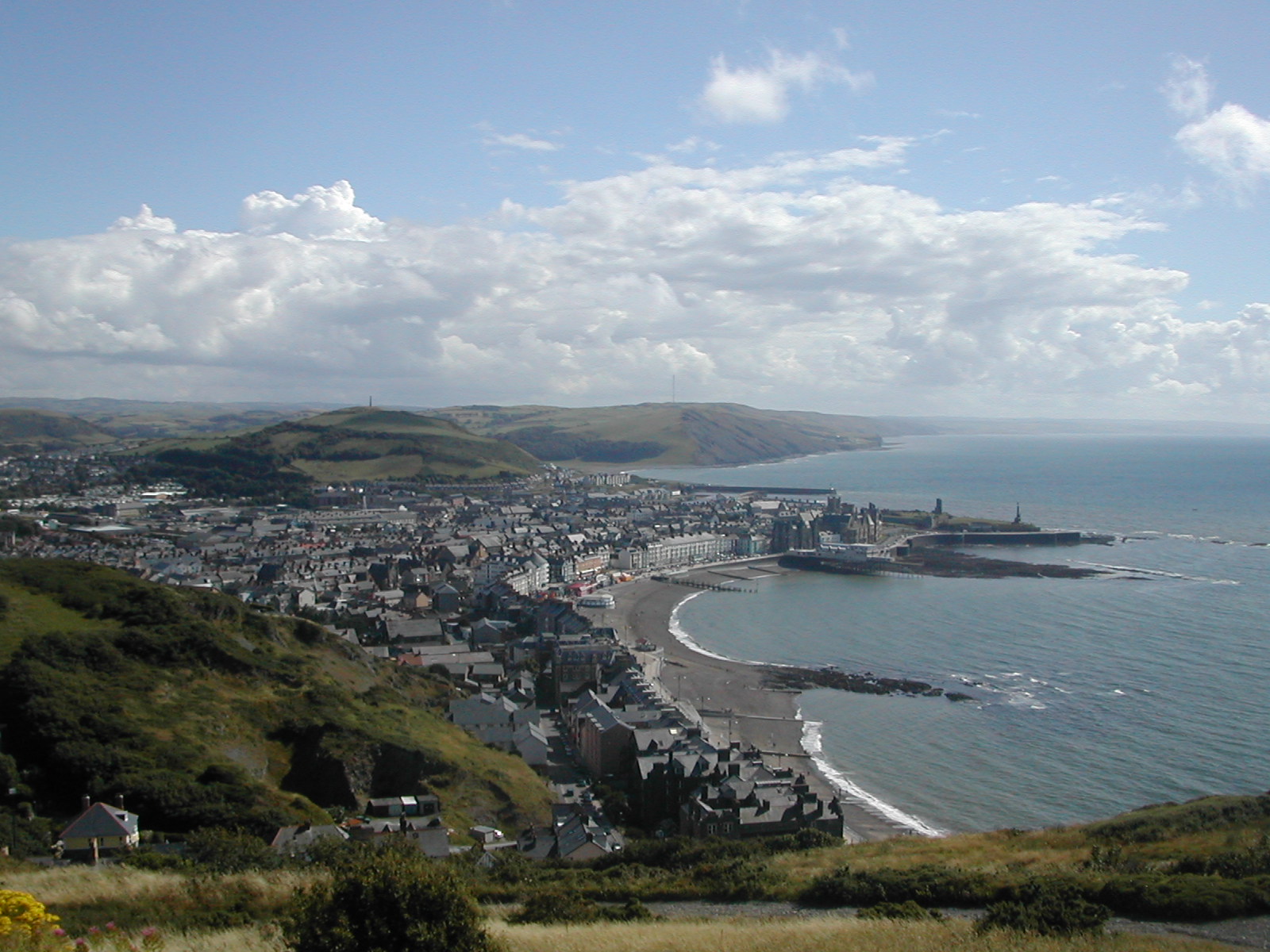
Located on the west coast of Wales, Aberystwyth is a picturesque and famously rather isolated seaside town. The Department of International Politics, founded in 1919, was the first of its kind in the world. The studentship I've been awarded is named after E.H. Carr, the historian and diplomat who joined the Department in 1936 and is best remembered for his books The Twenty Years' Crisis and What is History?

It'll be quite a shock leaving Bristol after living here for the past seven years. However, having spent a couple of days in Aber earlier this year, I'm looking forward to settling in there. Having grown up in the near-total rurality of Cornwall, I think I will get used to it easily enough. I plan to spend the second of my three years of study living elsewhere—possibly somewhere a bit livelier!—though I've not yet decided where.

I've already outlined the project that I will be working on in broad brush strokes. It builds on everything that I've been writing on this blog for the past several years. I am really looking forward to throwing myself into it full-time at last—and to throwing myself into an environment where so much great work has been, and continues to be, written.


Sunday, 31 May 2015

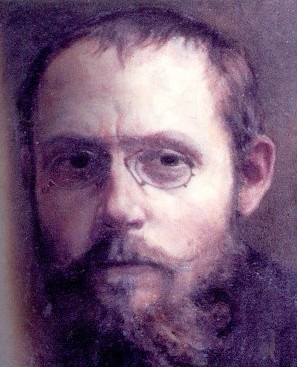
Bruno Latour: 'Charles Péguy: Time, Space, and le Monde Moderne'―new translation published

Bruno Latour has often commented on the importance of Charles Péguy for his thought; however, Péguy is largely unknown in English and, until recently, little had been written on the connection. Henning Schmidgen's The materiality of things? Bruno Latour, Charles Péguy and the history of science did a good job of outlining the importance of Péguy for Latour from his doctoral thesis onwards.

However, now there is finally a substantial essay by Latour on Péguy, thanks to a translation by Tim HowlesCharles Péguy: Time, Space, and le Monde Moderne―published in French as Nous sommes des vaincus. (If anyone wants a copy of the former and doesn't have access to New Literary History, just drop me an email.)

I won't attempt to summarise the essay as Tim has himself written a very fine translator's introduction (included as a foreword to Latour's text) and has also added some helpful endnotes clarifying various points that may be unclear to an anglophone reader.

I'll just pick up on a few things that are particularly interesting to me. One thing that Latour takes from Péguy is reminiscent, in a slightly surprising way, to what he takes from Carl Schmitt: he gives an account of the ontological groundlessness of the moderns and articulates the need for re-grounding, re-placing, re-territorialising. The problem with the modern world, Latour writes, is that "it provides neither a time nor a space in which it might deploy that which it claims to be instituting." The moderns' account of causation and of the inexorable arrow of progress render them incapable of understanding their own place in time, first of all.
The drama, the crime, or the destiny of the moderns is to have standardized the action of historical time in every domain of life: there was to be a chain of cause-and-effect in the physical world (such would seem to be a valid inference) and a logic of secondary causation in the domains of history and sociology (that inference would seem to be no longer sustainable), all of which was to be singularly accounted for by the structure of the capitalist economy (that one is the big lie).
 And it gets no better when shifting ontological registers.
To be without time—temporality, historicity—was one thing. But to find oneself without a place, without spatiality, was something else, albeit equally serious. And yet, if there was an intractable hiatus of the present, there was just as much an intractable hiatus in belonging to a space. If a lack of time results in a sense of suffocation, a lack of space ends up asphyxiating. Capitalism is a morbid religion of space just as much as it is a morbid religion of time. For just as it defines the future by means of the past, short-circuiting the irreducible hiatus of the present, in the same way it defines that which is universal—or, we might say, global—by short-circuiting the very earth on which we stand. The earth becomes nothing more than the backdrop for the agency of money. There are no more places, since there is no longer a place characterized by the hiatus.
There's a strong resonance with Sloterdijk here, too, for whom the legacy of globalisation was to have made, as he puts it in his book Globes, every point on the planet merely an address for capital. An odd triumvirate—Péguy, Schmitt, Sloterdijk—but an effective one for thinking a kind of geopolitical coexistentialism with particular attention to the, we might say, morbid temporal and spatial abstractions of capitalism.

Latour notes the care that must be taken to avoid the soil-obsessed nationalism with which Péguy certainly flirted. However, compared to the political legacy of Schmitt, this is certainly a less risky option.
Péguy helps himself to concepts that seem closed (such as race, earth, nation, people) in order to lever wide open that which the moderns claimed to have settled for good (before they proceeded to plunge into nearly a century of nationalistic and patriotic madness).
The poetic style that so entranced Latour in his doctoral writings on religion is key to how he appropriates Péguy's territorialisations.
Péguy realizes that by means of his poetic style alone, by means of long enumerations of place-names, he can communicate the hiatus of existence for the space-dimension of this world, for those who are earth-bound, for the terrestrials [l’espace terrestre, terriens et terreux], just as previously by means of repetition alone he was able to communicate the hiatus of the present for the time-dimension of this world. He audaciously sets out to capture all this by means of poetry. But it’s precisely because he is a philosopher that he can dare to grasp the potential of poetry to bring about that wonderful feeling of rootedness—all by contrast with the system of thought of his time, which was continually blown off course by the utopia of a global marketplace, only to find itself bogged down for four long years in the quagmire of the trenches, and then for nearly a century afterwards plunged into a world at war.
The essay concludes with a veritable call to arms.
For us, it’s not the territory of Alsace-Lorraine that is at stake. For us, it’s the whole Earth. Who is ready to take it back?
It might be worth quoting the French version of this alongside the English.
Nous, ce n’est pas l’Alsace-Lorraine que nous avons perdue, c’est la Terre. Qui se prépare à la reconquérir?
This is a striking geopolitico-philosophical gambit—a provocation put down that, I think, has yet to be really picked up. In Back down to Earth, I argued that territory was at the heart of Latour's conception of geopolitics. Here I think that is demonstrated even more forcefully. However, it is a complex proposition, only very partially excerpted above, that involves far more than any blunt appeal to autochthony. Certainly, one needs to be careful, as Latour is in this essay (but elsewhere not so much), to extract the territorial sentiments from a historical period in which these were by no means straightforwardly progressive ideas. (Beware the toxic sentiments that come with unearthed sediments!)

It'd be interesting to read Péguy alongside Schmitt (and Sloterdijk/Heidegger) in more detail. Certainly, the former is a more politically interesting figure, and one far less explored.

William James on the conciliation of religion and science; also, mathematics and pragmatism

I'm presently reading William James' Varieties of Religious Experience. Like much of James' writing, some of it can be rather pedestrian and ponderous but then certain sections jump out like great glowing epiphanies. I like this section from the end of lecture 5 on "The religion of healthy-mindedness" in particular:
The experiences which we have been studying during this hour (and a great many other kinds of religious experiences are like them) plainly show the universe to be a more many-sided affair than any sect, even the scientific sect, allows for. What, in the end, are all our verifications but experiences that agree with more or less isolated systems of ideas (conceptual systems) that our minds have framed? But why in the name of common sense need we assume that only one such system of ideas can be true? The obvious outcome of our total experience is that the world can be handled according to many systems of ideas, and is so handled by different men, and will each time give some characteristic kind of profit, for which he cares, to the handler, while at the same time some other kind of profit has to be omitted or postponed. Science gives to all of us telegraphy, electric lighting, and diagnosis, and succeeds in preventing and curing a certain amount of disease. Religion in the shape of mind-cure gives to some of us serenity, moral poise, and happiness, and prevents certain forms of disease as well as science does, or even better in a certain class of persons. Evidently, then, the science and the religion are both of them genuine keys for unlocking the world’s treasure-house to him who can use either of them practically. Just as evidently neither is exhaustive or exclusive of the other’s simultaneous use. And why, after all, may not the world be so complex as to consist of many interpenetrating spheres of reality, which we can thus approach in alternation by using different conceptions and assuming different attitudes, just as mathematicians handle the same numerical and spatial facts by geometry, by analytical geometry, by algebra, by the calculus, or by quaternions, and each time come out right? On this view religion and science, each verified in its own way from hour to hour and from life to life, would be co-eternal. (99-100)
This brief note on mathematics reminds me of Isabelle Stengers' regular insistence on the importance of the fact that A. N. Whitehead was a mathematician. Far from granting transcendent access-authority to a higher realm of ideas, in this understanding mathematics heightens only one's capacity for perspective-shifting—that is, for pragmatism.

Saturday, 23 May 2015

Reassembling geopolitics—a brief synopsis of my long-term project

For the past 8 or 9 months, I've been plotting and planning the long-term research project that, one way or another, I will pursue for the next several years. (In fact, this plan has been more or less complete since January but I'm just getting around to sharing it now.)

It takes Bruno Latour's work on geopolitics as its starting point but also departs from it in various ways. My recently published article Back down to Earth: reassembling Latour's Anthropocenic geopolitics is essentially a (very) long preface to this larger work.

The project is divided into six parts, each of which are substantially independent but also follow on from each other:

1. Earth and Cosmos
2. Geopolitics and Environment
3. Spherology and Fortification
4. Diplomacy and Territory
5. Possibilism and Possession
6. Geohistory and Geodesy

The first two parts suppose that if we are to reimagine what geopolitics might mean 'in the Anthropocene' or 'facing Gaia,' etc. then we really need to understand what some key terms mean (and have meant) in a broader historical context: Earth, first and foremost, but also the inherited Latin and Greek parallels of that Germanic term, terra and geo. Following on from Peter Sloterdijk's grand conceptual histories, Earth also has to be understood in its historical geo-ontological relation with cosmos. Geopolitics, as I've written in Back down to Earth, was coined in 1899; however, it has to be related to the much longer history of geography and then, in turn, to the entangled histories of words such as environment, climate, milieu, and so on. By the end of these first two parts/chapters, the various conceptual-historical issues surrounding 'geopolitics in the Anthropocene' should be well understood and a thorough reconstruction should therefore be possible.

The middle two parts focus on different sorts of techniques and technologies and how these produce differing configurations of exclusion and belonging. Techniques of fortification—walls, fences, barricades, etc.—carve up space and cement geopolitical arrangements. We are used to understanding such constructions along borders and on strategic high grounds as being geopolitical but increasingly it is not only humans that must be kept in/out: flood defences, dykes, geoengineering projects—these are all geopolitical forms of fortification in the new sense that I would like to articulate. Diplomacy, meanwhile, is not a technique of exclusion but a 'technology of belonging,' as Isabelle Stengers puts it. How differing forms of territory are negotiated (or not) is crucial to understanding the possibility of new forms of coexistence given mounting Anthropocenic pressures.

The final two parts investigate the role of the sciences in this nascent geopolitics in more detail, particularly focusing on problems of calculation, possibility and deep time in relation to matters of land, dispossession and resistance. Possibilism is a term taken from the historian Lucien Febvre. He opposed it to the alleged environmental determinism of the previous generation of geographers from Germany, such as Friedrich Ratzel. Linking to abovementioned investigations, I also want to think about compossibility in the sense of Leibniz and the concept of compossibilism as a diplomatic form of thought about possibilities of coexistence. Possession I take to mean both possession of and possession by—I want to relate geopolitics particularly and inextricably to matters of expropriation but also to mass movements and political passions. Geohistory I mean both in the sense of Fernand Braudel's geographical histories and of Martin Rudwick's history of the geological sciences. Related to the latter, geodesy is a somewhat archaic term meaning the science of measuring the shape of the Earth. However, etymologically the '-desy' also suggests division, which relates back to matters of apportionment, appropriation and nomos, in the sense of Carl Schmitt.

There is an enormous amount of work to be done on all of the above; however, I've already made a start on some of it.

My work-in-progress paper Varieties of diplomatic experience (with particular attention to the problem of territory), presented at a workshop in Windsor this week, investigates the conceptual side of the diplomacy/territory conundrum. I intend to do more empirical work on these issues, taking Richard White's The Middle Ground: Indians, Empires, and Republics in the Great Lakes Region, 1650–1815 as a starting point; however, working out some of the conceptual problems is a first step.

On possibilism and determinism, I've arranged a roundtable conference session at RGS-IBG in Exeter later this year: Determinism, environment and geopolitics: an interdisciplinary conversation. I'm hoping to assemble a variety of geographers and environmental scientists to talk through these issues from different perspectives and to form, however modestly, a research agenda on these topics that are so crucial for political geographers and earth-concerned thinkers of all sorts.

As the project develops over the coming months/years it'll be interesting to see how it changes relative to this initial envisagement!

Wednesday, 20 May 2015

'Bruno Latour and Environmental Governance'—a brief report

Further to my previous post, I had the great pleasure of attending a workshop on 'Bruno Latour and Environmental Governance' at the superbly plush Cumberland Lodge in Windsor this week.

We worked through a stellar line-up of papers, which were innovatively presented and intensively discussed:
Matthijs Kouw and Arthur Petersen, Learning to trust the IPCC again: A diplomatic approach

Mark Brown, Bruno Latour and the democratic representation of climate change

Maximilian Mayer and Michele Acuto, Large assemblages and ‘size’ in world politics: Questioning a forgotten variable to understand the topography of LTS

Philip Conway, The varieties of diplomatic experience (with special attention to the problem of territory)

Sandra Junier and Maurits Ersen, “An ant’s nest could bring down a hill”: The material in actor network theory

Arjen Zegwaard, Parliaments of mud

Werner Krauss, The political ecology of emerging climate landscapes

Tim Forsyth, Critically examining Science and Technology Studies within environment and development: Actor Network Theory and the stabilization of science in the Global Landscapes Approach

Stephen Flood and David Frame, The IPCC’s science–policy interface through a Latourian lens

Jasper Montana, ‘An IPCC for biodiversity’: On being, and becoming unlike, IPCC-­like

Ed Dammers, The Nature Outlook as an example of diplomacy between different modes of existence

Hanneke Muilwijk and Albert Faber, Beyond borders: How the Anthropocene re-­colours our world

Jasmine Livingston and Eva Lövbrand, Contested purification: The (un)making of integrated climate science in the IPCC’s Fifth Synthesis Report

Kari de Pryck, Developing a methodology for tracing issues and statements in the IPCC
(N.B. not all co-authors attended the workshop.)
My own paper on diplomacy and territory seemed to be well-received and I particularly benefited from the several co-workshoppers who have had first hand experience of participating in IPCC negotiations. I'm hoping to draw on those experiences as I redraft my paper.

Thanks particularly to the organisers Arthur Petersen, Theo Lorenc and Matthijs Kouw.

Friday, 8 May 2015

Austerity as the contested ground of future politics

More and more I feel that austerity is going to form the principal political space of conflict not just for the coming years but for the coming decades. Its neoliberal version is only getting stronger. As ecological crises bite more and more, another version will cross-cut the first (with the same distribution of suffering in both cases).

Econo-austerity and eco-austerity will work together and operate through the same spaces of exception and immunity (i.e. spaces outside protection and spaces outside obligation, respectively).

What we see now is the thin (but rapidly thickening) end of a wedge that prises apart the haves and the have-nots, not by way of systemic dynamics (or not by these alone) but by deliberate, concerted efforts. We are facing an era of fortifications -- steel to keep the poor out, concrete to keep the rich dry (all secured by finance and law).

More pragmatically and immediately: How did anti-austerity become a 'radical' cause? Criticism of austerity is mainstream economics (albeit not neoliberal economics).

Labour, among other such parties around the world, accepted the austerity narrative and it's getting harder and harder to go back on that with every passing day -- days like these in particular.

The quiet death of the Labour Party?

Amidst the utterly crushing, dispiriting disappointment of this election result, I think we have to remember that this was a colossal missed opportunity. The soul searching and self-flagellation is already underway, and rightly so. The Tories are presenting this as a glorious victory but in truth they've barely scraped a majority. Relative to expectations that's huge -- far beyond the wildest hopes/nightmares of supporters/opponents, respectively. But the discontent with the way this country has been run is still there, still simmering -- perhaps even more so now.

Our progressive political parties south of Scotland, with a handful of exceptions (including in my own home constituency of Bristol West), have manifestly failed to tap that. They've managed to take a simmering discontent and thrown a damp blanket over it.

What the Tories will now knock down may never be rebuilt. That is a weight that will rest on us for generations to come.

It feels like a death in the family, this morning.

And it really makes me question whether the Labour Party has a future (not questioning the future of the Party, whether it has one). The pattern now will be precisely the same as five years ago. The in-fighting of leadership contests will paralyse any possibility of opposition for weeks if not months. Meanwhile, the Tories are already consolidating their narratives, burying the abovementioned fact that this is an extremely narrow victory, and presenting themselves as having a formidable mandate. They're aided in this by the larger part of the media, the offshore, oligarchic ownership of which is only going to get stronger. Add to this further gerrymandering and the effective loss of Scotland (whether through SNP dominance or outright independence)...

I know everyone always thinks that they're at a turning point of history but it's difficult to get around the sense that this was the last chance for the Labour Party in its present form.

It died not with a bang but with a whimper. What comes next?

Monday, 4 May 2015

Russell Brand, Ed Miliband and the irritating necessity/necessary irritation of populist politics

Interesting character, that Russell. Quite the conundrum.

He seems to have figured out that politics isn't about a lot of self-righteous, beautiful-souled loudhailery in the blind hope of an unfathomable miracle. That's welcome (oh so many persons of more incisive, sophisticated and unhyperventilated thought-rhythms could take note).

Will Miliband 'listen'? In the sense of doing everything you'd like? Of course not. I think he'll be less congenitally disinclined to anything approximating a progressive policy than his blue equivalent. I think he'll be able to actually comprehend what the difference between changing the status quo and crumpling in the face of it is. Not inspiring words but still.

I think the difference is that Ed will ultimately face whichever the way the wind is blowing and won't be able to do much about that direction but he will probably wish it was blowing towards a more progressive compass point (westerly?)

Everything Brand says is correct. If you want to have progressive politics in a representative system, you've got to put the politicians under more pressure than the forces of regression, stasis and downtroddening are capable of. The question is whether that's at all possible.

For all Brand's incomparable zest and zeal, we seem under-equipped... Then again, a few more like him and that might really mean something.

Of course, whether his, *ahem*, brand survives his giving up selling beautiful souls is yet to be determined. People do so love the nobility of a perfectly pure defeat.

Friday, 1 May 2015

Sunday, 26 April 2015

'An Ecomodernist Manifesto' reviewed—Conclusion

The fourth and final part (1, 2, 3) of a review of the Ecomodernist Manifesto.

When criticising something, I think it's important to make a distinction between what that text is attempting to do and how well it achieves what it sets out to do. In other words, one can criticise a text's objectives, or its realisation of those objectives, or both.

The Manifesto, I think, can be praised on this basis: it achieves what it sets out to do. In response to Clive Hamilton's rather scathing critique, Matthew Nisbet replies:
History suggests that policy makers and their publics are far more likely to spare nature if options are available that allow them to meet their social development goals, than for any sacred, moral, or ideological reasons. 
Politics, argue ecomodernists, is about getting a diversity of people to act on behalf of the same goal but for different reasons. Politics is not about getting everyone to share the same belief, or vanquishing from politics those who disagree.
If that is what this text is about—presenting ecological imperatives in terms that well-meaning and more or less liberal politicians and bureaucrats can understand and make use of—then that's great. However, this cannot disguise the Manifesto's flaws.

My main constructive suggestion would be that the authors need to broaden their cohort to include anthropologists and postcolonial political scientists. The way in which liberal values are presented as obvious, incontestable and universal is a mistake. Perhaps that is what policymakers and business leaders need to hear so as to get their attention (and not scare them off with the idea that they might be part of the problem) but I, for one (and I'm sure I'm not alone), will never be satisfied with the sub-Pinkeresque verbiage that passes for their geopolitical analyses.

There are others than the ecomodernists doing similar sorts of work and doing it, in my opinion, rather better in some respects. Johan Rockström, for instance, in a recent article titled "Bounding the Planetary Future: Why We Need a Great Transition" writes:
Economic growth in the Global South and global sustainability are compatible aims. A world paradigm of abundance within planetary boundaries can be made plausible— if we act with sufficient rapidity, scope, and coherence to avoid crossing thresholds of irreversible change. But robust world development within [Planetary Boundaries] will need to ensure a fair distribution of this finite space among all nations and people. 
[...] 
Sharing finite planetary budgets will require fundamental value changes. Planetary regulation needs to spur innovation and technological breakthroughs. Ethical norms need to evolve to embrace a universal belief that all citizens in the world have the right not only to an equitable share of the available environmental space, but also to a stable and healthy environment.
Rockström also utilises some of the tropes and traits that I've criticised; e.g.:
Our species [emphasis added] must thus give up the illusion that a heavy reliance on market-based policy measures—which can, at best, deliver relative, not absolute, improvements—can deliver a flourishing civilization in this century.
However, the emphasis on boundaries and limits moves away from any tendency towards excessively utopian optimism and his attention to non-Western peoples and the poor is far stronger.

I hope that others better informed that me (particularly in scientific and technical terms) will get their teeth into the ecomodernist claims as, for all their faults, I think that this is a movement worth engaging with.

'An Ecomodernist Manifesto' reviewed—part 3

The third part of my review of the Ecomodernist Manifesto. The first instalment was a bit of a knee-jerk reaction (although I can't say that I've changed my mind). The second proceeded to go through the Manifesto point by point. I'll try to continue in that vein.

Part 3 of the Manifesto gets to one thing I particularly take objection to: the 'early' Anthropocene thesis. It does not use this phrase explicitly but it is implied:
Extensive human transformations of the environment continued throughout the Holocene period: as much as three-quarters of all deforestation globally occurred before the Industrial Revolution.
If the point being made here were simply that humans have never been 'in harmony' with nature—indeed, there has never been a harmonious 'nature' to sing such sweet choral lullabies to at all—that would be fine. But that is not what's happening here. The point being made is to attach the 'anthropos' in Anthropocene to homo sapiens as such—that is, to locate the driving force behind climate change, etc. in generic, biological human capacities rather than understanding it as resulting from a particular mode of production or an historically specific and peculiarly instrumentalist social formation.

It derives not, then, from a criticism of the concept of nature as such since it retains an essentialised concept of human nature that is taken as the aetiological basis of the planetary transformations that we are concerned with.

However, again, curate's egg as this Manifesto is, they are making this assumption in the context of an interesting claim:
Insofar as past societies had less impact upon the environment, it was because those societies supported vastly smaller populations. [...] The technologies that humankind’s ancestors used to meet their needs supported much lower living standards with much higher per-capita impacts on the environment.
Of course, precisely who would claim that we must go back to a pre-Industrial collective tech-scape is unclear. There is a hint of the straw man here (as elsewhere). While the general point is indeed an interesting one, they then go and spoil it all again:
Ecosystems around the world are threatened today because people over-rely on them: people who depend on firewood and charcoal for fuel cut down and degrade forests; people who eat bush meat for food hunt mammal species to local extirpation.
They quickly qualify this by adding:
Whether it’s a local indigenous community or a foreign corporation that benefits, it is the continued dependence of humans on natural environments that is the problem for the conservation of nature.
However, the classic rightwing pseudo-environmentalist trope of blaming the poor for their feckless inefficiencies relative to the enlightened tech-savvy ways of metropolitan elites is more than echoed here.

The next section defends the project of affordable energy generation. Here, again, there is a valid point to be made:
Climate change and other global ecological challenges are not the most important immediate concerns for the majority of the world’s people. Nor should they be. A new coal-fired power station in Bangladesh may bring air pollution and rising carbon dioxide emissions but will also save lives. For millions living without light and forced to burn dung to cook their food, electricity and modern fuels, no matter the source, offer a pathway to a better life, even as they also bring new environmental challenges.
This is very important. Decarbonisation is a global goal that should not be taken to automatically prescribe the best course of action locally. Attention to this kind of complication and the way in which the negative effects of climate change, although they will disproportionately affect the already impoverished, are by no means the only concern that the poor, or those who govern them, have to contend with.

It does, however, seem to be a deliberate strategy of the Manifesto's textual composition to alternate progressive and conservative ideas because, once again, the bad follows the good:
Meaningful climate mitigation is fundamentally a technological challenge. By this we mean that even dramatic limits to per capita global consumption would be insufficient to achieve significant climate mitigation. Absent profound technological change there is no credible path to meaningful climate mitigation.
The suggestion seems to be that because restrictions to consumption alone cannot do the job therefore technological innovation must bear the larger weight of the transition. It's faulty logic, although it may reassure the conservative reader that their wealth is in no way under threat.

The point that the right kind of technological change might preconditionally necessitate political change is never addressed. An implicit teleology flows right through this text: technological innovation in and of itself is what is needed because technological innovation is a direct, rational response to a need, right?...

They do go on to say that:
Technological solutions to environmental problems must also be considered within a broader social, economic, and political context.
But this context only goes so far as noting misguided policy choices:
We think it is counterproductive for nations like Germany and Japan, and states like California, to shutter nuclear power plants, recarbonize their energy sectors, and recouple their economies to fossil fuels and biomass.
It'd be simplistic to call this Manifesto straightforwardly 'neoliberal.' The authors are wary of showing their hand in this regard:
Too often, modernization is conflated, both by its defenders and critics, with capitalism, corporate power, and laissez-faire economic policies. We reject such reductions. What we refer to when we speak of modernization is the long-term evolution of social, economic, political, and technological arrangements in human societies toward vastly improved material well-being, public health, resource productivity, economic integration, shared infrastructure, and personal freedom.
More liberal, Third Way apologistic Western triumphalism than strictly 'neoliberal' in the usual Anglo-American sense.
Accelerated technological progress will require the active, assertive, and aggressive participation of private sector entrepreneurs, markets, civil society, and the state. While we reject the planning fallacy of the 1950s, we continue to embrace a strong public role in addressing environmental problems and accelerating technological innovation, including research to develop better technologies, subsidies, and other measures to help bring them to market, and regulations to mitigate environmental hazards.
Despite criticising Germany's anti-nuclear policies above, this sounds an awful lot like Ordoliberalism.

The Manifesto's closing lines are programmatic:
We hope that this statement advances the dialogue about how best to achieve universal human dignity on a biodiverse and thriving planet.
It has certainly done that. I will try to make a more constructive and evaluative contribution in my next post.

The dialogue of Beelzebub and the Hermit—Leibniz, The Philosopher's Confession

Further to a previous post, and particularly Tim Howles' comment thereon, I thought I'd post an extract from Leibniz's 'The Philosopher's Confession,' which Isabelle Stengers references in her Penser Avec Whitehead (although it isn't mentioned in the English translation).

It is a dialogue on God's justness. The interlocutors are 'The Theologian as Catechist [i.e. instructor]' and 'The Philosopher as Catechumen [i.e. instructed].'

We may join them in the closing stages of their discussion, as our principal interest vis-à-vis Stengers' remark concerns a 'dialogue within a dialogue' that occurs soon after:
Philosopher: [...] No one who does not know God can love him properly, but such a person can hate him nevertheless. Therefore, he who hates God, hates nature, hates things, hates the world: he who wants these things to be different wants God to be different. He who dies malcontent dies a hater of God and now, as if pushed to the edge of an abyss, he follows the path on which he began, external things no more calling him back. With the access to the senses closed off he nourishes his soul, which has withdrawn into itself, with the hatred of things already began, and with that misery and loathing, indignation, jealousy and displeasure, which increase more and more. When reunited with the body, and when the senses have returned, he continually finds new material for contempt, disapproval and anger, and is so much more tormented the less he is able to change and endure the torrent of things displeasing to him. However, in a certain way the pain turns into pleasure and the wretched are glad to find something by which they are tormented. Just as with humans too, the unhappy, while envying the happy, seek at the same time to wear them down, with no other outcome than that they become indignant, as they think the inept are the masters of things, and their pain, more unimpeded and more unchecked, is turned into a kind of harmony, i.e. an appearance of reason. For in the case of the jealous, indignant and malcontent of this kind, pleasure is mixed with pain in a remarkable way, for just as they are pleased and delighted by their belief in their own wisdom, so they suffer so much more furious pain because they lack the power they think is due to them, or rather is in others they deem unworthy. Here you have the explanation of those extraordinary paradoxes, that no one is damned unless he wills it, but also that no one remains damned unless damned by himself. The damned are never absolutely damned, always damnable. They are damned by stubbornness and a perverse appetite, by an aversion to God, so that nothing gladdens them more than to have something by which they may feel pain; they seek nothing more than to discover a reason for them to get angry. This is the highest degree of madness of reason - it is voluntary, irredeemable, desperate and eternal! The damned, therefore, even if they wanted to, can never make use of those complaints which we ascribed to them earlier, and so cannot accuse nature, the universal harmony and God as being the authors of their own misery. 
Theologian: Immortal God! How you have brought about endoxa from your paradoxes. I realize that the Holy Fathers were not averse to this kind of explanation. And the pious ancients summed up the innate character of the damned very much like this in a simple but wise fable. Some hermit, in the depths of contemplation as if intoxicated, begins to be pained in earnest on account of there being so many creatures coming to ruin. Therefore he approaches God with his prayers, and shows the sincerity of his own longing - 'Oh father,' he says, 'can you watch the destruction of so many healthy children? Ah, receive into your grace those wretched demons, which drag so many souls with them into the abyss.' To him who cried out like this, the almighty calmly replies, with an expression which brightens the sky and quietens the storm: 'I see, my son, the simplicity of your heart, and I forgive the exuberance of your emotions, and in my case there is indeed no obstacle. Let those who seek forgiveness come to me.' The hermit then says, in adoration: 'You are blessed, oh Father of all mercy, oh inexhaustible source of grace. And now I go with your permission in order to meet he who is wretched to himself and others - he who so far is ignorant of the happiness of this day.' He departs to meet the prince of devils, not an infrequent visitor for him, and immediately upon making his way in, says: 'Oh you are fortunate! Oh fortunate this day, on which the way of salvation is opened to you, which almost from the beginning of the world has been closed! Come now, and complain about the cruelty of God, in whose presence the supplication of a miserable hermit on behalf of rebels of so many centuries has been effective.' The prince of devils, like the indignant and like those speaking menacingly, replies 'And who has appointed you as our agent? Who has persuaded you to so foolish a pity? Understand, foolish one, that we need neither you as mediator nor God's pardon.'
The Theologian then proceeds to recount this intra-dialogue:
Hermit: Oh the stubbornness! Oh the blindness! Stop, I beseech you, and allow me to discuss this with you.
Beelzebub: Evidently you will tell me.
Hermit: But how trifling is the loss of a few moments you spend listening to a little man who is desirous of the best for all?
Beelzebub: So what do you want?
Hermit: You should know that I have pleaded with God concerning your salvation.
Beelzebub: You? With God? Oh disgrace of heaven, oh infamy of the world, oh humiliation of the universe! And this is he who rules things, this is he who so demands the angels tremble before an authority which has prostituted itself before these worms of the earth? I am bursting with anger and rage.
Hermit: Ah, refrain from these curses as we are on the verge of reconciliation.
Beelzebub: I am beside myself.
Hermit: You will return to yourself when you have learned with how much fatherly tenderness the lap of God hopes for the return of a son.
Beelzebub: And is it possible that he who has exasperated us through so many injustices wants reconciliation? He who has so often harmed has recovered his senses? He who considers himself all-knowing has recognized his error, he who considers himself all-powerful humbles himself? Eh, and what is the price, do you think, for agreeing to the peace?
Hermit: A single supplication will extinguish the angers, will bury the hatreds, and will make the memory of earlier events submerge as if in the depths of the sea.
Beelzebub: Go and announce that by this condition I am prepared for friendship.
Hermit: Seriously?
Beelzebub: Not a doubt.
Hermit: You are not making fun?
Beelzebub: Only go, and enable the matter to be accomplished.
Hermit: Oh happy me! Oh cheerful day! Men freed, God blessed! 
God: What news do you bring with so much dancing?
Hermit: The matter is settled, oh Father! Now the kingdom and the power, and the salvation, and the strength, and the honour, and the glory are of our God and his son Christ, because he who accused us every day, and who bellowed by night and by day for our death, has turned.
God: What? You have also added the condition of begging mercy?
Hermit: He has approved it.
God: See that you should not be deceived.
Hermit: I go in order to bring him so that he will keep his promise.
God: But listen, you: let us work out in advance the form of words.
Hermit: I shall follow them.
God: Therefore give notice to whoever may want to be accepted in grace that they will have to commit to the use of these words before my throne: 'I confess with my mouth and acknowledge with my heart that my wickedness has been the cause of my misery and that it would have been made eternal if your ineffable pity had not dispelled my stupidity. Now that I, with a subdued mind, have understood the distinction between light and darkness, I would rather suffer everything to the end than return to the condition where I repeated the offence to him, which the nature of things can consider nothing so vile.'
Hermit: I have it. And now I shall go, or rather I shall fly. 
Beelzebub: Can it be that you are winged?
Hermit: The emotion has made me so fast. Here is the form of words of the supplication.
Beelzebub: I shall read it if it pleases you. But when will the condition be fulfilled?
Hermit: Whenever you want.
Beelzebub: As if the delay is on account of me.
Hermit: Come then. Let us go to the throne of God.
Beelzebub: What? Are you quite sane? Do I go to him, or him to me?
Hermit: Do not mock with regard to a matter so great.
Beelzebub: He who is going to beg for pardon will go.
Hermit: Let's go then.
Beelzebub: You are mad.
Hermit: Are you not the one who has to beg for pardon?
Beelzebub: Is this what you have promised?
Hermit: Who would think differently, even if he were dreaming?
Beelzebub: Is it not I who am offended? Shall I become suppliant to that tyrant? Oh excellent mediator! Oh plague of man! Oh model of a colluding advocate!
Hermit: Ah, what are you doing?
Beelzebub: Poison enters the limbs, and already rages the anger Through the whole body: crime is heaped upon crime. Thus we are purified. The only victim for the frenzied Is the sacrifice of his enemy. It is pleasing that he be scattered in the winds And mangled alive, drawn into a thousand pieces, Persecuted with as many marks of my own pain, The trumpet itself summoning those to be resurrected To withdraw the flesh.
Hermit: God, turn to my assistance.
Beelzebub: Gaping jaws of pale Avernus, and you lakes of Taenarum...
Hermit: He has vanished, I breathe again. That wretched creature left behind testimony of where he would go in his last words. Oh despair! Oh enemy of God, of the universe, of himself! The cursed should go to him, and have their deliberate insanity. But to you praise, honour, glory, oh my God, who have condescended to reveal your pity and also your justice so splendidly to your servant; you have removed all those temptations of doubts which were trying to make out that you are either unjust or powerless. Now my soul is at peace, and basks with unexhausted delights in the light of your beauty.

Thus spoke our hermit, and I with him.
 To quote Tim's previous comment:
This is not Milton's Satan. It's a much more cowardly, dastardly, niggardly refusal of truth: the perfect analogy, as Stengers points out, for the destructive/ deconstructive/ denunciatory reaction that she doesn't want from the reader of this book.
The crucial thing here is mediation (this is why I think that the figure of the diplomat must be kept in mind throughout Stengers' writings, even when she doesn't mention it explicitly).

The Hermit is the mediator here who is abused and betrayed by Beelzebub. God, as the previous discussion between the Theological and the Philosopher indicates, is conceived of as a substance of pure harmony. To make peace with God is thus to find peace; to reject God is to wallow in an inwardly and outwardly destructive circle of loathing and contempt.

However, I am inclined to hold at least a moment's thought for Beelzebub's position here. Is his objection not that he is being summoned to kneel before a Father? He is being granted a divine invitation to peace and harmony—an invitation that his loathing and self-importance cannot allow him to accept. However, it is an offer issued from a position that is discernibly monarchical.

Indeed, Stengers says something similar on this same dialogue towards the end of her Cosmopolitics II:
"When Leibniz attempted to consider the question of damnation and introduced Beelzebub's refusal to 'ask forgiveness,' which God had decreed to be the condition for his salvation, he also showed, perhaps in spite of himself, the extent to which apparent generosity, whenever it is one-sided, can exacerbate the rage of the one it was supposed to benefit. The cosmopolitical calculus will always remain exposed to rage, to Beelzebub's despair [...]." (415)
She goes on:
"Beelzebub's venomous rage is the rage liable to invade the victims of crimes to whom the risky commitment of the calculemus is proffered." (415)
The calculemus ('let us calculate') in Stengers' reading refers to the construction of a temporary common measure, a 'middle ground' between estranged parties for the purposes of conciliation. It takes two to conciliate; we may infer that the condescension of a benign deity is insufficient to this end.

I think it's also important that Stengers notes that Leibniz might be making this case "perhaps in spite of himself." Her reading of Leibniz posits him as a 'minor key' thinker, in the sense of Deleuze and Guattari. Leibniz is notoriously impossible to pin down—a multiplicity if ever there was one. However, the minoritarian, diplomatic reading is, I think, really fruitful, even if it has to be constructed to some degree 'in spite of' certain facets of the man himself.

Between common ground and middle ground; or, the unbearable lightness of being Earthbound

Terence Blake writes:
Do we need a “common ground” in order to communicate with each other effectively or enjoyably?
I think we should have no qualms about needing 'grounds.' Not any more. We now understand very well that no ground—not even the proverbial bedrock—can be understood as a secure, unyielding foundation; however, at the same time, we are equally well aware that there is no groundlessness, no infinite nomadism. Groundlessness is death, floating in the vacuum of space.

However, I think that one can make a distinction between 'common ground' and 'middle ground' (as the latter term is used in ethnohistory). Both imply a convergence, a political or cosmopolitical coming together (in the pragmatic conception, compelled by mutually concerning issues). However, while the common is something shared (thus suggesting an underlying unity either revealed or constructed), the middle is simply the temporary milieu fabricated between two distinct parties that may thoroughly misunderstand each other but, nevertheless, are thereby able to exchange well enough to negotiate. The common aims at a settlement 'for us,' the middle aims at a settlement 'between us.' Settlement—i.e. ground—is the issue for both but borders are drawn in completely different ways.

The common should not be prioritised over the middle because of its greater unity. However, equally, the middle is not preferable simply because of the looseness or bagginess of its mode of belonging. The conception of grounds as constructed between distinct groups implies commonality within these groups (albeit with fractal micro-divergences at every level, and so on and so on).

So, which of these conceptions pertains to democracy? If we are talking institutionalised democracy then I think it is plainly a common ground that predominates. To the extent that there are established rules that authorise participation then we are in the common. Of course, a rule is never simply 'applied' and every democrat constantly pushes their luck; however, the fact that they have to 'push their luck' implies a covenant that is recognised to be binding to some degree.

The common cannot imply harmony or an absence of dissent; however, it does imply a collective project in a way that the notion of middle does not. Although, substituting the French 'milieu' for the English 'middle' brings the notion of environment and envelopment into it. But perhaps this is the difference between ground and atmosphere: an atmosphere can be shared without in any way implying a unity. In this sense we can say that every collective on Earth shares an atmosphere but they do not yet share a ground. Not that there is one atmosphere—there are indefinitely many and of endlessly varied kinds; however, there is an atmosphere that envelops us all and that therefore serves as the medium, the ether for our collective problems—but emphatically not our unity.

There is, as I have said, a connection between atmosphere and ground (without ground we are floating in a vacuum). However, atmosphere carries qualities of envelopment that ground does not. In this much we might say that a middle ground is closer to an atmosphere than is a common ground.

Every ground can ultimately float away as if on a breeze but we would be ill-advised to valorise our being of such unbearable lightness! The bittersweet ungroundedness of the émigré understands both edges of the sword.

'All that is solid...,' says Marx. His voice shook with fury but the ground beneath his feet did not. Do we share his common ground?

The unbearable lightness of being Earthbound.

Monday, 20 April 2015

'An Ecomodernist Manifesto' reviewed—part 2

In my first (very hastily written) part of this review, I commented that the Ecomodernist Manifesto gets off to a very bad start, reproducing, as it does, the simplistic interpretation of ‘Anthropocene’ as ‘The Age of Humans’ (at least they didn’t say ‘Man’).

This etymologically correct but politically misguided iteration has been criticised from many quarters. For example, Bruno Latour in his Gifford Lectures:
“Indian nations in the middle of the Amazonian forest have nothing to do with the ‘anthropic origin’ of climate change — at least so long as politicians have not been distributing chainsaws at election times. Nor do the poor blokes in the slums of Mumbai, who can only dream of having a bigger carbon footprint than the black soot belching out of their makeshift ovens.”
(Incidentally, Latour is a member of The Breakthrough Institute, an organisation closely affiliated with the ecomodernist initiative, and is participating in their event ‘Breakthrough Dialogue 2015: The Good Anthropocene’ in June.)

The notion of a ‘good’ (and, as we shall see, ‘early’) Anthropocene is foremost in their thoughts:
“[…] a good, or even great, Anthropocene. A good Anthropocene demands that humans use their growing social, economic, and technological powers to make life better for people, stabilize the climate, and protect the natural world.”
I, at this point, remain with the (objection-taking) opinion of Clive Hamilton. The Manifesto is not, however, uniformly disagreeable from any particular point of view:
“[…] we affirm one long-standing environmental ideal, that humanity must shrink its impacts on the environment to make more room for nature, while we reject another, that human societies must harmonize with nature to avoid economic and ecological collapse.”
‘Hear, hear,’ exclaim environmentalists everywhere.

It soon becomes very apparent that the solution to most ecomodernist problems is technological. We must, they argue, put “humankind’s extraordinary powers in the service of creating a good Anthropocene.” Their narrative is based upon optimism not only for the future but also for the past and present:
“Humanity has flourished over the past two centuries. Average life expectancy has increased from 30 to 70 years, resulting in a large and growing population able to live in many different environments.”
Accordingly, they seem to endorse (without citation) Steven Pinker’s arguments regarding violence:
“Violence in all forms has declined significantly and is probably at the lowest per capita level ever experienced by the human species, the horrors of the 20th century and present-day terrorism notwithstanding. Globally, human beings have moved from autocratic government toward liberal democracy characterized by the rule of law and increased freedom.”
At this point they get rather Whiggish:
“Personal, economic, and political liberties have spread worldwide and are today largely accepted as universal values.”
If you’ve never travelled outside the Euro-American metropoles, sure. There are entire academic disciplines devoted to demolishing this sort of naive, coyly imperialistic liberalism.

They have little truck with ‘pessimistic’ assessments of the Earth’s carrying potential, scorning the “limits to growth” thesis of the 1970s. Solar energy, for example, is effectively unlimited and energy from a “closed uranium or thorium fuel cycle” or “hydrogen-deuterium fusion” could see a technologically advanced civilisation in rude health for millennia, so they claim.

The answer to our problems, in a word: decoupling.
“Relative decoupling means that human environmental impacts rise at a slower rate than overall economic growth. […] Absolute decoupling occurs when total environmental impacts — impacts in the aggregate — peak and begin to decline, even as the economy continues to grow.”
Humans must close themselves off in a kind of eco-citadel, technically disembedding their modes of social reproduction from the wider Earth environment. (Logan’s Run flashes to mind.)

They are on stronger ground when they note, for example, the relative ecological per capita efficiency of cities compared to rural modes of living:
“Cities occupy just one to three percent of the Earth’s surface and yet are home to nearly four billion people . As such, cities both drive and symbolize the decoupling of humanity from nature, performing far better than rural economies in providing efficiently for material needs while reducing environmental impacts.”
Intensive, large-scale farming is, very unambiguously, the future: “modernization is not possible in a subsistence agrarian economy.” Intensification allows for progressive net reforestation as the square mileage of land required for every unit of food is reduced.

However, for every thought provoking point something ire-raising tends to follow:
“[…] in contradiction to the often-expressed fear of infinite growth colliding with a finite planet, demand for many material goods may be saturating as societies grow wealthier.”
While this is true, it is rather beside the point since the rise before the peak is so gargantuan. There’s no way that even a significant minority of the present-day poor could reach that peak without total ecological devastation – so does that help?

Not wanting to ramble on for too long (and being about halfway through the Manifesto), I’ll leave the rest for my next post.

Speaking of determinism and possibilism... (and ecomodernism)

Speaking of determinism and possibilism, Simon Dalby has just uploaded his paper to be presented at the AAG 2015 annual convention in Chicago. It's titled "Framing the Anthropocene: The Good, The Bad and The Ugly."

He examines, zeitgeistily enough, the ecomodernist movement and its critics before closing with remarks on determinism and possibilism:
Determinism has been finally demolished by the earth system discussions of the Anthropocene; insights from the earth system framing of current options now need much more attention from scholars in the humanities. 
A reworked notion of possibilism, one shaped by the much more comprehensive understandings of both earth system science on one hand and political ecology with its focus on lived environments on the other, offers a much better encompassing interpretive frame for present circumstances. It does so because it demands political action to shape the future, recognizing that we live in a world that, in William’s Connolly’s terms, is about fragile things and self-organizing processes that now urgently require democratic activism in the face of persistent neoliberal fantasies. Naomi Klein’s arguments for linking various forms of political activism in a coalition of fossil fuel divestment, protest against mines and pipelines and a reconstruction or rural economies using renewable energy, offers a broad outline of what is needed. Climate change adds urgency to activism in a world where opposition to fossil fuel production is obviously necessary if the majority of those fossil fuels are to stay in the ground and the planet not push pass 2 degrees Celsius heating.
Well worth reading.

'Determinism, environment and geopolitics: an interdisciplinary conversation' — RGS-IBG 2015, Exeter

I'm pleased to announce that my proposed session for the RGS-IBG 2015 Conference on 'Geographies of the Anthropocene' has been accepted. The conference will be held on 1st – 4th September at the University of Exeter.

It differs a little from the original CfP; however, I'm very pleased with how it's turned out. The abstract is as follows:
“There are no necessities, but everywhere possibilities; and man, as master of the possibilities, is the judge of their use. This, by the reversal which it involves, puts man in the first place [au premier plan] – man, and no longer the earth, nor the influence of climate, nor the determinant conditions of localities.” — Lucien Febvre, A Geographical Introduction to History ([1922], p.236)
Issues of environmental determinism and possibilism have structured human geographical debates since at least the 1920s. However, in recent decades these concepts have become more a matter for disciplinary textbooks than intellectual debate. This session is motivated by the conviction that, given the challenges of the Anthropocene, this must change. Febvre’s response to determinism, now nearly a century old, is plainly inadequate. ‘Man’ can no longer be considered either ‘judge’ or ‘master.’ The ‘influence of climate’ will not be washed away by 1920s-style humanism. And yet, for all human geography’s theoretical riches, the alternative is not obvious. 
Our challenges are vast, complex and ineluctably interdisciplinary. Bearing this in mind, this experimental session consists of four diverse, open and conversational roundtables on interrelated but distinct themes:
  • Determinism and representation (chair: Gwilym Eades)
  • Possibilism and historical geography (chair: Simon Dalby)
  • Calculation and environmental science (chair: Lauren Rickards) 
  • Complexity and potentiality (chair: Jason Dittmer)
These roundtables will debate their respective matters of concern individually before presenting their findings to the group. The session has two major goals: first, to collectively sketch ‘the state of the art’ of environmental geopolitics with regard to these issues; and, second, to discern the major contours of agreement and disagreement between the interested parties. We will not pretend to produce any definitive conclusions but, rather, attempt to more broadly outline the problematical terrain that requires further collective exploration. 
This session is, of course, open to all; however, we would particularly welcome participants from physical geography and the environmental sciences.